
Browsing Tag

bedroom

All Posts, Mattress August 6, 2026

Comparing Hybrid Mattress vs Memory Foam​

Key Takeaways

  1. Understand your unique sleep needs, whether you’re a side, back, stomach, or combination sleeper to identify the best mattress type for your comfort and support.
  2. Evaluate mattresses for pressure relief, especially if you experience back or hip discomfort, to ensure you wake up feeling rested.
  3. Consider cooling features if you tend to overheat at night; materials and construction can make a significant difference in temperature regulation.
  4. Assess motion isolation performance if you share your bed with a partner, as this minimizes sleep disruption from movement.
  5. Set a clear budget, but remember that higher-quality materials and advanced support systems may offer better durability and value over time.
  6. Research verified customer reviews and data to make an informed decision that matches both your physical needs and personal preferences.
  7. Use skimmable comparisons and expert insights to streamline your mattress search and shop with greater confidence.

The differences of a hybrid mattress vs memory foam

What is a memory foam mattress?

A memory foam mattress consists entirely of foam layers, with no springs or coils inside. Originally developed by NASA to absorb shock and improve safety in aircraft cushions, memory foam technically known as viscoelastic polyurethane foam reacts to body heat and pressure. When you lie down, the material softens and molds to your specific shape, distributing your weight evenly across the surface.

Modern all-foam mattresses are typically built with three to four distinct layers. The foundation is a thick, high-density base foam that provides structural integrity and prevents the bed from sagging prematurely. Above this base sits a transition layer, which acts as a buffer between the rigid base and the soft top. Finally, the top comfort layers are made of softer, pressure-relieving memory foam.

Manufacturers often modify these comfort layers to address common issues associated with traditional memory foam, such as heat retention. You will frequently see open-cell foam, which promotes better airflow, or gel-infused foam designed to pull heat away from the body.

What is a hybrid mattress?

Hybrid mattresses blend the pressure relief of foam with the support of an innerspring core. To qualify as a true hybrid, a mattress needs a robust coil support system and several inches of comfort material, such as memory foam, latex foam, or polyfoam.

The foundation uses individually wrapped pocket coils, where each spring operates independently within its own fabric casing. This allows the coils to respond separately to your body weight, contouring where needed while isolating motion to prevent disturbances from a partner’s movement.

Comfort layers sit above the coils to provide cushioning and pressure relief. The gaps between the pocket coils create natural airflow channels throughout the core, allowing heat to dissipate more effectively than in solid foam mattresses.

Comparing memory foam vs hybrid mattresses

The best mattress choice depends on how each type performs in areas that matter most to your sleep, along with understanding what makes their construction fundamentally different.

Primary support core and comfort layers

Memory foam mattressHybrid mattress
Uses a base of high-density polyurethane foam for foundational supportBuilt with individually wrapped pocket coils that offer targeted support and motion separation
Typically features viscoelastic foam and may include gel-infused foam to provide contouring comfortCombines memory foam, latex, or polyfoam layers over the coil base for a balanced feel

Pressure relief and spinal alignment

Memory foam mattressHybrid mattress
Delivers superior pressure relief through deep body contouringOffers good pressure relief without the deep sinking feeling of pure foam
Molds closely around shoulders and hips to eliminate sharp pressure pointsBalances cushioning comfort layers with a firmer coil foundation
Critical for side sleepers needing compression to keep the spine straightSupports heavier individuals by preventing excessive hip sinkage
Evenly distributes body weight to prevent pressure buildupMaintains proper spinal alignment for all body weights
Perfect for anyone experiencing numbness or joint discomfortIdeal for back and stomach sleepers requiring firm foundational support

Temperature regulation and cooling

Memory foam mattressHybrid mattress
Can retain heat unless designed with gel or open-cell technologies to promote airflowExcels at temperature regulation, as the coil core encourages air movement and dissipates body heat effectively
Solid foam relies on conduction to move heat away from the bodyThe coil core acts as a natural ventilation system that actively circulates air
Cooling technologies like gel-infused layers, phase-change covers, and open-cell structures help but may not be enoughWarm air is pushed out of the mattress sides, and cool air is drawn in
Traditional memory foam can still sleep uncomfortably warm for naturally hot sleepersContinuous airflow prevents the heat retention commonly associated with solid blocks of foam
Generally not recommended for hot sleepers without advanced cooling featuresStandard recommendation for hot sleepers due to superior breathability and heat dissipation

Motion isolation and transfer

Memory foam mattressHybrid mattress
Superior motion absorption makes it ideal for partners who toss and turnPocket coils significantly reduce motion transfer but cannot eliminate it completely
Dense cellular material traps movement at the source without any bounceNatural spring bounce means some kinetic energy travels across the surface
Top performer if motion isolation is your absolute priorityWorks well for most couples but may not satisfy extremely light sleepers

Edge support and usable surface

Memory foam mattressHybrid mattress
Offers weak to moderate edge support that compresses under weightGenerally strong edge support, often reinforced with sturdy perimeter coils
Foam density alone cannot prevent significant compression when sitting or lying near the edgesThicker wire gauges and high-density foam encasements reinforce the outer perimeter
Reduced usable sleeping surface as edges feel less stable and supportiveIncreases total usable surface and provides a sturdy sitting area for sleeping, sitting, and even getting dressed

Bounce and responsiveness

Memory foam mattressHybrid mattress
Low bounce and slow response to movement creates a hugged feelingHigh bounce and quick responsiveness from the coil system allows easier movement
Material conforms closely around your body with minimal pushbackPocket coils provide active resistance that pushes back against your body weight
Changing positions or getting in and out of bed requires more effortMakes it significantly easier to change positions during the night or get in and out of bed

Durability and lifespan

Memory foam mattressHybrid mattress
Lifespan averages 6 to 8 years before noticeable degradation occursGenerally lasts 7 to 10 years due to the superior longevity of tempered steel coils
Polyurethane foam compresses permanently and softens with repeated use over timeSteel coils retain their structural support and bounce far longer than foam base layers
Body impressions and reduced support become inevitable as the mattress agesHigh-quality construction typically outlasts all-foam options by several years

Weight

Memory foam mattressHybrid mattress
Moderate weight simplifies regular rotation and room changesHeavy construction from coils makes routine movement substantially harder
Manageable for most people to handle independentlyWeight and bulk typically require help for repositioning or transport

Price profile and value

Memory foam mattressHybrid mattress
Budget-friendly pricing due to simpler construction and materialsPremium pricing based on advanced coil systems and layered comfort materials
No expensive spring manufacturing keeps costs accessible for most shoppersSophisticated engineering and quality components increase manufacturing costs
Excellent value proposition for those seeking quality comfort at lower price pointsHigher price offset by extended durability and broad appeal across sleep preferences

Additional notable features

Memory foam mattressHybrid mattress
Deep contouring adapts precisely to your body shape as heat softens the material around shoulders and hipsBalanced feel combines body-hugging comfort layers with responsive coil support and reinforced edges
Creates a cradle that supports the natural curvature of your spineVersatile performance accommodates various sleep positions and body types
Operates completely silently without steel springs grinding or squeakingSuitable for diverse sleepers due to balanced support structure
Particularly beneficial for light sleepers who wake easily at subtle noisesCoil foundation provides adaptable support across different sleep needs

Pros and cons of both mattress-types

Listing out the strengths and weaknesses gives you a clear view on how each mattress-type performs. The pros and cons below show the practical benefits and limitations for each mattress.

Memory foam pros and cons

ProsCons
Best-in-class pressure relief for joints and musclesBody heat retention can make sleep uncomfortably warm
Outstanding motion isolation ideal for couplesPoor edge support limits usable sleeping area
Silent performance with no squeaking or creakingDeep sinking sensation restricts easy position changes
Budget-friendly pricing with strong value propositionOff-gassing smell likely when first removed from packaging
Manageable weight simplifies rotation and relocationReduced durability versus innerspring or hybrid mattresses

Hybrid mattress pros and cons

ProsCons
Coil system promotes excellent cooling and temperature regulationMore expensive than foam due to manufacturing complexity
Bounce and responsiveness make positional adjustments easyHeavier construction complicates handling and transport
Strong perimeter support maximizes total usable spaceSlightly higher motion transfer than all-foam options
Versatile support accommodates most sleep positions and weightsCoils can develop squeaks over time with heavy use
Steel coils provide superior long-term durabilityLess pressure point conforming compared to memory foam

Who should choose memory foam?

Certain sleep styles and preferences align perfectly with the unique properties of dense polyurethane foam. You should choose memory foam if you fall into the following categories:

  • Side sleepers: Side sleepers require a mattress that can compress deeply at the shoulders and hips. If the bed is too firm, it pushes against these joints, causing numbness and pushing the spine out of alignment. Memory foam provides the exact conforming necessary to alleviate these pressure points.
  • Couples with different sleep schedules: If one partner goes to bed late or wakes up early, motion isolation is critical. Memory foam prevents the movement of getting in and out of bed from waking the sleeping partner.
  • People with joint pain: Individuals suffering from arthritis or general joint aching benefit from the cradling effect of foam, which minimizes the physical stress placed on sensitive areas by evenly distributing total body weight.
  • Budget-conscious shoppers: For those looking to maximize comfort without spending a premium, high-density foam mattresses provide excellent comfort and support at a highly competitive price point.

Who should choose a hybrid mattress?

The balanced design of a hybrid makes it highly versatile, but it is particularly beneficial for specific types of sleepers. You should choose a hybrid if:

  • Hot sleepers: If you frequently wake up sweating or find yourself throwing off the covers, the active airflow generated by a pocketed coil system is essential for maintaining a comfortable, neutral temperature throughout the night.
  • Combination sleepers: People who switch between their back, side, and stomach during the night need a bed that facilitates movement. The responsive bounce of a hybrid prevents the feeling of being trapped in a foam crater, making positional changes much easier.
  • People who sit on the edge of the bed: If you routinely sit on the edge of your mattress to tie your shoes, get dressed, or simply relax, the reinforced perimeter of a hybrid bed is necessary to prevent the edge from collapsing under your concentrated weight.

Choosing the right mattress-type

Choosing the right mattress comes down to your unique body type, how you sleep, and any personal comfort needs like relief from pressure points, cooling features, or limiting how much movement you feel from a partner. Ashley offers a wide range of mattresses designed to support these needs, with options that feature advanced support systems, cooling materials to prevent overheating, and technology that helps minimize motion transfer. Take some time to compare different mattress types, including what Ashley has available, and look for feedback from trusted sources. Selecting a mattress that aligns with your comfort such as those found in Ashley’s collection can help ensure you wake up refreshed and free of discomfort.

Want to compare other mattress types? Check out our guides on hybrid vs innerspring mattress and foam vs spring mattress.

All Posts, Bedroom Ideas July 31, 2026

How To Choose A Bed Frame

Bed frames do more than hold up your mattress. They determine how well you sleep, shape your bedroom’s entire aesthetic, and impact your comfort in ways most people never consider. While shoppers fixate on mattress specs, the frame underneath quietly influences the quality of every night’s rest.

A quality mattress on a weak base won’t deliver its full benefits. Poor foundations can void mattress warranties, lead to sagging, and cause squeaks. Choosing the right bed frame means considering your space, mattress specs, preferred style, and the structural strength of the frame itself.

This guide covers all key factors before you buy including types and materials, weight capacities, and support systems, so you can select the best bed frame for your needs.

Why your bed frame matters?

Bed frames aren’t just decorative accessories. They’re fundamental components of your sleep system. Understanding what they actually do helps explain why choosing the right one matters before you start comparing specific models.

Protecting your mattress investment

Modern mattresses, especially heavy memory foam and latex types, need consistent, even support. Without a strong frame, mattresses can sag and develop permanent indentations. Most mattress warranties specify requirements such as slats no more than three inches apart or a center support leg for beds larger than a twin. Failing to meet these standards can void your warranty.

Enhancing sleep quality

A sturdy bed frame reduces movement and noise at night. In contrast, flimsy metal or poorly built wooden frames often squeak and sway, disturbing sleep. For people sharing a bed, a solid, quiet foundation limits motion transfer so one person’s movement doesn’t wake the other.

Maximizing bedroom space

Bed frames also influence room layout. Large, bulky frames like sleigh beds can make small rooms feel cramped. Minimalist platform beds help open up space, while storage beds can eliminate the need for extra furniture.

Choose what size you need

First step is measuring your bedroom before falling in love with any bed frame. A beautiful piece becomes a mistake when it prevents doors from opening fully or swallows up the entire room.

Understanding standard mattress sizes

Precise sizing matters when pairing frames with mattresses. Too much wiggle room creates shifting problems and wears down edges prematurely. These measurements clarify what each size provides and who should consider it.

Twin Size (38″ x 75″)
Twin beds work well for children, teenagers, or small guest rooms. Their narrow width usually means no center support leg is needed.

Twin XL Size (38″ x 80″)
The Twin XL adds five inches of length, suitable for taller sleepers or dorm rooms with limited width.

Full Size / Double (54″ x 75″)
A full-size bed is 16 inches wider than a twin, offering more space for solo adults. For two adults, this size is often too tight.

Queen-Size (60″ x 80″
Queen beds are the most popular and fit most main bedrooms, providing enough room for two adults. Check that your queen frame has a sturdy center support bar with a floor leg to handle the added width and weight.

King-Sized (76″ x 80″)
A king bed is as wide as two Twin XL beds side by side, offering maximum space for couples. King frames require substantial center support, usually a rail with multiple legs or a cross-grid, to prevent sagging.

California King (72″ x 84″)
A California King bed is four inches narrower and four inches longer than a standard king, designed for very tall sleepers. Use only a frame specifically labeled “California King,” as sizes are not interchangeable.

Explore the different types of bed frames

Once you know the size and available space, you can start exploring bed frame types. The frame style influences whether you need extra foundation pieces, how much storage you have, and your room’s look.

Platform bed frames

Platform beds support your mattress directly on either a solid surface or tightly spaced wooden slats. The support system is already built into the frame itself.

Pros:

  • No need for a separate box spring, saving money and lowering bed height
  • Offers a sleek, low-profile look ideal for minimalist, modern, and mid-century styles
  • Provides firm support for all mattresses, especially memory foam and hybrids

Cons:

  • Lower height may be difficult for those with mobility issues
  • Limited under-bed storage, depending on leg height

Panel bed frames

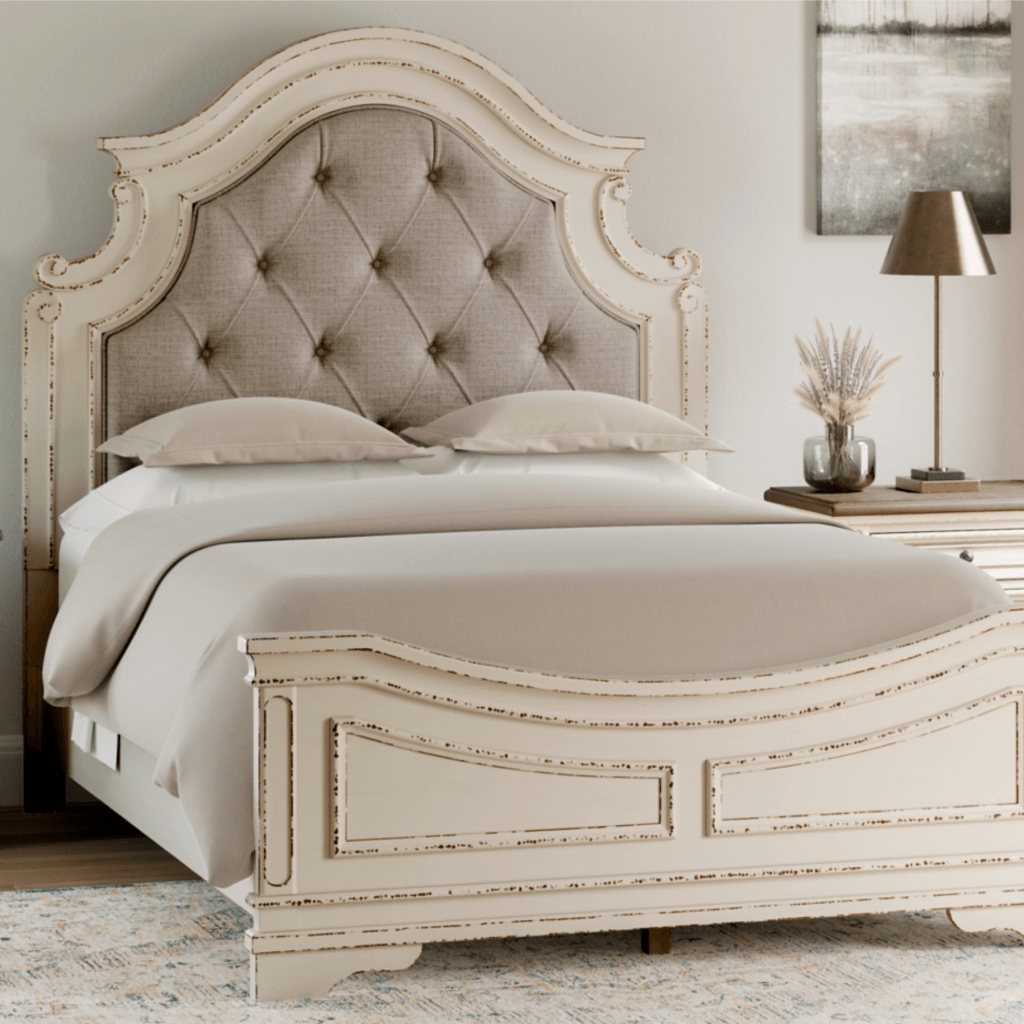
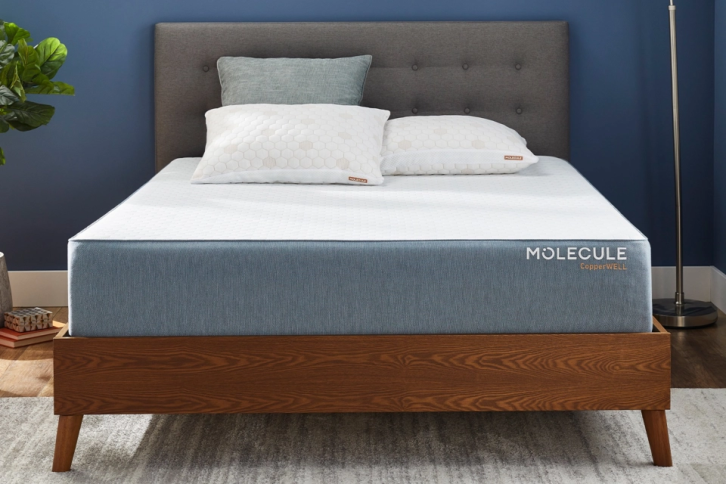
Panel beds feature a tall headboard and often a footboard, usually made with flat wooden panels. They have a few cross-slats to hold a box spring or foundation, not the mattress.
Pros:

  • Classic appearance for traditional bedrooms
  • Box spring raises mattress height for easier access

Cons:

  • Requires a separate box spring or foundation, increasing cost
  • Heavy and bulky

Storage bed frames

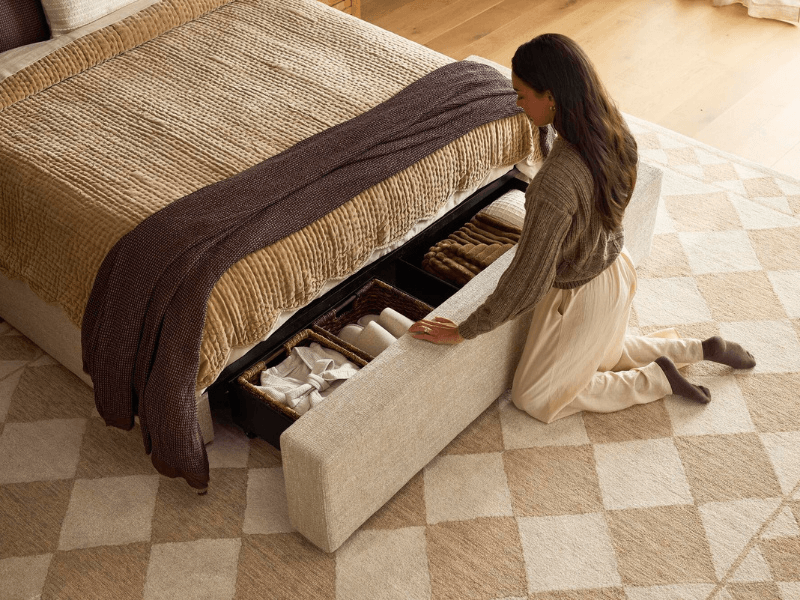
Storage beds add functional space directly beneath your mattress through built-in compartments. These pull-out drawers along the sides or foot of the bed hold bedding, clothing, shoes, and other items that would otherwise need separate furniture.

Pros:

  • Replaces the need for a large dresser, saving floor space
  • Keeps items protected from dust

Cons:

  • Very heavy and difficult to move
  • Inexpensive models may have weak drawer tracks

Upholstered bed frames

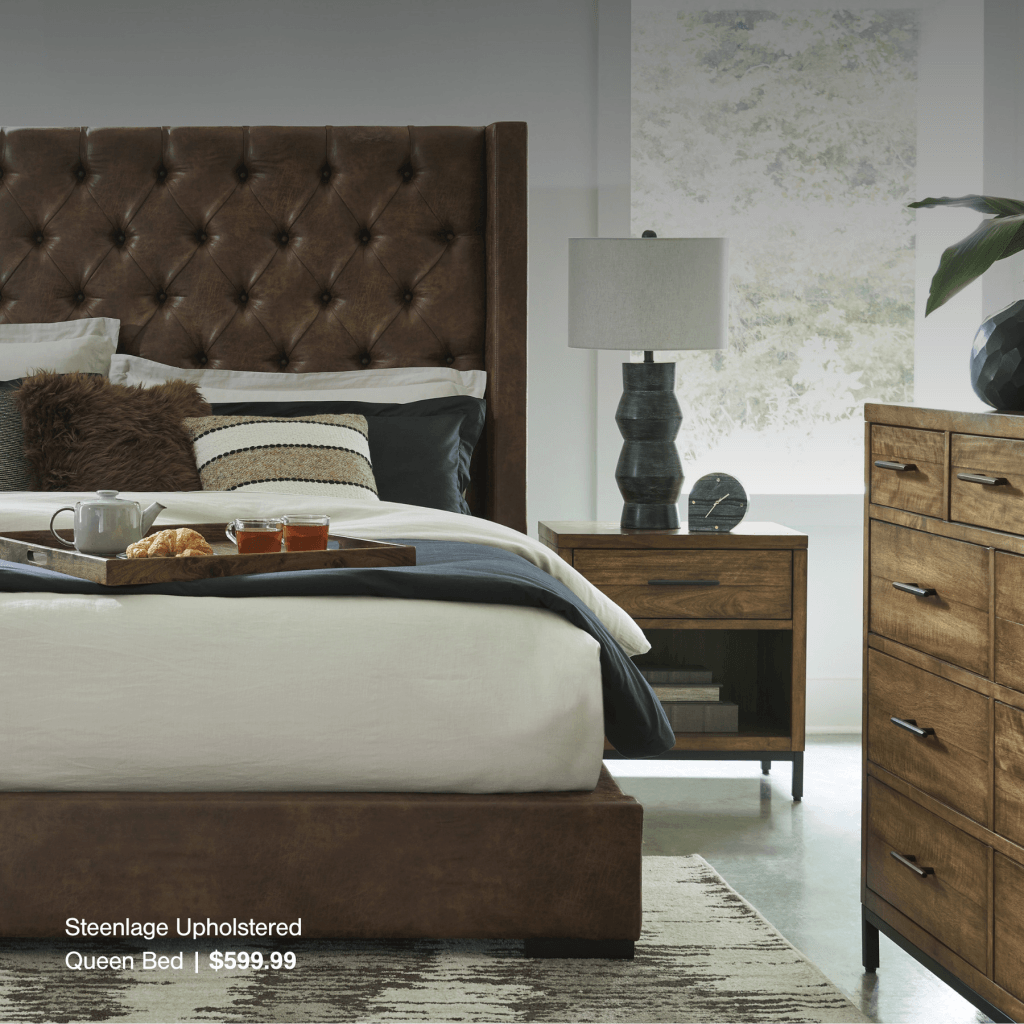
Upholstered beds take a basic wood or metal skeleton and add cushioned fabric covering. You’ll find them wrapped in everything from linen and velvet to faux leather and polyester blends.

Pros:

  • Comfortable for sitting up in bed
  • Fabric adds warmth and texture
  • Padded edges reduce injury from bumps

Cons:

  • Fabric needs upkeep; it attracts dust, pet hair, and stains
  • Pets may scratch upholstered corners

Adjustable bed frames

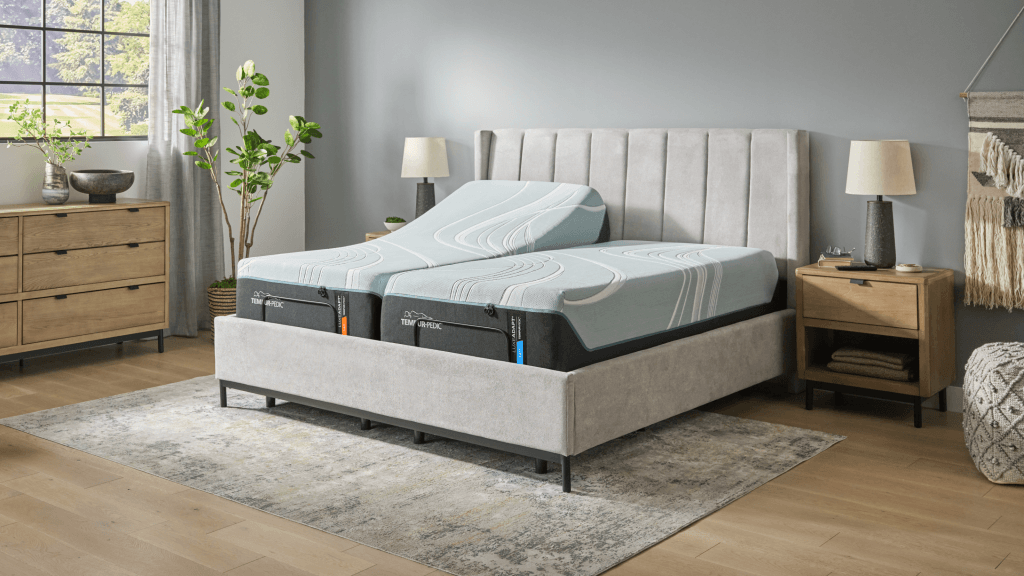
Adjustable beds use electric motors to raise and lower the head and foot portions of your bed. You control the angles electronically, positioning each section exactly where you want it.

Pros:

  • Raising the head can help with acid reflux, snoring, and sleep apnea
  • “Zero gravity” position can relieve back pressure and improves circulation
  • Good for physical recovery

Cons:

  • Among the most expensive frame options
  • Heavy and usually need professional setup

Sleigh beds

Sleigh beds stand out with their curved headboard and footboard design that echoes the lines of a classic sleigh. Usually constructed from solid wood, these frames become the focal point of any bedroom.

Pros:

  • Distinctive traditional style
  • Sturdy build

Cons:

  • Curves take up extra floor space
  • Heavy than other bed frames

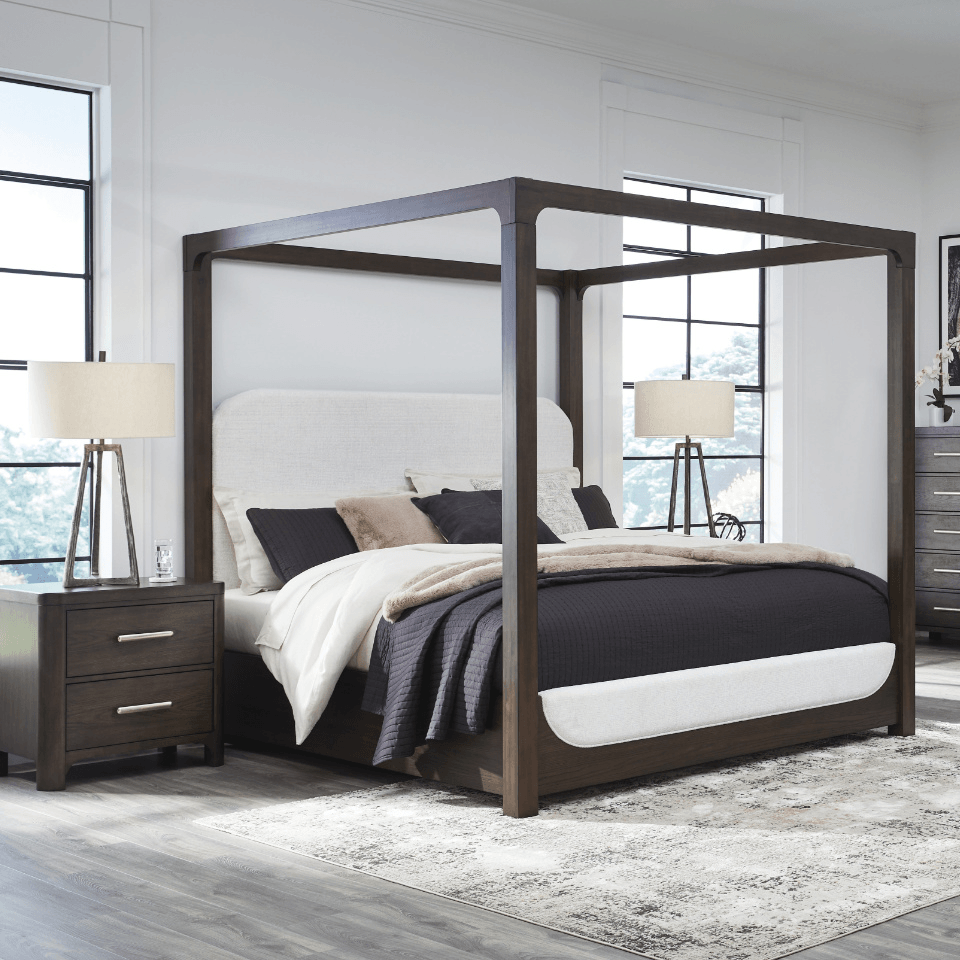
Canopy beds

Canopy beds feature tall posts rising from each corner that connect overhead with a frame. This structure supports draped fabric you can use for privacy, warmth, or pure decorative effect.

Pros:

  • Adds drama and luxury to a bedroom
  • Drapes can help regulate temperature and block light

Cons:

  • Require high ceilings; otherwise, rooms feel cramped
  • Top rails collect dust and require regular cleaning

Metal beds

Metal beds are adjustable steel perimeters for supporting a box spring. Decorative versions use iron or steel piping.

Pros:

  • Budget-friendly
  • Easy to assemble, disassemble, and move
  • Resistant to bed bugs

Cons:

  • Basic metal frames are purely functional with little aesthetic appeal
  • Without reinforcement, metal joints can become squeaky

Select the right materials for longevity

The material of your bed frame determines its lifespan, weight, maintenance needs, and appearance. Knowing the difference between high-quality and budget materials helps you choose a sturdy bed frame.

Wooden bed frame

Solid wood bed frames stands as the classic furniture standard. These frames rely on genuine lumber, not engineered alternatives or composite materials.

Hardwoods vs. softwoods:

  • Hardwoods like oak, maple, walnut, mahogany, and cherry are dense, durable, and resist scratches. A well-made hardwood frame can last decades, though it’s heavier and more expensive.
  • Softwoods such as pine, cedar, and spruce are less costly and grow quickly but are more prone to dents and scratches. Pine is common in rustic styles or budget frames.

Check the finish for quality, oils, stains, or clear varnishes highlight grain, while heavy paints cover it.

Manufactured wood (MDF and particle board)

Engineered wood appears in most budget-friendly bed frames. These composite materials use wood particles, fibers, or layers bonded with adhesives. They’re lighter and cheaper than solid wood but less durable over time.

  • Medium-density fiberboard (MDF): Made from compressed wood fibers and resin, MDF is dense, heavy, and smooth suitable for painting or veneer.
  • Particle board: Composed of wood chips and sawdust, it’s lighter and less durable than MDF.

MDF and particle board frames cost less and offer uniformity but lack durability. Hardware can loosen easily, especially if disassembled multiple times. Moisture will cause swelling and warping. These frames are not ideal for frequent moves.

Metal bed frame

Metal bed frames vary widely, using everything from light alloy materials to durable steel and iron.

  • Steel frames: High-quality steel frames provide excellent strength. Powder coating helps resist rust and scratches. Lower gauge means thicker, stronger steel.
  • Wrought iron: Used in vintage or farmhouse styles, iron frames are very heavy and extremely sturdy.

To minimize squeaks, look for frames with rubber or plastic gaskets at joints and robust bolts for stability.

Upholstered bed frame

Upholstered bed frames perform differently depending on the fabric used. Material selection directly impacts both longevity and the cleaning effort required to maintain appearance.

  • Linen blends: Breathable and natural but may wrinkle and stain.
  • Velvet: Soft, vivid, and durable (with performance velvet), though it attracts pet hair.
  • Faux leather / polyurethane (PU): Easy to clean and allergy-friendly, but lower-quality versions may crack.
  • Genuine leather: Durable, ages well, and considered premium, but comes at a higher cost.

Best-selling bed frames

he most popular Ashley bed frames stand out for their balance of aesthetic appeal, solid construction, and competitive pricing. Their individual characteristics reveal why customers choose them.

Ashley best-selling beds:

  • Kristiland King Upholstered Storage Bed: The Kristiland king storage bed features neutral upholstery, sturdy wood construction, a discreet footboard drawer, easy assembly, and no foundation needed, ideal for stylish storage and versatile bedroom fit.
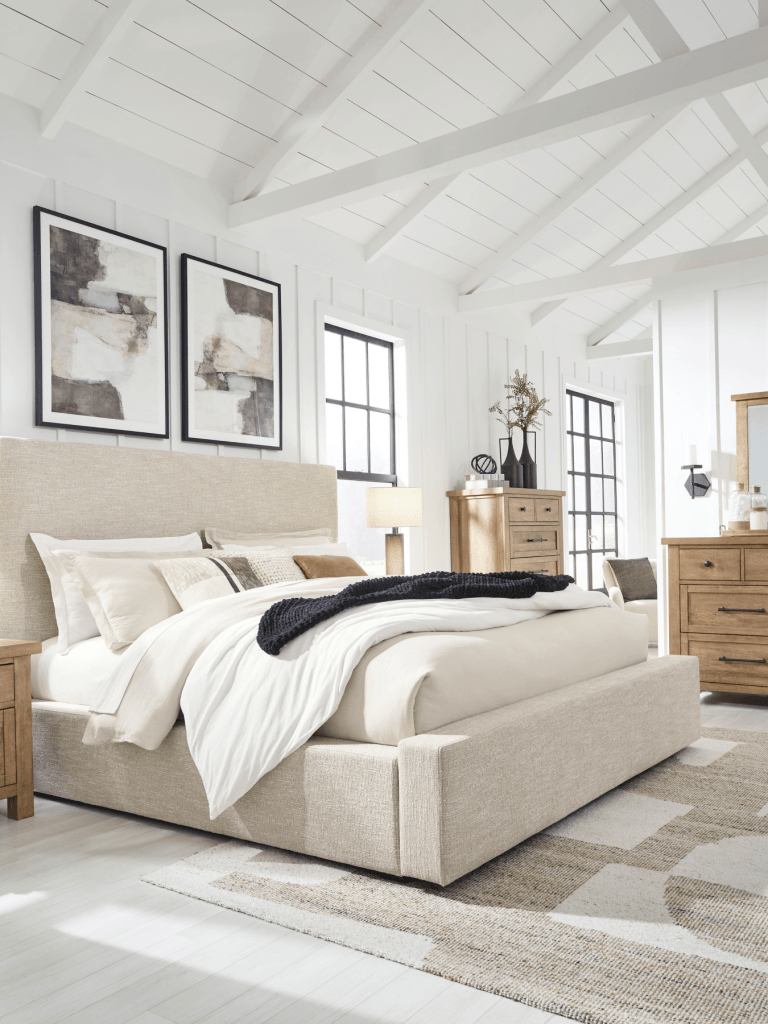
  • Cabalynn King Upholstered Bed: The Cabalynn king bed combines modern lodge and farmhouse style, upholstered for comfort with a supportive, tapered headboard and practical loose pillows—ideal for relaxing, reading, or watching TV.
  • Starmore Queen Panel Bed: The Starmore queen panel bed features acacia wood, an oiled walnut finish, and open plank headboard design, ideal for contemporary spaces; requires box spring and assembly, adjustable base compatible.
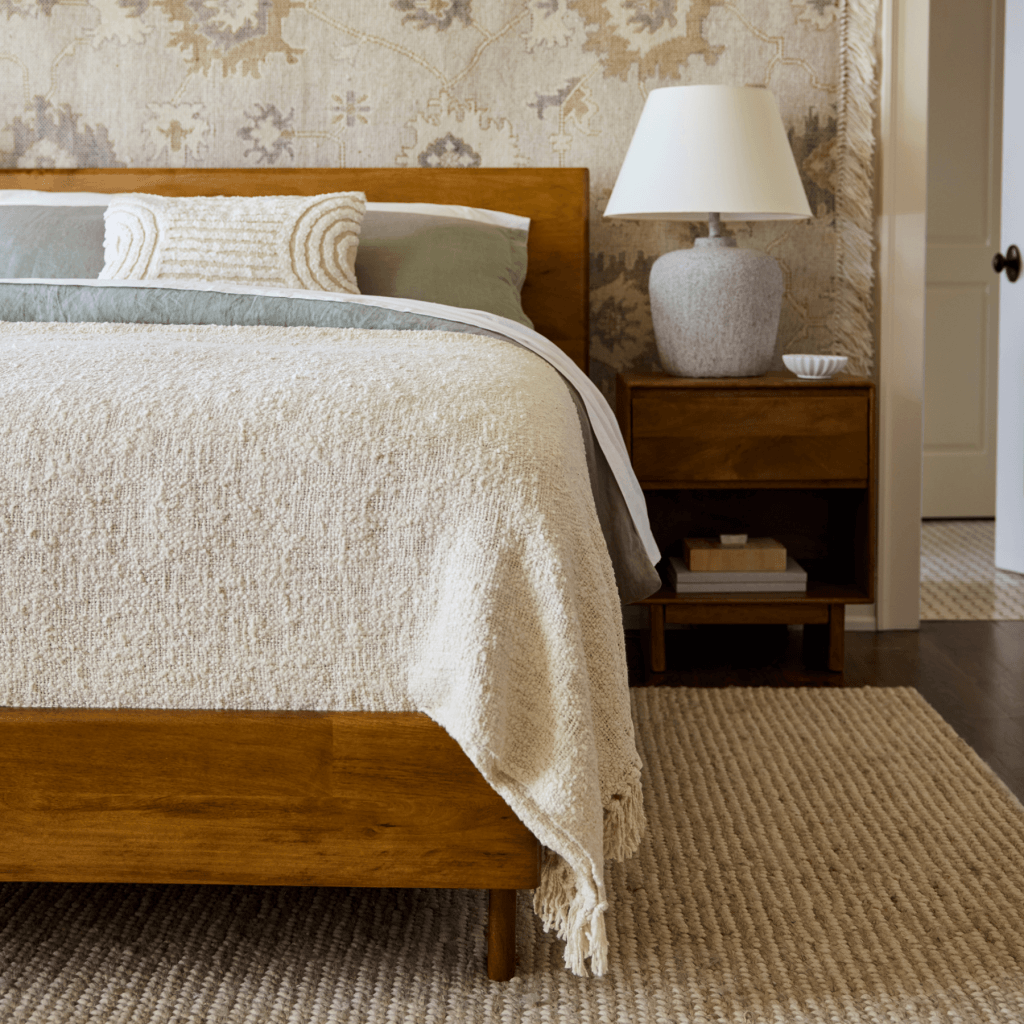
  • Isanti Queen Panel Bed: Platform bed made from mango wood features a clean-lined, low-profile design, light finish, no box spring needed, adjustable base compatibility, and 35-minute assembly, well-suited for achieving a natural appearance while maximizing bedroom space.
  • Takston King Panel Bed: Takston king panel bed features a sunburst-paneled headboard, hardwood solids with acacia veneer, a light glazed brown finish, quick assembly, and requires a separate foundation and mattress. Key factors: style, materials, easy setup.
  • Breckington King Next-Gen Nuvella™ Performance Fabric Canopy Bed: The Breckington king canopy bed features durable hardwood, easy-clean Next-Gen Nuvella™ upholstery, and a stylish modern design which requires box spring, mattress, assembly, and ample ceiling clearance. Key: strength, fabric, fit.
  • Whittgate Queen Next-Gen Nuvella™ Performance Fabric Bed: Whittgate queen bed features easy-care, durable Next-Gen Nuvella™ upholstery, sturdy construction, and modern design. Includes headboard, footboard, rails; mattress and foundation sold separately; simple assembly.
  • Nashburg Queen Metal Bed: The Nashburg queen metal bed features a sturdy steel frame, farmhouse-inspired matte black finish, and moulded details. Key features: includes headboard/footboard/rails, adjustable base compatible, assembly required.
  • Hennington King Upholstered Bed: Hennington king upholstered panel bed combines modern, affordable design with cushioned, upholstered rails, textural bisque wood, and plinth base. Includes assembly; foundation and mattress sold separately.

Ashley trending beds: 

  • Jesstean King Next-Gen Nuvella™ Performance Fabric Bed: King bed with plush tufting, easy-clean stain-resistant fabric, sturdy engineered wood frame, strong slat support, includes headboard and rails; foundation and mattress sold separately. Assembly required.
  • Takston Queen Panel Bed: Takston queen bed features sunburst veneer panels, hardwood/acacia construction, light glazed finish, and requires a foundation. Key factors: natural materials, modern boho design, easy assembly, stylish statement.
  • Dolante King Upholstered Bed with Square Button Tufting: King platform bed with soft, tufted beige upholstery. Includes headboard, footboard, and rails. Engineered wood frame. Fits adjustable bases. Easy assembly, box spring required. Ideal for modern bedrooms.

Evaluate the support system (slats vs. solid base vs. box spring)

How the bed frame supports the mattress is crucial. The support system affects mattress comfort, breathability, and durability.

Wooden slats

Slats are horizontal planks, usually wood, sometimes metal, forming the base of platform beds.

Solid vs. sprung slats:

  • Solid slats: Made from firm woods like pine or birch, these offer stable support—ideal for memory foam or heavy latex mattresses.
  • Sprung (flexible) slats: Curved, laminated wood that flexes under weight, adding bounce and cushioning. Common in European beds, they’re best with lighter innerspring or hybrid mattresses.

Keep slats within 2.75 to 3 inches of each other when using memory foam, latex, or hybrid mattresses. Spacing them farther apart creates sagging issues, risks mattress damage, and allows unwanted movement across the frame.

Solid base foundations

Instead of slats, some platform beds feature a solid foundation built from wood panels or MDF sheeting.

Pros:

  • Consistent support across entire surface
  • Eliminates gaps that cause sagging
  • No slat movement or squeaking

Cons:

  • Poor ventilation
  • Increases frame weight significantly

Box springs

Box springs are fabric-wrapped wooden frames placed under the mattress to raise bed height and offer additional support where frames lack it.

Pros:

  • Raises mattress higher
  • Provides support when frames lack it

Cons:

  • Redundant with quality bed frames
  • Most mattresses perform better without them
  • No longer contain springs, just basic wooden frames

Bed frame styles and design

While structural integrity is paramount, your bed frame is likely the largest piece of furniture in the room. It sets the entire aesthetic tone.

  • Mid-Century Modern: Characterized by clean lines, warm woods (like walnut or teak), and tapered, angled legs. Mid-century frames are almost exclusively low-profile platform beds. They pair beautifully with uncluttered, airy bedroom designs.
  • Traditional and Rustic: Characterized by heavy, substantial wood framing, prominent headboards, and decorative molding. Sleigh beds, four-posters, and panel beds fit this category. They require larger rooms to avoid looking overwhelming and pair well with warm lighting and plush, layered bedding.
  • Industrial: Characterized by raw materials, specifically matte black metal pipes, distressed wood accents, and exposed hardware. These frames are typically very sturdy, budget-friendly, and perfect for loft-style apartments or modern masculine decor.
  • Minimalist / scandinavian: Focuses on absolute simplicity. Light-colored woods (like ash or birch), extremely low profiles, and an absence of headboards or decorative elements. The focus is entirely on function and creating a calming, zen-like environment.

The frame matters as much as the mattress

Don’t let the bed frame be an afterthought in your bedroom refresh. Take accurate measurements, choose sturdy construction, make sure slats are positioned correctly for your mattress type, and confirm center support is there. Pay attention to weight capacity and hardware quality. Get this foundation piece right and it pays off in stability and silence for the long haul.

All Posts December 2, 2024

Tufted Furniture

Not all of today’s trendy furniture features a unique new design. Some of the most distinctive pieces available from Ashley connect to the past through styles that hearken back to previous centuries. Our top-selling tufted furniture designs are a great example of this demand for a classic look. If you’re not sure if tufting is right for your home decor, consider whether you need a hint of elegance and comfort all in one package. Tufted furniture pieces like beds, couches, and ottomans can do all of that and more when added to the room.

What Is Tufted Furniture?

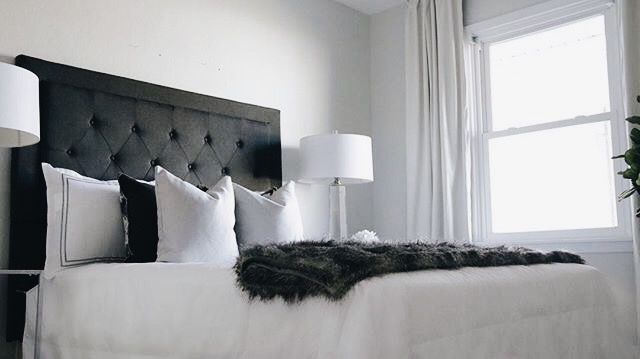
Not all stuffed or soft upholstered furniture is considered tufting. This style originated as a way to anchor down the stuffing and increase the durability of the padding, but it also adds a distinctive look to the surface that many people enjoy. Tufted furniture features the use of stitches, buttons, or other devices to anchor certain points down through the stuffing. This creates a pattern of raised sections between the stitches or buttons. It’s an elegant look that many people choose to accent their traditional style decor. While there is a long history behind tufted furniture pieces, there are also plenty of modern takes on the style as well.

The History of This Furniture Style

This technique began in the early Victorian era in England as a way of ensuring padding and stuffing stayed in place. While the use of modern foams eliminated the need for stitching and tufting on a practical level, the practice of using buttons to add visual appeal to a tufted bed or couch continues today.

What Are the Benefits of a Tufted Couch?

Putting a tufted sectional in your living room could bring a number of benefits to the space. First, tufted furniture is durable and long-lasting. The padding resists compression and can be reupholstered in most cases to extend the life of a couch or sofa. Second, it’s a cozy and welcoming surface that nonetheless has an elegant look. You get the best of both worlds in one package. Third, there are tufted furniture designs to fit every home decor style. Modern fabrics and patterns brighten up the classic look of diamond-patterned buttons.

Styling Tips for the Tufted Sofa

Styling your modern tufted furniture is the best way to give it a personal touch and help it blend in with the rest of your decor. Try adding these elements to your new tufted sofa.

  • Find throw pillows with textures and colors that contrast with the upholstery on the sofa. For example, leather tufted sofas in rich caramel brown pair great with extra soft faux fur or looped fabrics.
  • Turn to vintage prints, patterns with history behind them, and nostalgic color combinations. This hints at the rich history behind most tufting designs.
  • Don’t forget that the side tables and lamps you flank the tufted sofa with also contribute to its appearance. Mid-century designs can pair well with these seating options, as can Edwardian and Queen Anne inspired pieces.

Is Tufted Furniture in Style?

As with most furniture styles with a few centuries of history behind them, many homeowners are concerned that tufted bedroom furniture is not trending. Yet this kind of classic elegance doesn’t really go out of style like other pieces can. It’s easy to dress up tufted sofas and chairs in ways that fit with practically any modern decor trend. Just change up the pillows and throws you pair with the couch if trends change and you want something new.

Choosing a Complete Tufted Furniture Set

A single piece of tufted furniture can make a big impact in a room. But if you’re really dedicated to this style, consider an entire matching tufted bedroom furniture set. You get a unified look that ties the space together without having to find individual pieces that match. In addition to a tufted headboard and footboard, you’ll likely see these bedroom sets including tufted chairs, benches, and even storage ottomans. One of the handy tufted ottomans furniture stores carry can help you kick back and relax at the end of the day.

Other Must-Have Tufted Furniture

The tufting style can be found on almost all upholstered pieces of furniture. You’ll find plenty of sofas, loveseats, and couches featuring this kind of work on the seats and back panel, along with matching armchairs and wing-back chairs. Even dining chairs can feature tufting for both aesthetic and comfort purposes. You’ll find a tufted bench to outfit your front hall and a tufted ottoman for resting your feet among our collection. Barstools offer an iconic mid-century look with a leather upholstery finished with button tufting. It’s even an option for adding details to some side tables and consoles.

How to Clean Tufted Furniture

Thanks to the depth of the dips created by the buttons or stitches, you’ll need a strong vacuum hose with a brush attachment to clean your sofas and couches. Pay attention to the material used for the upholstery. Leather needs cleaning and oiling on a regular basis, while velvet benefits from brushing along with routine vacuuming. For your tufted bed furniture, consider using an upholstery cleaning spray or powder at least twice a year to remove oils from your body and bed linens that can build up. These cleaning products are easily wiped off or vacuumed up.

Are Tufted Couches Comfortable?

Tufted couches are usually favored for aesthetic reasons rather than strictly questions of comfort. However, many people find that the textured surface and extra padding provided by these seating options are more comfortable than flat surfaces. The ripples and dips help encourage circulation when you’re sitting for hours while enjoying a movie marathon, reducing the discomfort that can occur. Velvet materials make these couches even more comfortable, as does extra plush padding to provide a cloud-like appearance and feel.

Ashley has plenty of tufted furniture to choose from, including couches, headboards, and more. Explore our selection of cozy and welcoming furnishings to make your home your sanctuary. Every room can feature the elegance and style you want while also providing a comfortable environment for relaxation with the right decor.

All Posts, Entertaining, Ideas & Trends, Seasonal, Winter Inspiration December 2, 2024

How to Make a Bedroom Cozy for Winter

Cold winters create the perfect opportunities for snuggling up in a cozy bedroom. Creating a winter retreat in your own bedroom space doesn’t have to require a major overhaul of the entire decor. A few updates here and there can transform the room, no matter your budget. Deciding how to make a bedroom cozy is as simple as considering your personal tastes and the level of cold you have to deal with over the winter. Some cozy details are practical for keeping you warm, while others are more focused on providing the comforting aesthetic that goes along with it.

Choose Luxurious and Extra Soft Bedding

Soft bedding is a staple of cozy bedrooms, whether you’re a devotee of the Danish concept of hygge or just want to have a comforting sleeping experience. Brushed flannel bedding is a classic choice. It’ll keep you warm and adds an unbeatable fuzziness against the skin. Extra-stretchy bedding keeps you from getting too warm if you have plenty of heat coming into the bedroom while still giving you that cozy feeling. Silky Tencel sheets also work well for this purpose, keeping you warm and cozy while wicking away moisture for comfort.

Wrap Up With Warm Blankets That Have Cozy Appeal

Once you have the perfect sheets on the bed, it’s time to top the mattress with the right quilts and coverlets. Warm and fluffy blankets help you build the cozy bedroom aesthetic you desire, especially if you choose color schemes based around warm beige, cool gray, and classic snowy white. You can’t go wrong with botanical or plaid patterns for your comforter sets as well. Look for down or down-alternative comforters for a comforting sense of weight and warmth that is perfect for winter bedtimes. You’ll want soft and fuzzy materials here as well, and brushed microfiber is a great fabric for comforters that really live up to their name.

Warm Your Feet With Footstools, Rugs, and More

Go beyond just your bed when planning your cozy bedroom decor this winter. It’s a little unpleasant to step out of a warm and soft bed only to feel your bare feet freezing on cold flooring. Rugs help you create a softer and warmer transition while adding plenty of cozy styles. If you routinely sit back on a loveseat or armchair while relaxing in your sanctuary, consider adding a plush footstool to get your feet up and off the floor. Not only will it give you a relaxing way to lean back and unwind, but it’ll also keep you warmer with no effort at all.

Celebrate the Holiday Spirit With Cuddly Throws

Comforters and quilts are great for bedtime, but sometimes, you just need something to curl up with during the middle of the day. Some of the best cozy bedroom ideas that you can accomplish on a budget are built around fleece or faux fur throw blankets. Chunky knits are a great choice. These throws belong not just on your bed, but on your living room or family room couch as well. Let these soft and cozy details add to your holiday decorating efforts by choosing Christmas pillows and throws, or stick to a neutral winter style if that’s more to your taste.

Plump Up Your Comfortable Seating Options With Poufs and Pillows

Pillows play a big role in creating a comforting environment all year round. They’re especially important in the winter. Consider swapping your cooling vented pillows for shredded or solid foam alternatives that add to the warmth of the room. This cozy bedroom decor idea goes beyond just the pillows you rest your head on when napping. Don’t forget seasonal decorative pillows to set the mood, both in the bedroom and living room of the home. Euro shams help add a cozy style without requiring you to buy a new set of pillows. If you want flexible seating options for your winter bedroom design that also double as footstools, consider adding a few textured poufs to create versatility in the space. Look for furry and looped fabrics to add a tactile sense of coziness that you’ll want to keep all year round.

Hang Wall and Window Coverings That Keep Out the Chill

Winter window coverings don’t always equal heavy and insulated drapes. Although thick curtains are a good idea in colder climates, homes in warmer areas may benefit from lighter coverings that let in plenty of natural light for a cozy bedroom glow. To add color to the walls while also warming up the room on a practical level, consider the traditional art of hanging fabric tapestries. They help block drafts and add a softer touch to the space without requiring major commitments to changing the flooring or painting the walls. Even the curtain rods you use for hanging window coverings, and tapestries can add to the seasonal comfort of the room.

Consider an Electric Warming Throw or Bedwarmer

For extra cold climates or homes with limited central heating, adding electric heat to your bed can make all the difference. Coziness is available at the touch of a button, thanks to warming bed covers and plug-in throws. Choose a model that shuts off after a few hours of use so you don’t have to worry about wasting electricity after you drift off. You may not need a space heater or other heat source in your bedroom once you’re trapping plenty of warmth under the covers with you. Electric throws can travel throughout the home with you, adding a touch of coziness everywhere you choose to relax.

Make this the coziest winter yet by giving your bedroom a quick makeover for the arrival of chilly weather. Little details from Ashley, like plush throws, soft bedding, and extra warm comforters, go a long way. Stick to a neutral color scheme to hearken to the colors of fresh snow, or add some pops of color with seasonal or holiday decorations. It’s easy to give your bedroom the perfect look for winter with our tips.

All Posts October 23, 2024

Molecule Mattresses 

Are you in the market for a new mattress and are unsure what makes a Molecule Mattress stand out from the rest? Molecule mattresses don’t just look nice. Underneath the aesthetics, Molecule uses science to help customers get the right type of recovery-focused sleep for their lifestyle.