
Browsing Category

Dining Room Ideas

Bedroom Ideas, Dining Room Ideas, Guides Published: October 7, 2026

How to Choose Decor That Matches Your Furniture

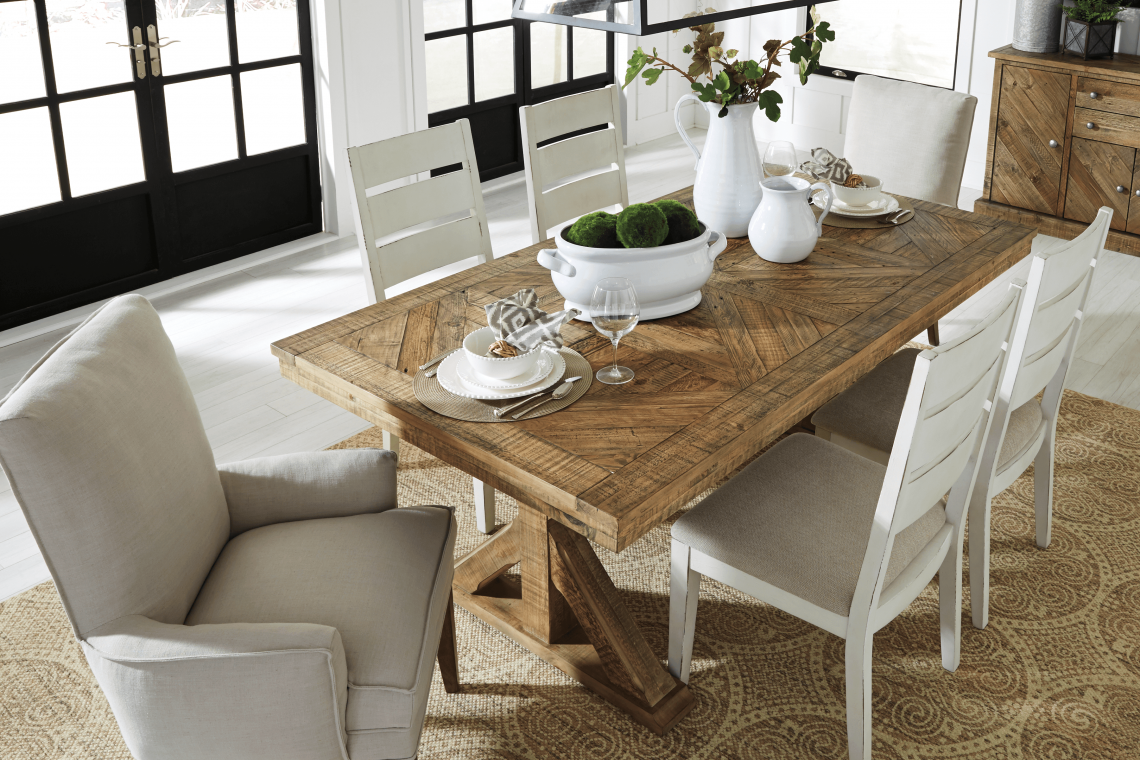
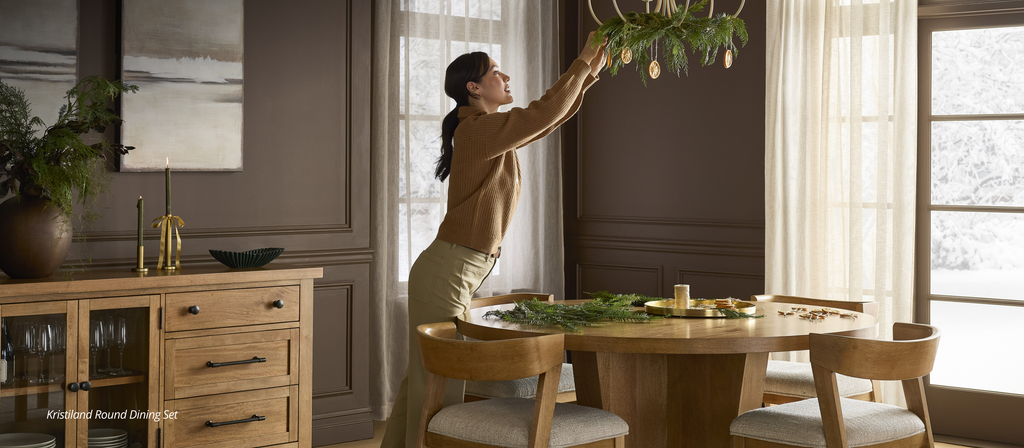
Kristiland Dining Table and 4 Chairs

Key Takeaways

  1. Start with the furniture you plan to keep. Note its undertone, materials, shape, and visual weight before shopping.
  2. Choose a color relationship, tonal, complementary, or neutral with an accent, instead of trying to match every shade exactly.
  3. Repeat a wood tone or metal finish in a small detail when you want a mixed material to feel intentional.
  4. Measure the furniture arrangement before choosing a rug, art, or lamp; the right scale depends on how you use the room.
  5. Add texture first, then a few patterns that share a color. Leave useful surfaces and sight lines clear.
  6. Test colors in your own daylight and evening light. If you want to begin small, try one washable pillow cover in your chosen accent.

The answer to how to choose decor that matches your furniture is to coordinate, not copy. Begin with an existing piece that sets the tone for the room, observe its color, shape, finish, and scale, then choose home decor that relates to one or two of those qualities. A rug might pick up the warmth of a wood table without being brown; a curved lamp might soften a square sofa rather than mimic it. These connections make a room feel cohesive without making it look like a matching set.
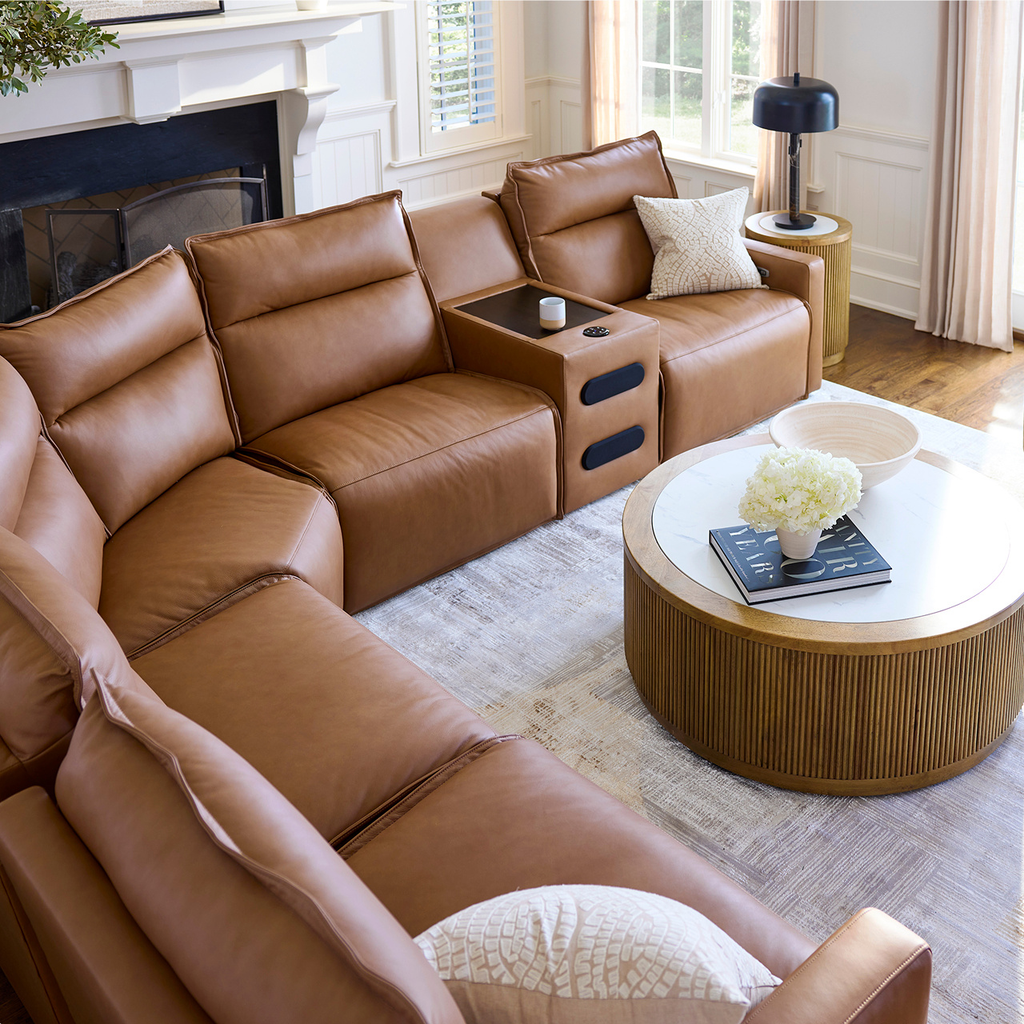
Ashley Luxe inspired living room

Start With the Furniture You Already Own

Choose the piece that has the greatest visual influence or that you are least likely to replace. It might be a sofa, bed, dining table, or large cabinet. If you have several contenders, start with the one that occupies the most space in your view from the doorway. You can still account for the others as you build the room palette.

Look at your anchor in the room, during the day and with the lights you normally use at night. Write down four observations:

  • Color and undertone: Is the surface warm, cool, or fairly neutral? Gray upholstery can lean blue or green; brown wood can lean red or golden. Compare a fabric or finish sample with other colors in the room rather than trusting a product photo. A white sheet of paper beside the surface may make a subtle cast easier to notice.
  • Material and sheen: Is it matte linen, smooth leather, textured wood, reflective metal, or a combination? Contrasting textures can add depth, while repeating a material in a smaller accessory creates a connection.
  • Shape: Are its lines mostly straight, rounded, tailored, or soft? This helps you decide whether the room needs an echo or a counterpoint.
  • Visual weight: A dark sectional with a deep seat looks heavier than an open-legged loveseat of similar width. Consider both its physical size and how much visual space it takes up.

You do not need every purchase to satisfy all four observations. If a pillow shares the sofa’s undertone, for instance, its contrasting texture may be what makes the pairing interesting. Use the observations as a filter for choices, not a requirement to assemble a set.
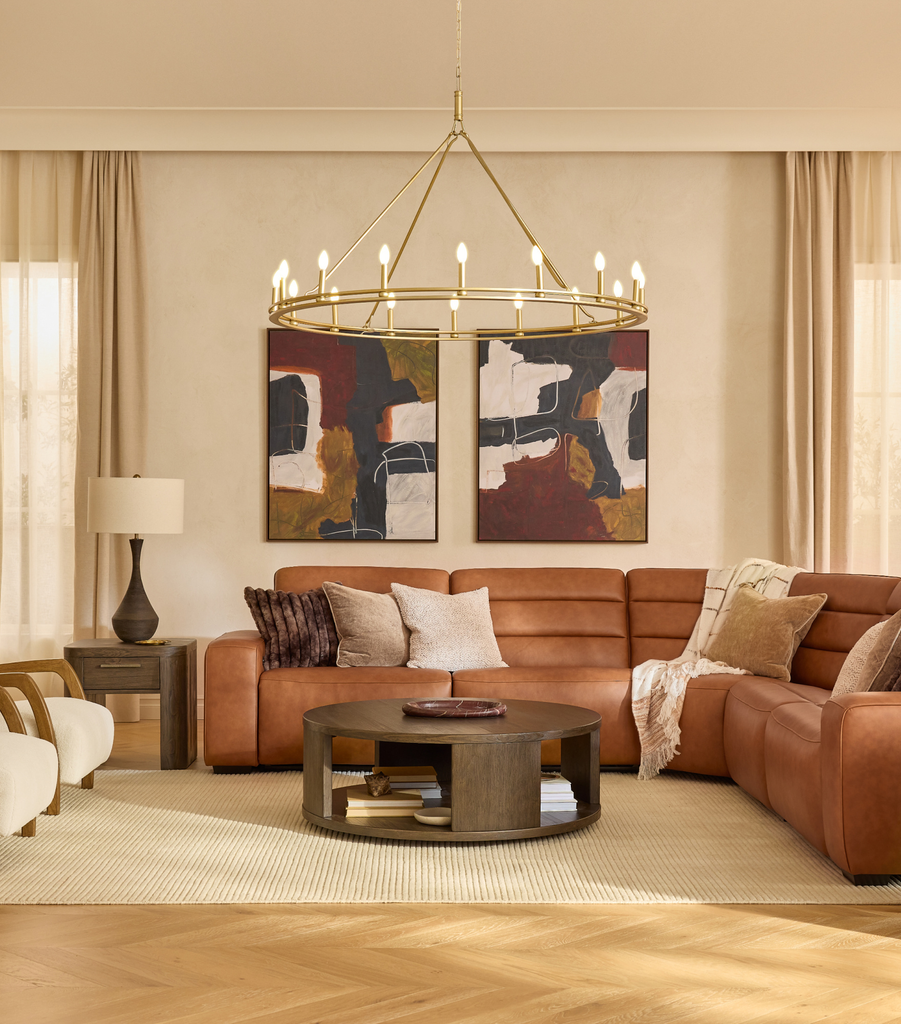
Ashley Luxe Modero 6-Piece Reclining Leather L-Shaped Modular Sectional

Choose a Color Relationship, Not an Exact Match

Pick a small palette before buying accessories: the anchor’s main color, one supporting neutral, and an accent. Include another color only if it has a job to do, such as connecting a patterned rug to existing art. The three approaches below offer different ways to make those colors work together.

Tonal: For a Quiet Room With Depth

A tonal palette stays within one color family while varying lightness and saturation. With a camel sofa, you might use ivory curtains, a deeper brown frame, and a muted terracotta pillow. The colors need not be identical; their shared warmth is the link. This approach is useful when you like a calm room or already own several warm neutrals. Vary the surfaces, too, a smooth leather seat beside a woven throw keeps similar colors from blending into one flat area.
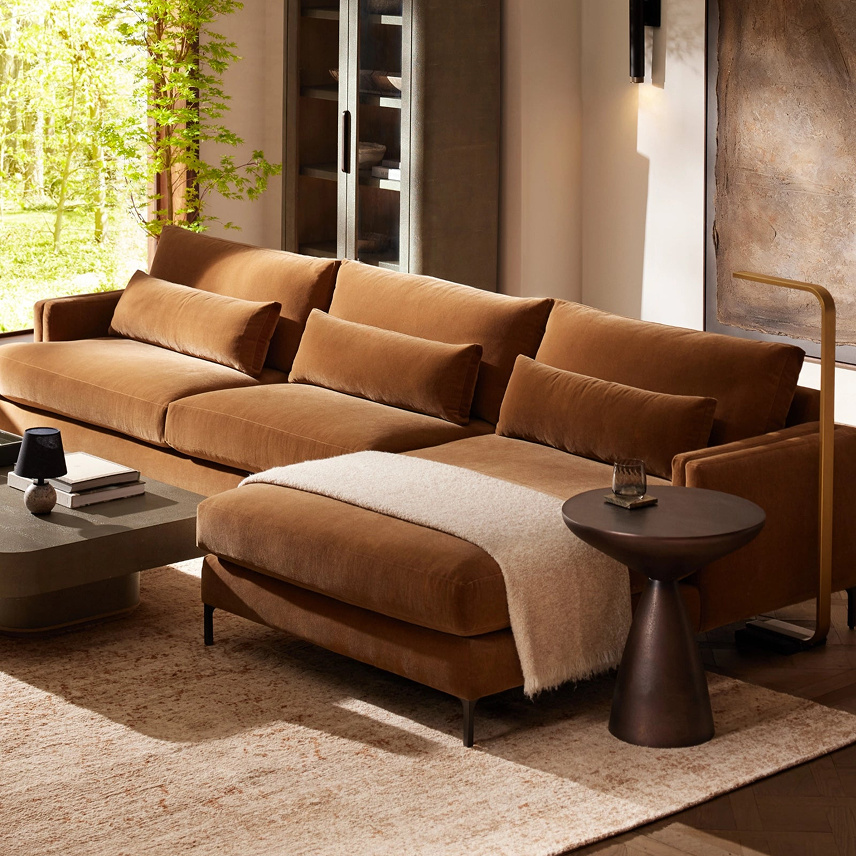
Brown tonal palette living room

Complementary: For Controlled Contrast

Complementary colors sit opposite each other on the color wheel. A navy sofa, for example, can work with a small amount of muted orange in art or pillows. The contrast gives a colorful anchor energy without requiring another large, saturated piece. This works best when the furniture is already a clear color and you want to emphasize it. You can soften the effect by choosing a muted version of the complement and letting neutrals occupy the larger surfaces.
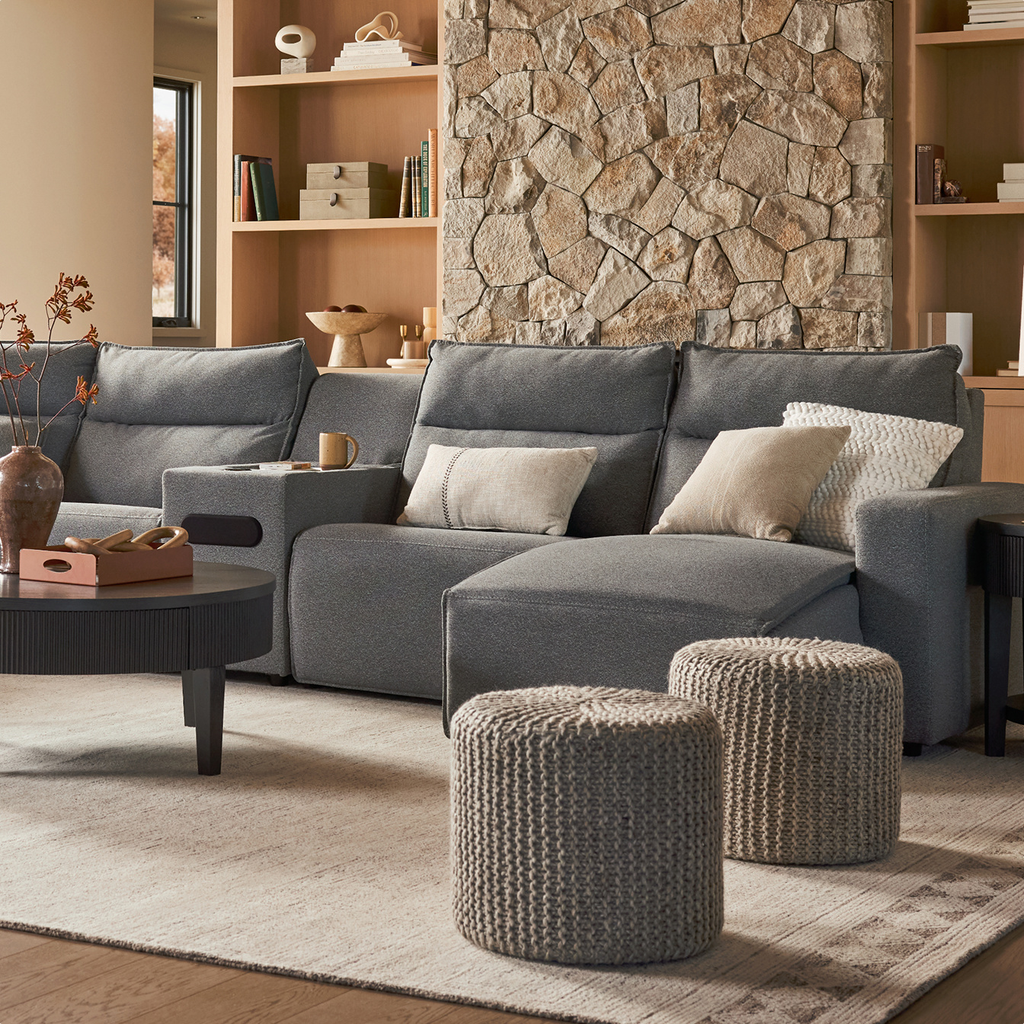
Modmax 2 modular secitonal by Ashley

Neutral With an Accent: For Flexibility

Let the existing furniture and larger textiles form a neutral base, then carry one accent through a few smaller pieces. A charcoal sofa might sit with cream curtains and a rug that includes touches of sage, echoed by a pillow. This approach is practical if you expect your tastes to change: swapping a cover or vase is simpler than replacing upholstery. Check the neutral’s undertone first, since a cool gray and a warm cream may need a shared color or texture to bridge them.

If you own a colorful sofa, resist buying accessories in exactly its shade. A rug with a smaller touch of that color, or art that combines it with your accent, will connect the room while allowing the sofa to remain the focal point.
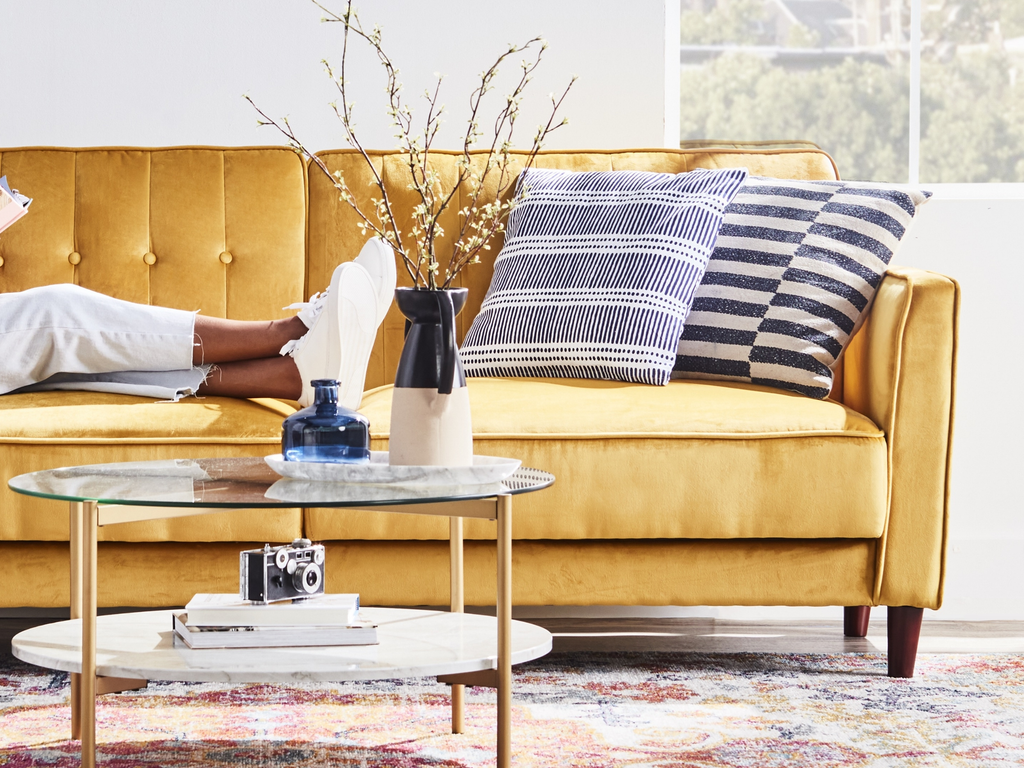
Yellow sofa with blue and white home decor accents

Mix Wood Tones and Metal Finishes

Your decor does not need the same wood or metal finish as your furniture. Repetition can make an arrangement feel settled; contrast can keep it from feeling uniform. The useful question is whether someone can see why a new finish belongs in the room.

First, identify the finishes already present. A dining table may be warm walnut, while its chairs have black metal legs. That combination gives you two existing cues. You could echo the walnut in a frame and the black in a light fixture, then let a lighter wood tray add contrast. The repeated details connect the finishes without requiring every piece to match.

When mixing woods, compare actual samples when possible. Species names alone do not tell you how a stain will read: two items labeled oak can have different warmth and depth. Woods with similar undertones are often easy to combine, but a cool or pale wood can also work beside warm, dark furniture when there is enough separation for both to register. A neutral rug or wall behind them can provide that breathing room.

For metals, let an existing fixture or hardware finish guide your choice, then use another finish as an accent if you like the contrast. Brass and matte black, for example, can share a room when the black appears in more than one visible place. There is no need to count every handle or eliminate a third finish already built into the room. Look for a clear dominant finish and a few deliberate connections rather than a strict formula.
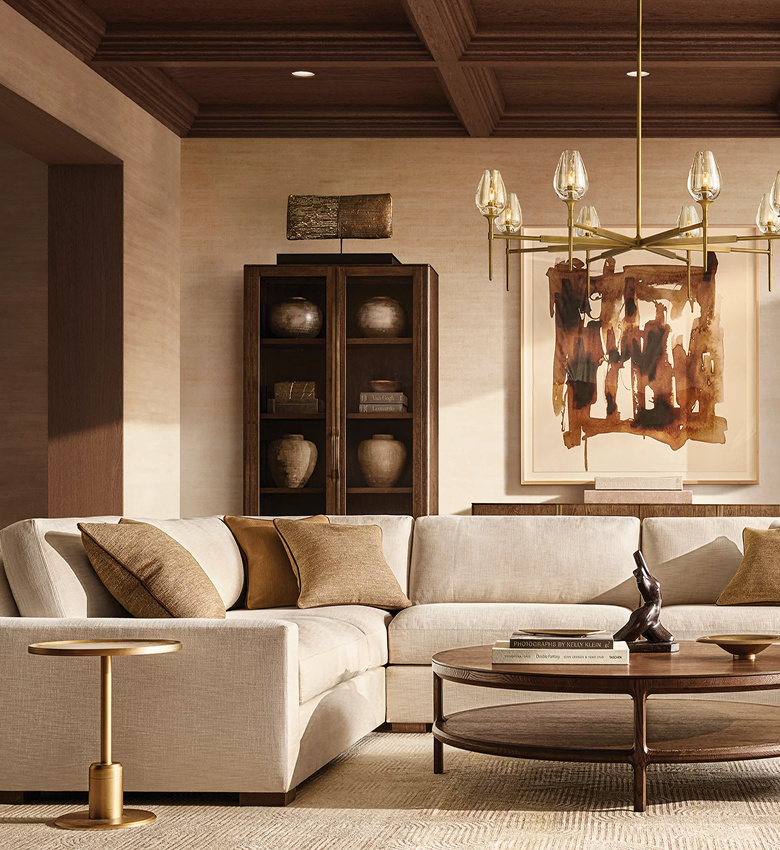
Ashley Luxe living room collection

Balance Furniture Shapes Without Matching Styles

The outline of furniture affects what looks comfortable beside it. If a room is full of square arms, straight table legs, and rectangular frames, a round mirror or curved lamp can soften the view. If most pieces have rounded edges, an angular tray or tailored artwork can provide definition.

Echoing a shape works when you want to reinforce a look. A rectangular mirror above a clean-lined sideboard makes their relationship obvious. Contrasting a shape works when that look has become too repetitive: a rounded vase on the same sideboard adds relief. Neither choice commits you to decorating every item in one style or era.

Stand at the doorway and look at the room as a whole. Which lines repeat? Where does your eye land? A traditional rug can sit near a modern cabinet if they share a color or material cue. The connection should be visible, but it does not have to come from identical silhouettes.
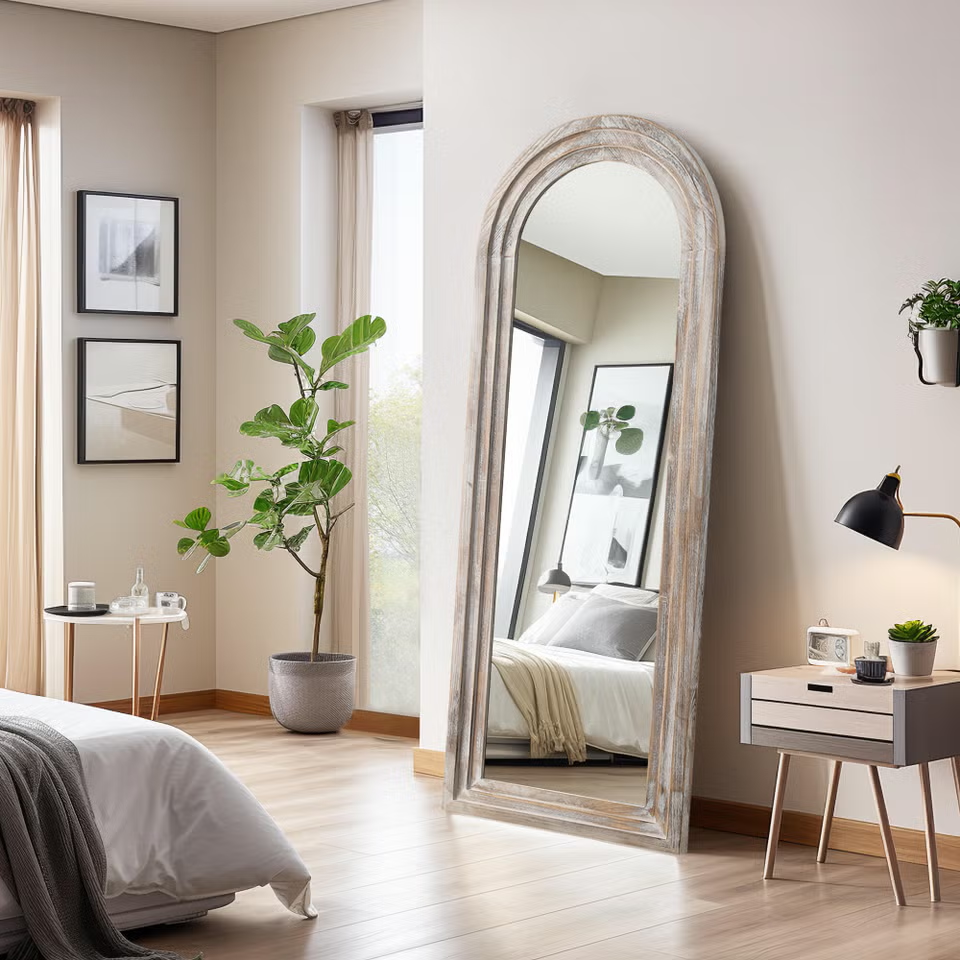
Dulcea 71" Classic Arched Framed Mirror

Measure for Rugs, Art, Lamps, and Displays

Before ordering a large accessory, measure the furniture arrangement and mark out the proposed piece. Painter’s tape on the floor can show a rug’s footprint; paper taped to the wall can show an artwork’s size. These checks are more useful than a universal dimension because rooms, furniture, and walking paths differ.

Rugs: Measure the full seating group, not just the coffee table. In a living room, a rug often looks more connected when at least the front legs of the main seating pieces can sit on it. Check that it does not leave an awkward strip of floor between related seats, and keep door swings and walking routes in mind. Under a dining table, pull a chair back as someone would when getting up; the rug should support that movement without its edge catching the chair. If a rug that size will not fit, consider leaving the dining floor bare instead of forcing a small rug beneath the table.

Wall art: Relate artwork to the furniture below it. Hold up a template above the sofa or sideboard and view it from the doorway and from a seat. One substantial piece or a grouping treated as a single shape may feel more balanced than a small frame floating over wide furniture. Check its height from where people normally see it rather than hanging it by an eye-level rule alone.

Lamps: Measure the table and nearby seating before choosing a lamp. The shade should provide useful light without blocking conversation across the room or shining directly into someone’s eyes when seated. A broad base may overwhelm a narrow nightstand even if the lamp’s height seems right. Compare the base, shade, and overall dimensions, then check the fit against your own table measurements.

Tabletop decor: Vary the height and shape of objects, but preserve the surface’s purpose. A coffee table needs room for a drink; a dining centerpiece should allow people to see one another. On a shelf, leave some open space so books and objects remain distinct. One larger object may be more effective than several small pieces that disappear beside substantial furniture.
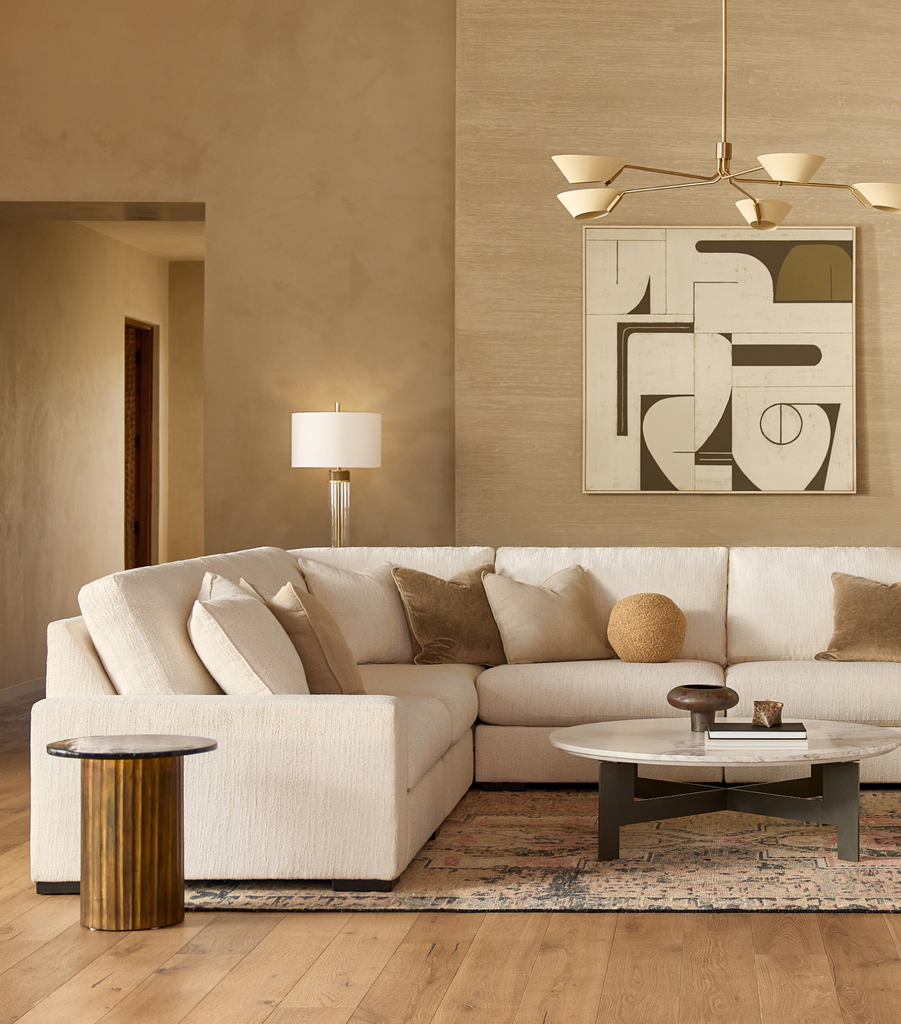
Ashley Luxe Calden Boucle 5-Piece Modular Sectional

Layer Texture Before Adding More Pattern

Soft decor gives you a way to change the feel of existing furniture without replacing it. A linen curtain, woven rug, knit throw, and velvet pillow can add depth even when their colors are close. Start with the textiles that occupy the most visual space, then add smaller textures where someone will see or touch them.

Use pillows and throws to connect the sofa or bed to the room palette. For example, a pillow can repeat a color from wall art while its fabric contrasts with smooth upholstery. Curtains can soften a room dominated by wood and metal; a rug can bring warmth to leather seating. Choose materials for how you live, too. Removable, washable pillow covers may be more useful than delicate fabrics in a busy household, while a low-maintenance rug may matter more than a particular weave.

When you add pattern, give each one a distinct role. A patterned rug can be the main visual feature, with quieter pillows that share one of its colors. If the curtains are bold, keep the rug calmer and introduce a smaller-scale print in a throw or cushion. There is no required number of patterns: if the room feels busy from the doorway, remove one and see whether the furniture comes back into focus.
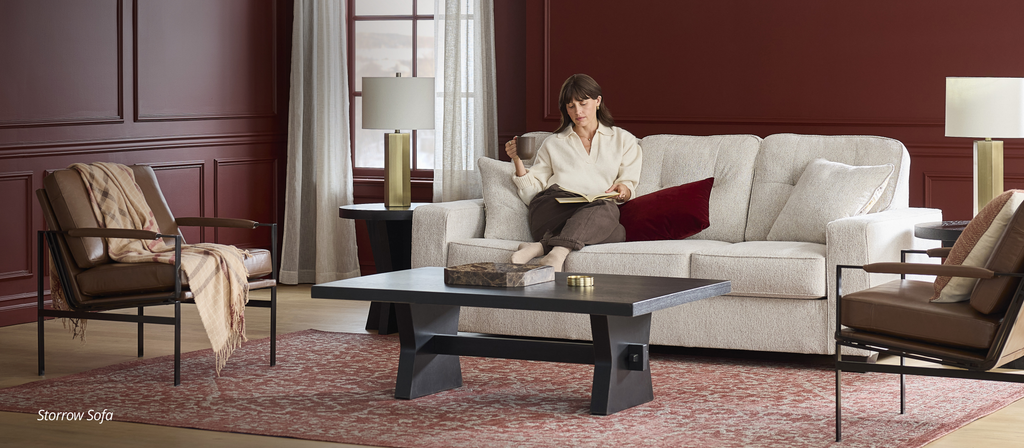
Storrow Sofa

Build the Palette, Test It, Then Buy by Impact

A little planning can prevent a collection of individually appealing objects from pulling in different directions. Follow this sequence before committing to a room refresh:

  1. Record what must stay. List the anchor, other prominent furniture, flooring, and fixed finishes. Note their undertones and choose a tonal, complementary, or neutral-with-accent direction.
  2. Gather a few references. Keep photos of your furniture taken in the room alongside samples of a supporting neutral and an accent. Check the samples next to the actual upholstery, wood, and flooring, not just next to one another.
  3. Test in real lighting. View swatches where the finished decor will sit, in both daylight and your usual evening light. A color that looks balanced online can read very differently beside your furniture. If a large purchase is involved, bring home a sample or mock up its color and size first.
  4. Prioritize by visual impact. A rug or curtains can change a large portion of the room, so settle their direction before accumulating small accessories. Next consider pillows, art, and lighting according to what the room lacks. Add tabletop objects last, when you can see whether they are needed at all.

This is a purchase order, not an instruction to buy everything. If your existing rug already works, keep it. If poor task lighting is the problem, a lamp may be more useful than new curtains. Pause after each addition and look at the room from several places before choosing the next piece.
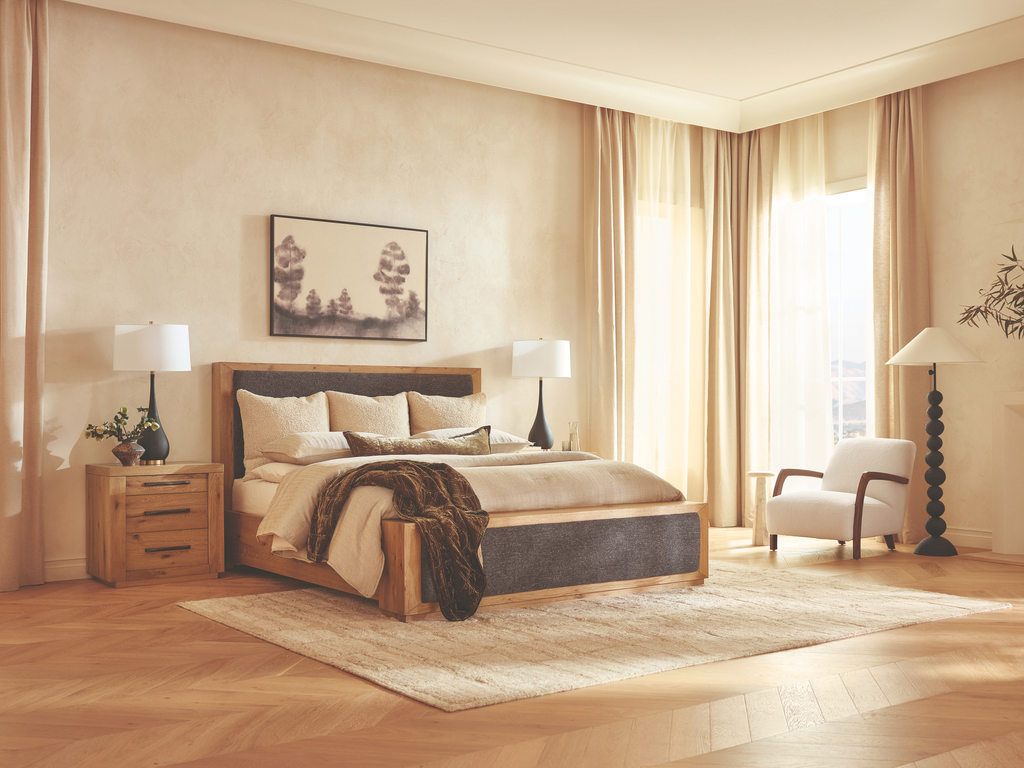
Ashley Luxe Bracken Bedroom Collection

Match the Plan to Your Furniture Starting Point

Use the furniture you have, not an idealized room, as your starting point. These common situations call for different choices:

Furniture starting pointDecor directionWatch for
Neutral upholsteryBring in texture through a rug, curtains, and pillows. Use one accent color in a few places, checking it against the upholstery’s undertone.Similar neutrals with no variation in depth or texture; an accent that looks unrelated in the room’s light.
Colorful upholsteryLet the sofa or chair carry the strongest color. Choose quieter surrounding textiles, then repeat a small amount of its color in art or a rug.Buying every accessory in the upholstery’s exact shade or adding several competing bold colors.
Dark wood furnitureIntroduce lighter textiles or wall art for contrast. Check whether the wood leans red, golden, or cool before choosing neighboring colors.Surrounding substantial dark pieces with equally heavy decor, or assuming every dark wood has the same undertone.
Mixed finishesUse the furniture’s existing wood and metal as palette cues. Echo each in a smaller detail while keeping the color palette focused.Adding accessories to solve a mismatch that is not there; crowding a room that already has plenty of material variety.

The table is a starting point, not a set of restrictions. A dark wood table can look good with another dark detail; what matters is whether the room still has enough contrast and open space to feel balanced.
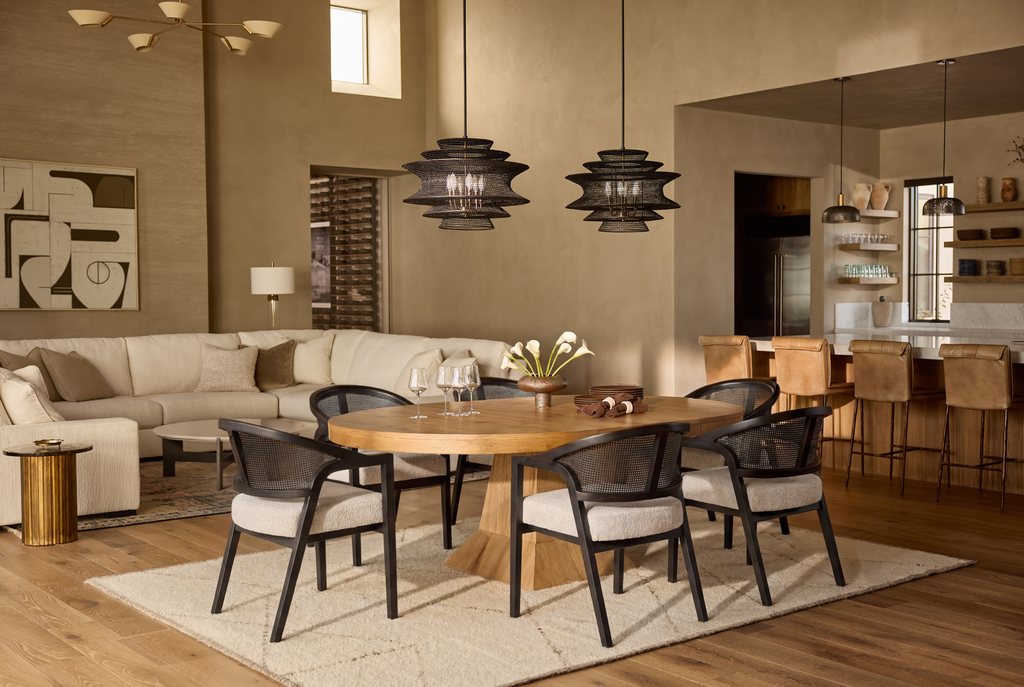
Ashley Luxe collection

Make the Room Livable, and Take One Small First Step

Decor has to work after it is styled. For homes with children or pets, look for washable covers and rugs you can maintain, check care labels, and choose stable objects for busy surfaces. Keep frequently used tables clear enough to use. If a shelf or console feels crowded, remove its objects and add back only those that serve a purpose, hold meaning, or strengthen the room’s palette.

Before you shop, make one quick pass through the spaces you use most:

  • Living room: Does the rug connect the seats? Is the art in proportion to the sofa? Is there useful light near where people read or talk?
  • Bedroom: Do bedding and curtains relate to the bed’s color and shape? Can bedside lamps fit without crowding the nightstands?
  • Dining room: Can chairs move freely, and can people see over or around the centerpiece? Do the table and nearby decor share a color or material cue?
  • Home office: Is the desk clear enough to work? Does task lighting suit the desk, and is there one visual connection to the furniture elsewhere in the room?

If you are not ready for a larger change, start with one washable pillow cover in the accent color you have tested at home. It is a low-commitment way to see that color directly against your upholstery. If a pillow is not useful in your room, choose a similarly small item from Ashley’s home decor selection that adds the texture or finish you identified. Live with that one addition before deciding what the room needs next.
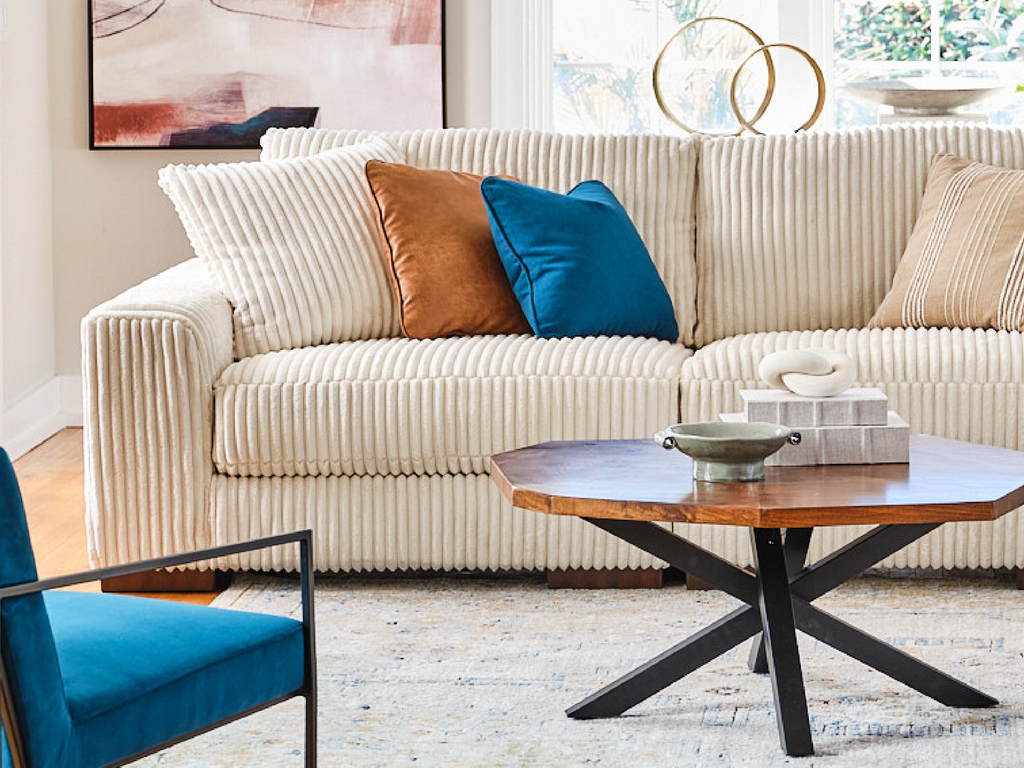
Living room furniture with blue and orange accent color decor
Dining Room Ideas, Entertaining, Outdoor & Patio Ideas Published: October 2, 2026

How to Choose Bar Stools

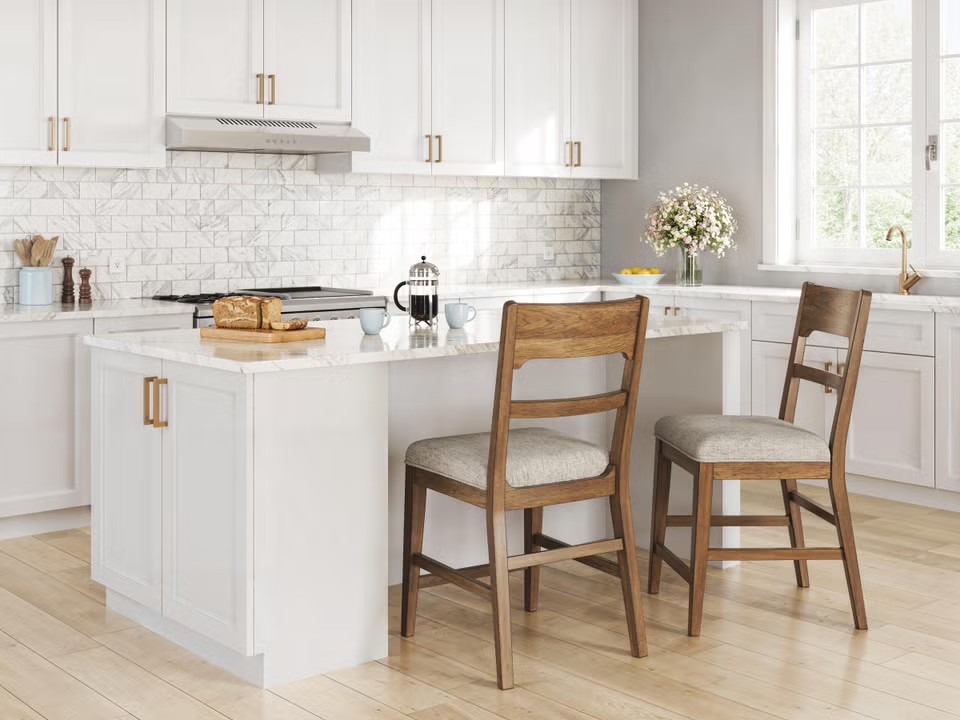
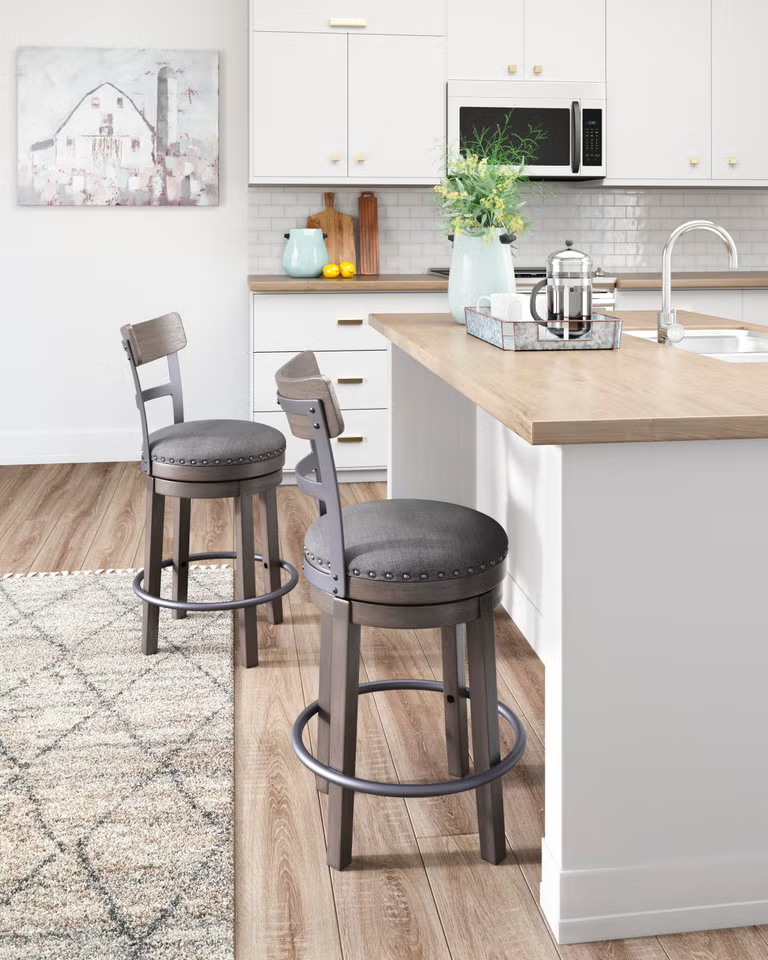
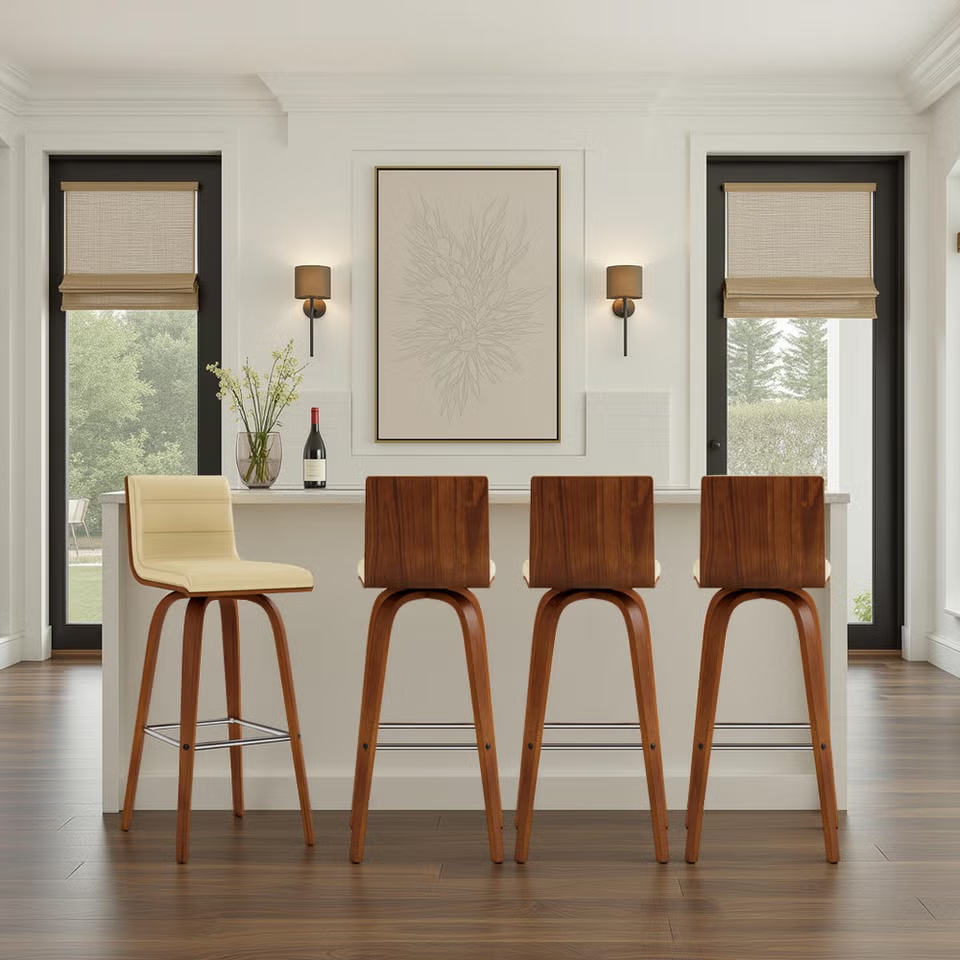
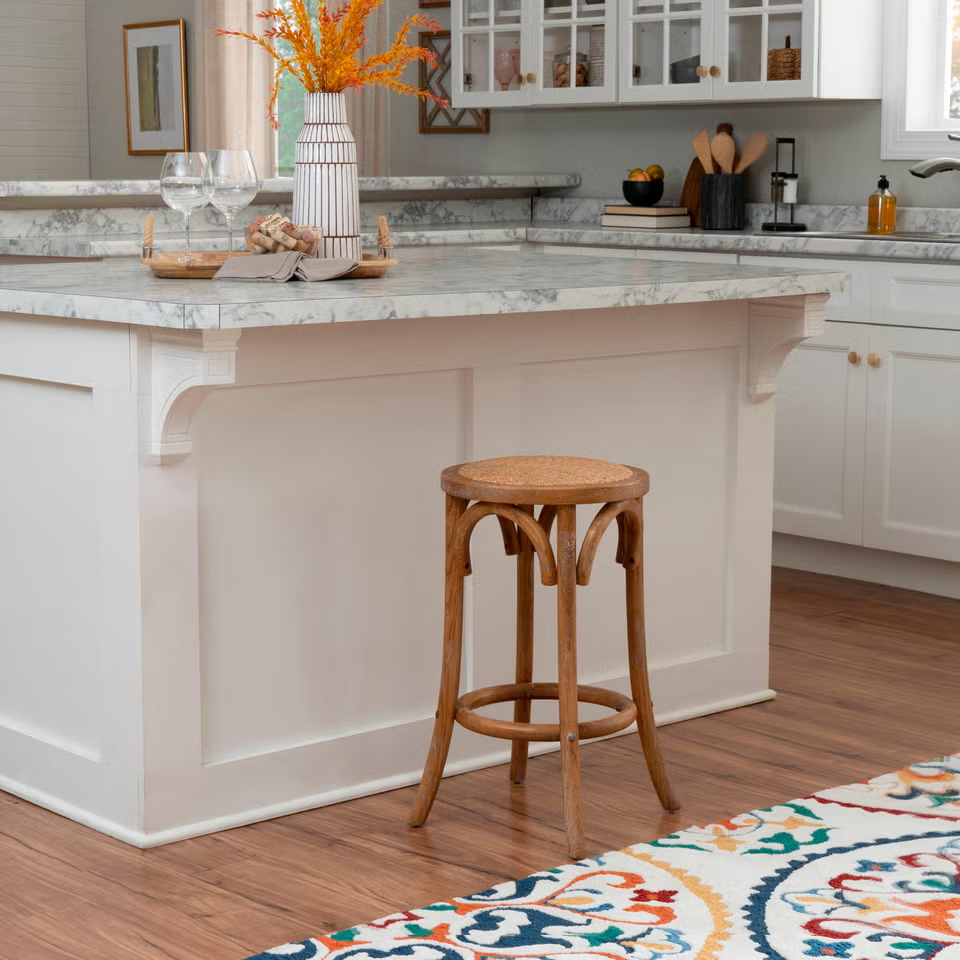
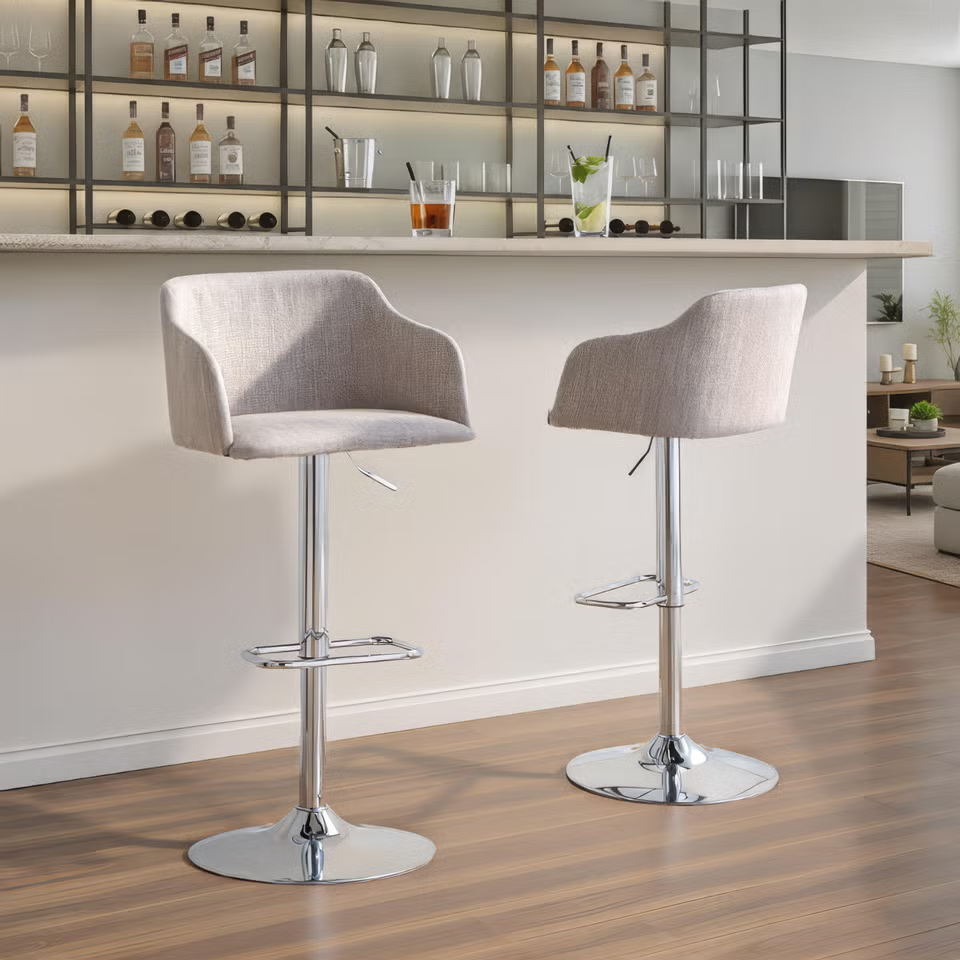
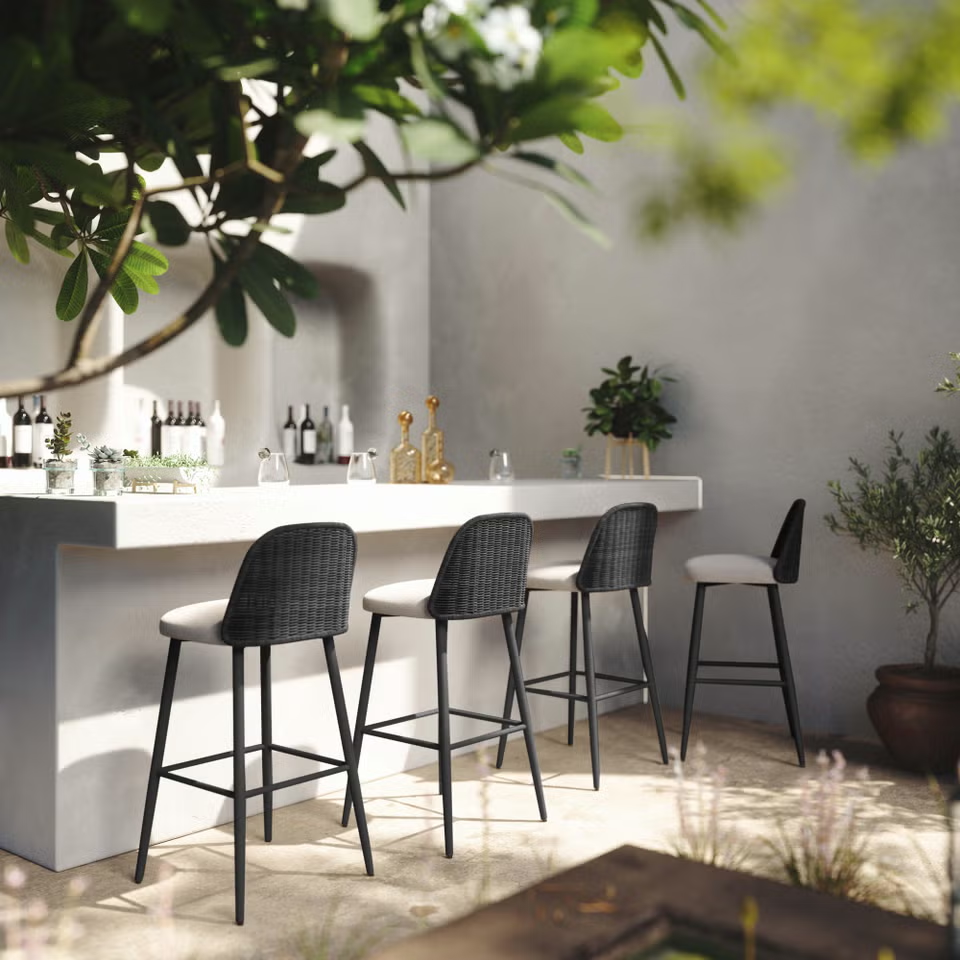
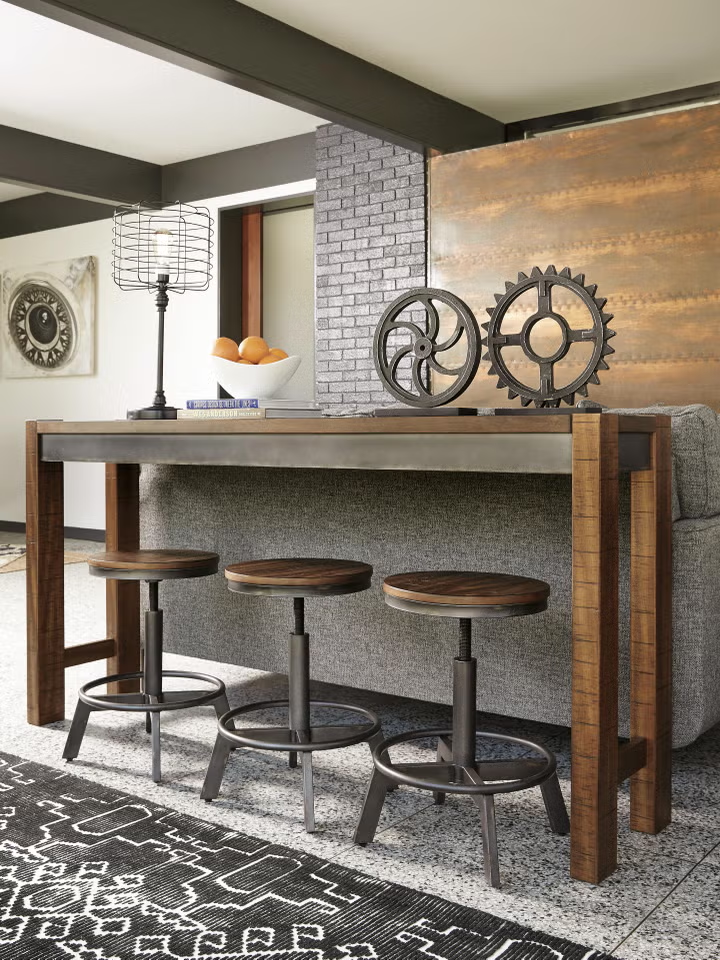
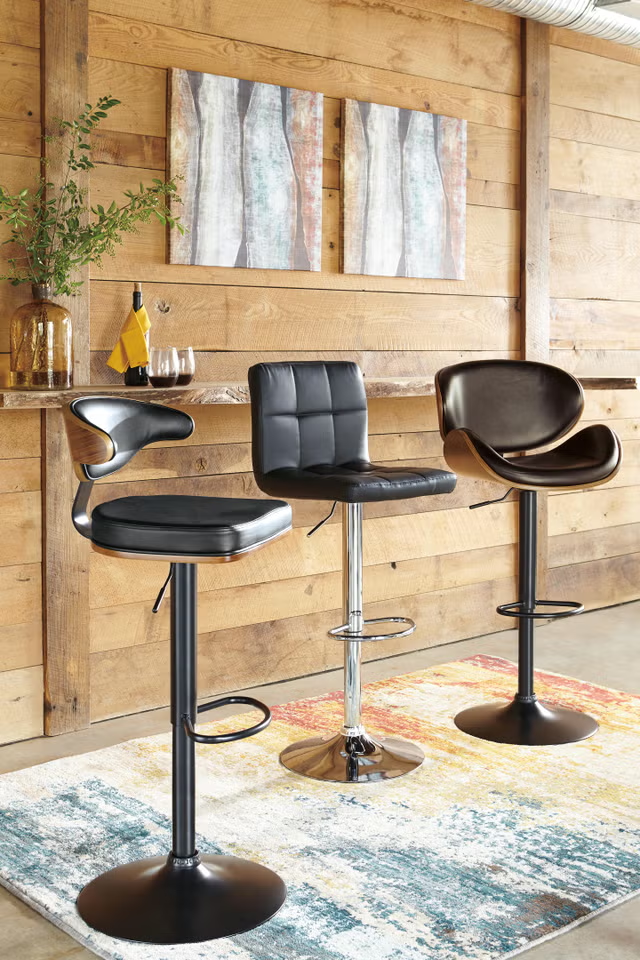
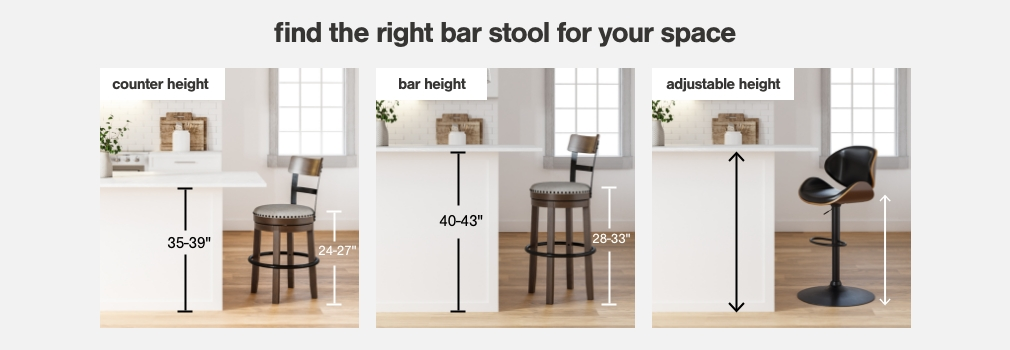
Bar stool examples including counter, bar, and adjustable heights

Key takeaways

  1. Bring three measurements: floor-to-underside height, usable counter length and space behind the seats.
  2. Check leg room, not just the label. Aim for about 9 to 13 inches between the seat and the underside.
  3. Plan stool count first. Use the widest point, allow about 6 inches between stools and leave end space.
  4. Match the back style to use. Backless works for short sits; backs help at dining counters.
  5. Picture the stool in use. Check the footrest, arm clearance, pull-out space and walkway.
  6. Let cleanup guide the material. Compare care instructions and choose an outdoor-rated stool for outdoor counters.

The right bar stools fit your counter and leave people room to sit, move and walk past. Before settling on a finish or back style, measure from the floor to the underside of your counter or bar, then measure the length available for seating. Use those numbers to compare listed stool dimensions, not just “counter height” or “bar height” labels. Once fit is settled, you can choose the seat, materials and silhouette that suit how you use the space.

Cabalynn Counter Height Barstool (Set of 2)

Measure the surface before choosing seat height

A countertop’s advertised height is measured to its top, but your legs occupy the space beneath it. Place a tape measure on the floor and measure straight up to the underside of the overhang where someone will sit. If a thick edge, support bracket or apron hangs lower than the rest of the surface, measure to that lower obstruction. Check more than one spot if the construction changes along the counter.

Next, subtract approximately 9 to 13 inches from the underside height. The result is a useful seat-height range: it leaves space between the seat and the surface for a seated person’s thighs and knees. For example, an underside height of 36 inches suggests a seat around 24 to 27 inches high. At a 42-inch underside, the comparable range is 28 to 33 inches.

This is a starting range, not a promise that every seat within it will feel alike. A thicker cushion may compress when occupied, while a low apron may affect where knees can go even if the seat-to-underside measurement looks right. Someone who prefers more clearance may want a different point in the range, while someone who finds a higher seat difficult to get onto may prefer a lower option. If you can, try a stool near the proposed height at a similar surface before buying a full set.

Also check the overhang’s depth. A surface with little room beyond the cabinet face can force people to sit too far from their plates, regardless of stool height. An overhang of roughly 12 inches is a useful starting point for knee space, but supports, cabinets and individual needs determine whether it feels comfortable in practice.

Bar stool examples including counter, bar, and adjustable heights

Counter height vs. bar height stools

Height labels help narrow a search, but they do not replace measurements. The table shows typical seat heights and approximate underside heights that may work with a 9-to-13-inch leg room gap. The fit ranges overlap because actual surfaces and stools vary.

Counter height bar stoolsBar height bar stools
Typical seat height24 to 27 inches28 to 33 inches
Approximate underside height to check33 to 40 inches37 to 46 inches
Common useKitchen islands Breakfast counters Counter height tablesRaised home bars Pub height tables Higher entertaining counters

A kitchen counter with an underside near 35 or 36 inches will often pair with a counter height stool. A raised bar with an underside near 41 or 42 inches will often call for a bar height stool. Yet a surface near the middle of the overlapping ranges could work with more than one seat height, depending on the person and the stool. Check the product’s listed seat height against your underside measurement before ordering.

The same method applies to a counter height or bar height dining table. Measure beneath the tabletop, including any apron, rather than choosing a stool solely because its label matches the table’s label. For an adjustable height stool, confirm that its usable adjustment range includes your target seat height and that the base feels steady at that setting.

Caitbrook Counter Height Swivel Bar Stool with Contoured Backrest

Work out how many stools will fit

Start with the length of counter where people can sit, not necessarily the island’s full length. A sink, end panel, cabinet support, wall or shallow section of overhang can reduce the usable span. Note which ends are open and which put a sitter beside an obstruction.

Then find the width of the stool you want. Seat width matters for elbow room, but also check the widest point of the arms, back or flared base. If that part keeps neighboring stools from sitting as close together as the seats could, use the wider measurement in your layout.

For a first estimate, leave about 6 inches at each end and about 6 inches between stools. The calculation is:

Total space needed = (number of stools × stool width) + (number of gaps between stools × 6 inches) + 12 inches for the ends.

There is one fewer gap than stools. On a 96-inch seating span, three 18-inch-wide stools need 54 inches for the stools, 12 inches for the two gaps and 12 inches at the ends: 78 inches total. Four would need 102 inches, so they would be too crowded by this estimate. Four 15-inch-wide stools need 90 inches and may fit; three 22-inch-wide stools also need 90 inches.

These numbers are a planning guide, not a universal capacity rule. People may need more elbow room for full meals than for occasional coffee, and an end stool beside a wall can require extra space to get in and out. Before ordering, mark the proposed stool widths and gaps along the counter with painter’s tape. This quickly reveals whether a cabinet door, walkway or corner complicates the tidy arithmetic.

Armen Living Vienna Swivel Bar Stool (Set of 4)

Pick a back style for how long people sit

A stool’s back changes both the experience of sitting and the view across the room. Consider the longest usual session at the counter rather than buying for the rare occasion when every seat is occupied.

Backless bar stools are easy to approach from either side and often tuck farther beneath an overhang. They preserve a clear view across a kitchen island and make sense where people stop briefly for breakfast or a snack. They provide no back support, though, so they may be less appealing at a counter used regularly for homework or dinner. Check overall depth and the counter’s structure before assuming a particular stool will tuck in completely.

Low-back stools keep a relatively open sightline while providing some support. They can be a useful compromise in an open-plan kitchen where the stools are visible from the living area. Back height and shape vary considerably, so a low back is worth trying in person if it will be used for more than quick meals.

Full-back stools generally suit longer meals and conversation, especially when the counter serves as a primary eating area. Their taller silhouettes remain visible above the counter, and their overall depth can take more room when pulled out. Back height alone does not establish how supportive or stable a stool feels: seat depth, back angle, base design, and the sitter all matter.

If several people with different preferences use the counter, focus on the seat that best serves its everyday role. A compact backless stool may be the right choice for a narrow breakfast spot; a backed stool may earn its larger footprint when the island doubles as a dining table.

Lara Counter Height Bar Stool

Choose between swivel and stationary stools

A swivel bar stool lets someone turn toward the room without moving the entire stool. That can be convenient at a counter used for conversation, at an L-shaped layout or where a heavy stool would be awkward to drag. Check that the seat can turn without hitting the counter edge or another stool and consider whether its movement brings knees or arms into nearby obstacles.

A stationary stool has fewer moving components and may feel more predictable in a busy space. It can be a practical choice where you want stools to stay aligned along the island. Still, a stationary stool needs enough space to pull out for entry and exit; it does not solve a tight walkway on its own.

For either design, sit on the stool if possible. Notice whether the seat feels secure when you shift your weight, whether your feet reach the footrest comfortably and whether getting on and off feels natural. If shopping online, compare the listed seat and overall dimensions and review the assembly and care information for the specific model.

Daniella Adjustable Height Bar Stool

Match the bar stool material to your needs

Upholstery can make a hard-edged kitchen feel warmer and a long meal more comfortable. Fabric offers a wide range of textures and colors, but spills may need prompt attention. Leather and faux leather can offer a smoother surface to wipe; they still have different care requirements, so do not assume one cleaner suits both. For a frequently used eating area, consider how easily the seat seams and edges can be cleaned, not just the middle of the cushion.

Wood, metal, vinyl and other smooth-surface seats may be simpler to wipe after everyday meals. That does not make every finish stainproof or every hard seat comfortable for an extended visit. A wood or metal stool with a removable cushion can offer flexibility, provided the cushion fits securely and its care instructions suit your routine. Upholstered bar stools may also be an option but check the specific fabric’s cleaning directions rather than treating the name as a guarantee against stains.

For a patio or outdoor entertaining counter, select outdoor bar stools explicitly intended for outdoor use. Consider what rain, sun and storage will mean for both the frame and any cushion. A material that wipes clean indoors is not automatically suited to prolonged exposure outside; the product’s outdoor-use guidance is the better test.

TOV Furniture Alexa Counter Height Bar Stool

Check footrests, arms, stability, and walking space

A well-measured seat can still disappoint if the details do not fit your space. Footrests matter because many people cannot place their feet flat on the floor at counter height or bar height. Check that the rail is easy to reach and sturdy. If you are considering an adjustable height stool, confirm that the footrest stays comfortable across its height range.

If the stool has arms, compare the arm height with your floor-to-underside measurement. Arms that hit the counter can keep a stool from sliding in. Leave a little extra room instead of relying on an exact fit.

Look at the base as well as the seat. A stool should feel steady when someone sits, shifts, and uses the footrest. Check for levelers on uneven floors, and review weight capacity and assembly details if available.

Finally, measure the space behind the seating area. About 18 to 24 inches can make it easier to pull a stool out and sit down. If people need to walk behind an occupied stool, aim for about 36 inches of clearance.

Map the position of oven and dishwasher doors, refrigerator access and routes through the kitchen. A backless stool can free floor space when not in use, but it cannot make a passage wider while occupied. If the layout is tight, fewer comfortable seats are more useful than an extra stool that blocks the room.

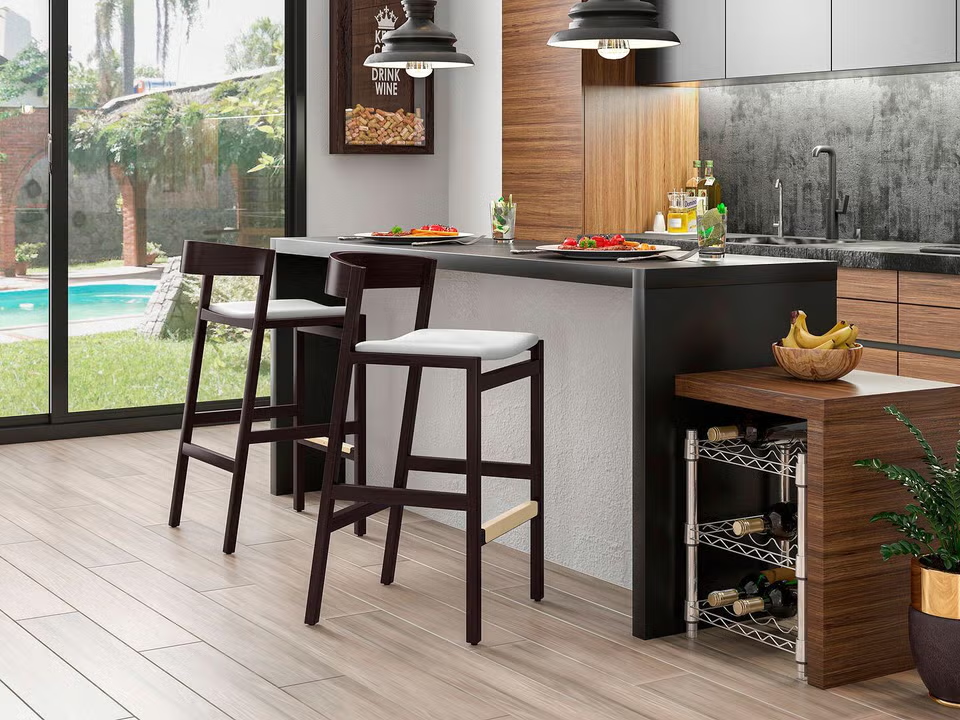
Torjin Adjustable Counter Height Backless Stool (Set of 2)

Coordinate stools without buying a matching set

Once the dimensions work, use the dining area as a reference point rather than a set you must duplicate. Repeating one element, such as a warm wood tone, black metal detail, curved profile, or color family, can connect stools to nearby chairs without making the room look overly uniform.

Silhouette is particularly useful in an open kitchen. Open-frame stools can lighten the look beside a substantial dining table; a more solid stool can give a spacious island visual presence. If the kitchen already has strong cabinet hardware or pendant lights, echoing their finish in a small part of the stool may be enough. View your choice from both the kitchen and the adjoining room, especially if taller backs will sit in the sightline.

Color and finish should also work for everyday use. A pale upholstered seat may suit the palette but require more attention at a frequently used counter. A darker easy-wipe seat can give a similar visual anchor with a different cleaning routine. Browse Ashley’s bar stools with your target seat height, maximum width, and preferred back style in hand; let those limits narrow the style choices rather than the other way around.

Bellatier Adjustable Height Bar Stool with Contoured Back and Seat

Care for the material and check the hardware

Follow the care label for the stool you buy, particularly for upholstery and coated finishes. As a general routine, wipe finished wood with a lightly damp cloth and dry it promptly. Clean metal with a soft cloth and mild soap if the finish permits it and inspect outdoor frames for finish damage or rust.

For fabric, blot spills instead of rubbing and use a cleaner appropriate to its care code. Use products intended for genuine leather only when the manufacturer recommends them; faux leather may call for different care. Smooth vinyl or molded seats typically need a soft cloth and a mild cleaner approved for the surface.

Every few months, check bolts, leg levelers, footrest joints and any swivel mechanism according to the assembly instructions. A developing wobble is a reason to inspect the stool before continuing to use it. Routine checks are especially worthwhile for seats that see daily use.

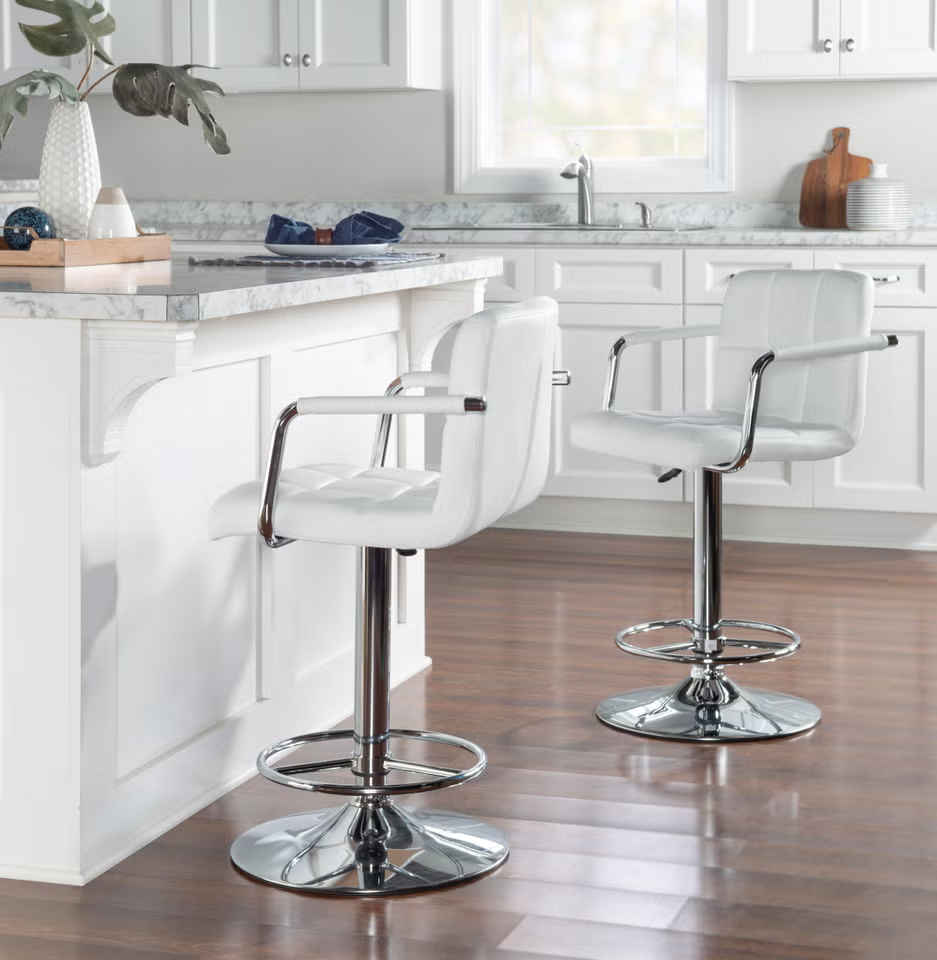
Chrome Quilted Adjustable Height Bar Stool

Bar stool pre-purchase checklist

Take your measurements to the product listing and compare them with the specific stool, not a size category or product photo:

  1. Surface fit: Record floor-to-underside height at the lowest relevant edge, then find a listed seat height that leaves approximately 9 to 13 inches of leg room. Check overhang depth and knee obstructions.
  2. Quantity: Measure usable seating length. Compare it with each stool’s seat width and widest overall point, allowing about 6 inches between stools and space at both ends.
  3. Room to move: Check the stool’s overall depth, room to pull it out and the route behind an occupied seat. Account for appliances and doors that open into that route.
  4. Daily comfort: Choose a back for the usual sitting duration; check footrest position, arm-to-counter clearance, base stability, and any available weight-capacity information.
  5. Everyday fit: Decide whether swivel movement helps or complicates the layout. Match upholstery or easy-wipe materials to your cleaning routine and verify outdoor suitability where needed.
  6. Final comparison: Confirm the listed dimensions, finish, care instructions and assembly details before placing an order.

The right choice is not necessarily the narrowest stool that will fit or the largest set that can line an island. It is the combination that gives each person usable leg room, a comfortable seat, and a clear way through the room.

Manhattan Comfort Klismos Counter Height Bar Stool (Set of 2)
Dining Room Ideas, Home Decor & Furniture Published: August 19, 2019 | Updated: October 9, 2020

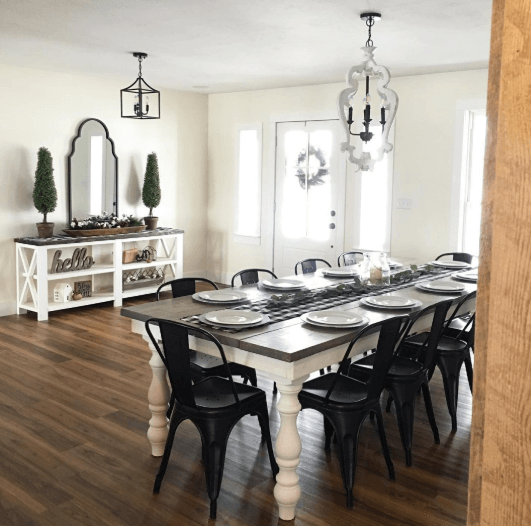
Caitlin Jarrell’s Family Find Farmhouse Dining

The dining area is a place of family togetherness. It is where memories are made and moments are shared with our families. In many homes, the dining area is the center of the home. We recount our days, tell stories, and spend time with loved ones. This is why we wanted to give the dining room some love in our next Mane + Mason collaboration!