
Key takeaways
- Bring three measurements: floor-to-underside height, usable counter length and space behind the seats.
- Check leg room, not just the label. Aim for about 9 to 13 inches between the seat and the underside.
- Plan stool count first. Use the widest point, allow about 6 inches between stools and leave end space.
- Match the back style to use. Backless works for short sits; backs help at dining counters.
- Picture the stool in use. Check the footrest, arm clearance, pull-out space and walkway.
- Let cleanup guide the material. Compare care instructions and choose an outdoor-rated stool for outdoor counters.
The right bar stools fit your counter and leave people room to sit, move and walk past. Before settling on a finish or back style, measure from the floor to the underside of your counter or bar, then measure the length available for seating. Use those numbers to compare listed stool dimensions, not just “counter height” or “bar height” labels. Once fit is settled, you can choose the seat, materials and silhouette that suit how you use the space.
Measure the surface before choosing seat height
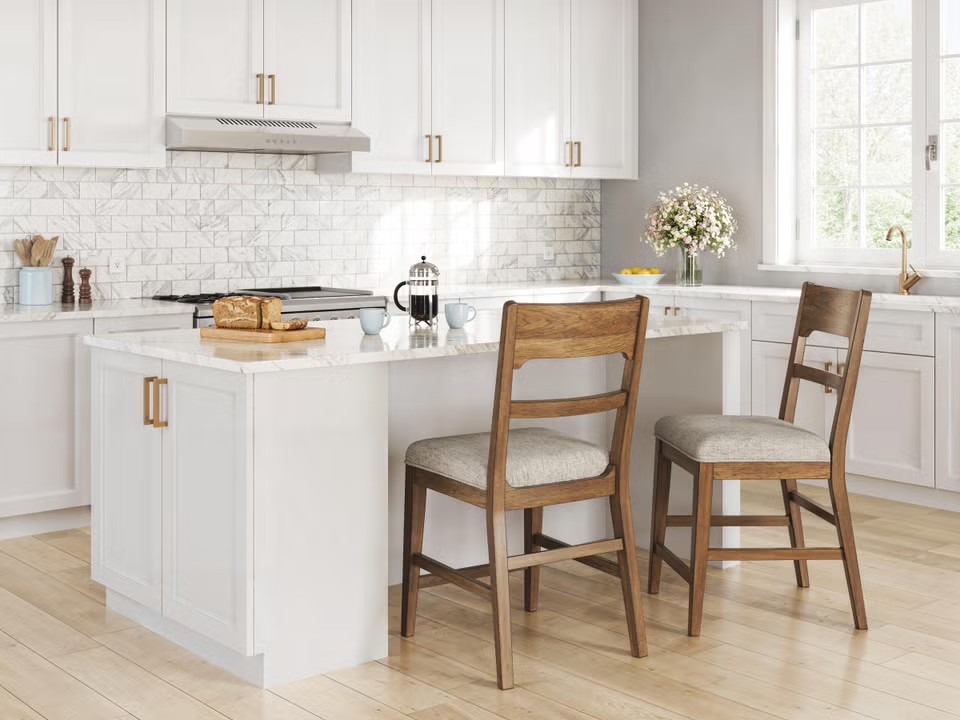
A countertop’s advertised height is measured to its top, but your legs occupy the space beneath it. Place a tape measure on the floor and measure straight up to the underside of the overhang where someone will sit. If a thick edge, support bracket or apron hangs lower than the rest of the surface, measure to that lower obstruction. Check more than one spot if the construction changes along the counter.
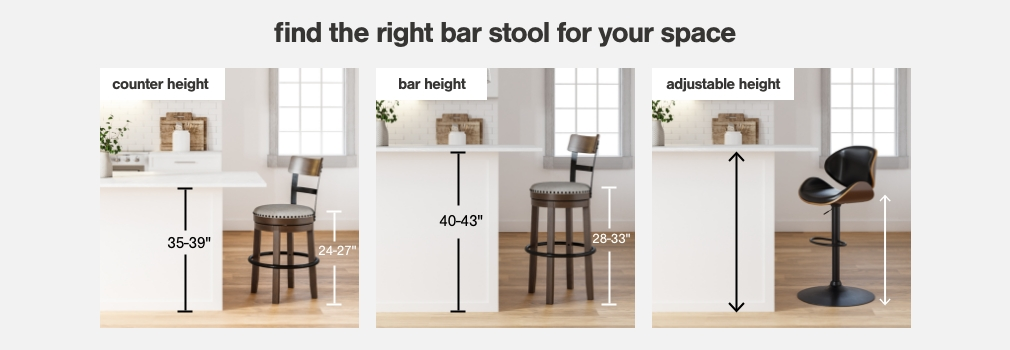
Next, subtract approximately 9 to 13 inches from the underside height. The result is a useful seat-height range: it leaves space between the seat and the surface for a seated person’s thighs and knees. For example, an underside height of 36 inches suggests a seat around 24 to 27 inches high. At a 42-inch underside, the comparable range is 28 to 33 inches.
This is a starting range, not a promise that every seat within it will feel alike. A thicker cushion may compress when occupied, while a low apron may affect where knees can go even if the seat-to-underside measurement looks right. Someone who prefers more clearance may want a different point in the range, while someone who finds a higher seat difficult to get onto may prefer a lower option. If you can, try a stool near the proposed height at a similar surface before buying a full set.
Also check the overhang’s depth. A surface with little room beyond the cabinet face can force people to sit too far from their plates, regardless of stool height. An overhang of roughly 12 inches is a useful starting point for knee space, but supports, cabinets and individual needs determine whether it feels comfortable in practice.
Counter height vs. bar height stools
Height labels help narrow a search, but they do not replace measurements. The table shows typical seat heights and approximate underside heights that may work with a 9-to-13-inch leg room gap. The fit ranges overlap because actual surfaces and stools vary.
| Counter height bar stools | Bar height bar stools | |
| Typical seat height | 24 to 27 inches | 28 to 33 inches |
| Approximate underside height to check | 33 to 40 inches | 37 to 46 inches |
| Common use | Kitchen islands Breakfast counters Counter height tables | Raised home bars Pub height tables Higher entertaining counters |
A kitchen counter with an underside near 35 or 36 inches will often pair with a counter height stool. A raised bar with an underside near 41 or 42 inches will often call for a bar height stool. Yet a surface near the middle of the overlapping ranges could work with more than one seat height, depending on the person and the stool. Check the product’s listed seat height against your underside measurement before ordering.
The same method applies to a counter height or bar height dining table. Measure beneath the tabletop, including any apron, rather than choosing a stool solely because its label matches the table’s label. For an adjustable height stool, confirm that its usable adjustment range includes your target seat height and that the base feels steady at that setting.
Work out how many stools will fit
Start with the length of counter where people can sit, not necessarily the island’s full length. A sink, end panel, cabinet support, wall or shallow section of overhang can reduce the usable span. Note which ends are open and which put a sitter beside an obstruction.
Then find the width of the stool you want. Seat width matters for elbow room, but also check the widest point of the arms, back or flared base. If that part keeps neighboring stools from sitting as close together as the seats could, use the wider measurement in your layout.
For a first estimate, leave about 6 inches at each end and about 6 inches between stools. The calculation is:
Total space needed = (number of stools × stool width) + (number of gaps between stools × 6 inches) + 12 inches for the ends.
There is one fewer gap than stools. On a 96-inch seating span, three 18-inch-wide stools need 54 inches for the stools, 12 inches for the two gaps and 12 inches at the ends: 78 inches total. Four would need 102 inches, so they would be too crowded by this estimate. Four 15-inch-wide stools need 90 inches and may fit; three 22-inch-wide stools also need 90 inches.
These numbers are a planning guide, not a universal capacity rule. People may need more elbow room for full meals than for occasional coffee, and an end stool beside a wall can require extra space to get in and out. Before ordering, mark the proposed stool widths and gaps along the counter with painter’s tape. This quickly reveals whether a cabinet door, walkway or corner complicates the tidy arithmetic.
Pick a back style for how long people sit
A stool’s back changes both the experience of sitting and the view across the room. Consider the longest usual session at the counter rather than buying for the rare occasion when every seat is occupied.
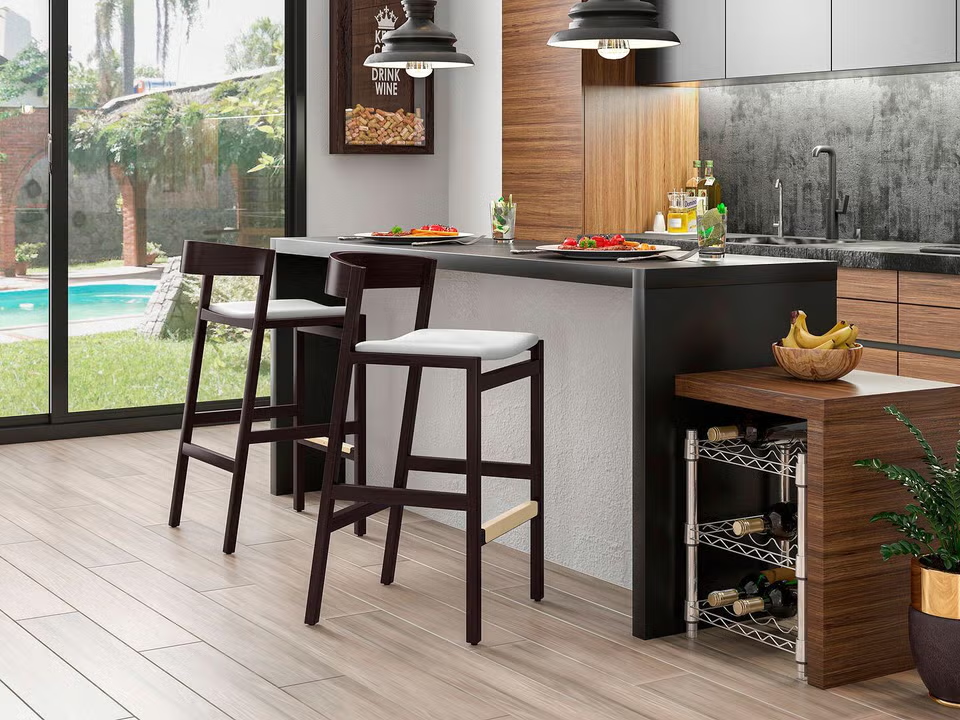
Backless bar stools are easy to approach from either side and often tuck farther beneath an overhang. They preserve a clear view across a kitchen island and make sense where people stop briefly for breakfast or a snack. They provide no back support, though, so they may be less appealing at a counter used regularly for homework or dinner. Check overall depth and the counter’s structure before assuming a particular stool will tuck in completely.
Low-back stools keep a relatively open sightline while providing some support. They can be a useful compromise in an open-plan kitchen where the stools are visible from the living area. Back height and shape vary considerably, so a low back is worth trying in person if it will be used for more than quick meals.
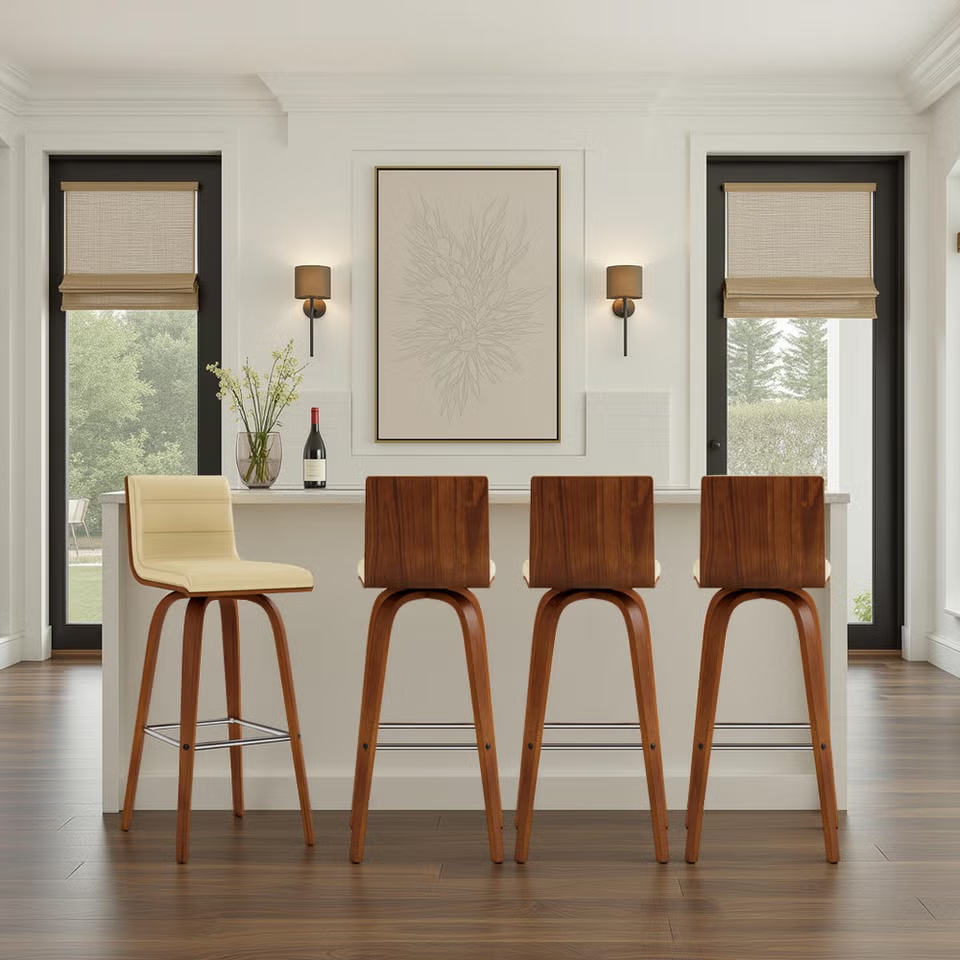
Full-back stools generally suit longer meals and conversation, especially when the counter serves as a primary eating area. Their taller silhouettes remain visible above the counter, and their overall depth can take more room when pulled out. Back height alone does not establish how supportive or stable a stool feels: seat depth, back angle, base design, and the sitter all matter.
If several people with different preferences use the counter, focus on the seat that best serves its everyday role. A compact backless stool may be the right choice for a narrow breakfast spot; a backed stool may earn its larger footprint when the island doubles as a dining table.
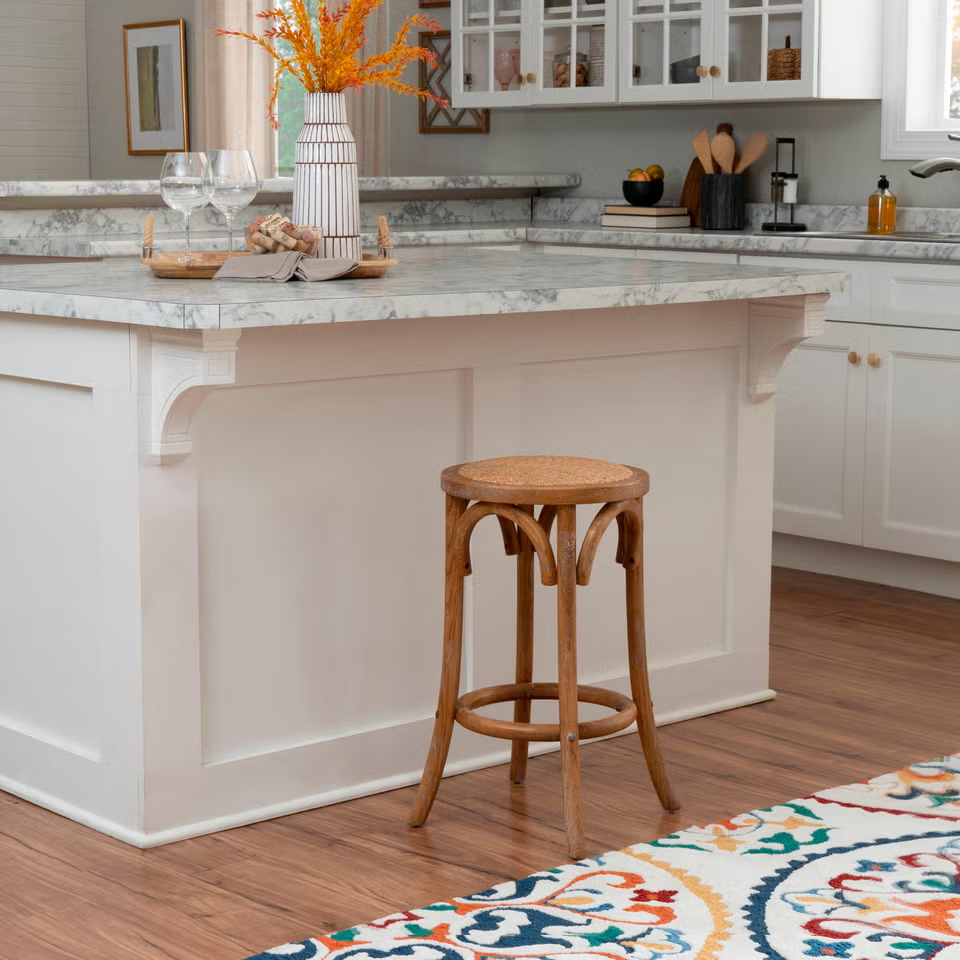
Choose between swivel and stationary stools
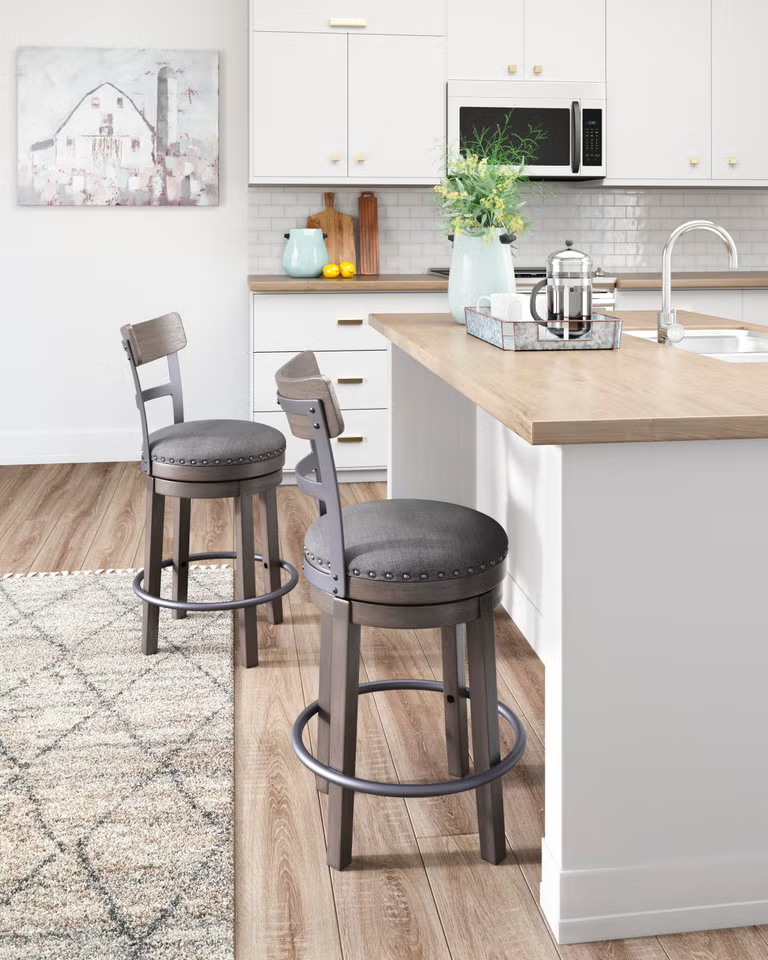
A swivel bar stool lets someone turn toward the room without moving the entire stool. That can be convenient at a counter used for conversation, at an L-shaped layout or where a heavy stool would be awkward to drag. Check that the seat can turn without hitting the counter edge or another stool and consider whether its movement brings knees or arms into nearby obstacles.
A stationary stool has fewer moving components and may feel more predictable in a busy space. It can be a practical choice where you want stools to stay aligned along the island. Still, a stationary stool needs enough space to pull out for entry and exit; it does not solve a tight walkway on its own.
For either design, sit on the stool if possible. Notice whether the seat feels secure when you shift your weight, whether your feet reach the footrest comfortably and whether getting on and off feels natural. If shopping online, compare the listed seat and overall dimensions and review the assembly and care information for the specific model.
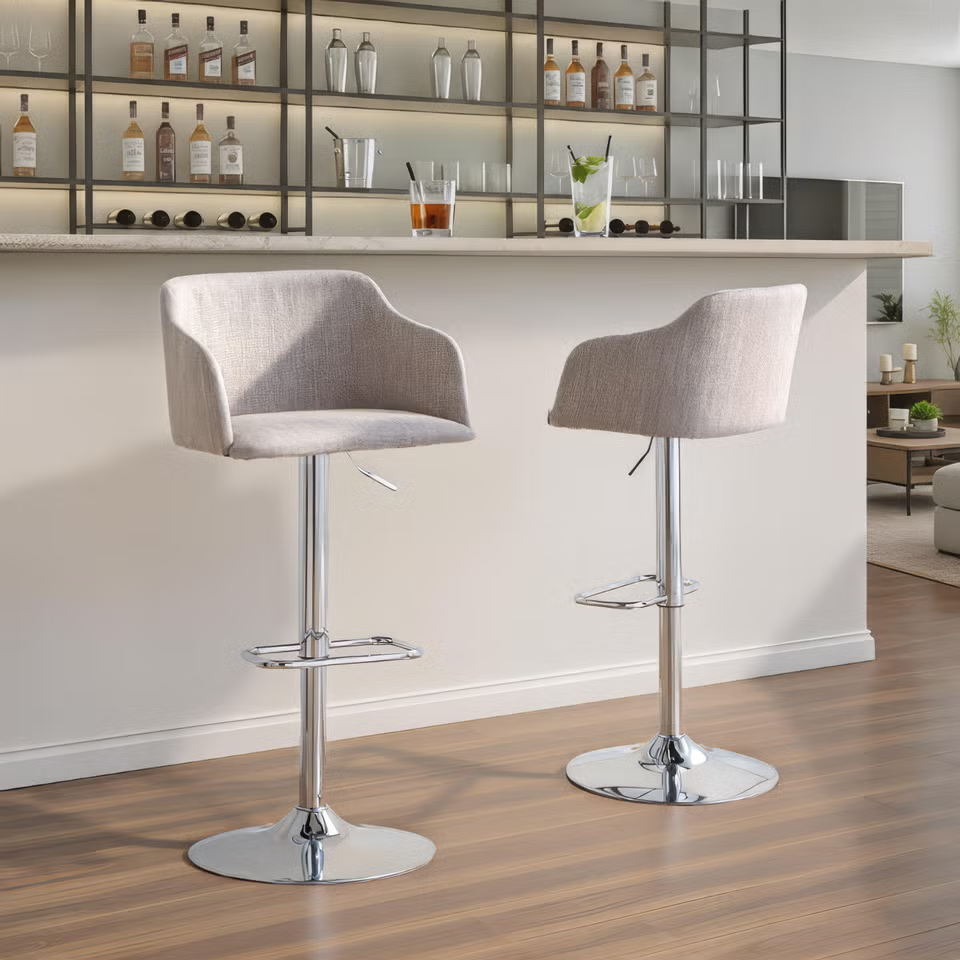
Match the bar stool material to your needs
Upholstery can make a hard-edged kitchen feel warmer and a long meal more comfortable. Fabric offers a wide range of textures and colors, but spills may need prompt attention. Leather and faux leather can offer a smoother surface to wipe; they still have different care requirements, so do not assume one cleaner suits both. For a frequently used eating area, consider how easily the seat seams and edges can be cleaned, not just the middle of the cushion.
Wood, metal, vinyl and other smooth-surface seats may be simpler to wipe after everyday meals. That does not make every finish stainproof or every hard seat comfortable for an extended visit. A wood or metal stool with a removable cushion can offer flexibility, provided the cushion fits securely and its care instructions suit your routine. Upholstered bar stools may also be an option but check the specific fabric’s cleaning directions rather than treating the name as a guarantee against stains.
For a patio or outdoor entertaining counter, select outdoor bar stools explicitly intended for outdoor use. Consider what rain, sun and storage will mean for both the frame and any cushion. A material that wipes clean indoors is not automatically suited to prolonged exposure outside; the product’s outdoor-use guidance is the better test.
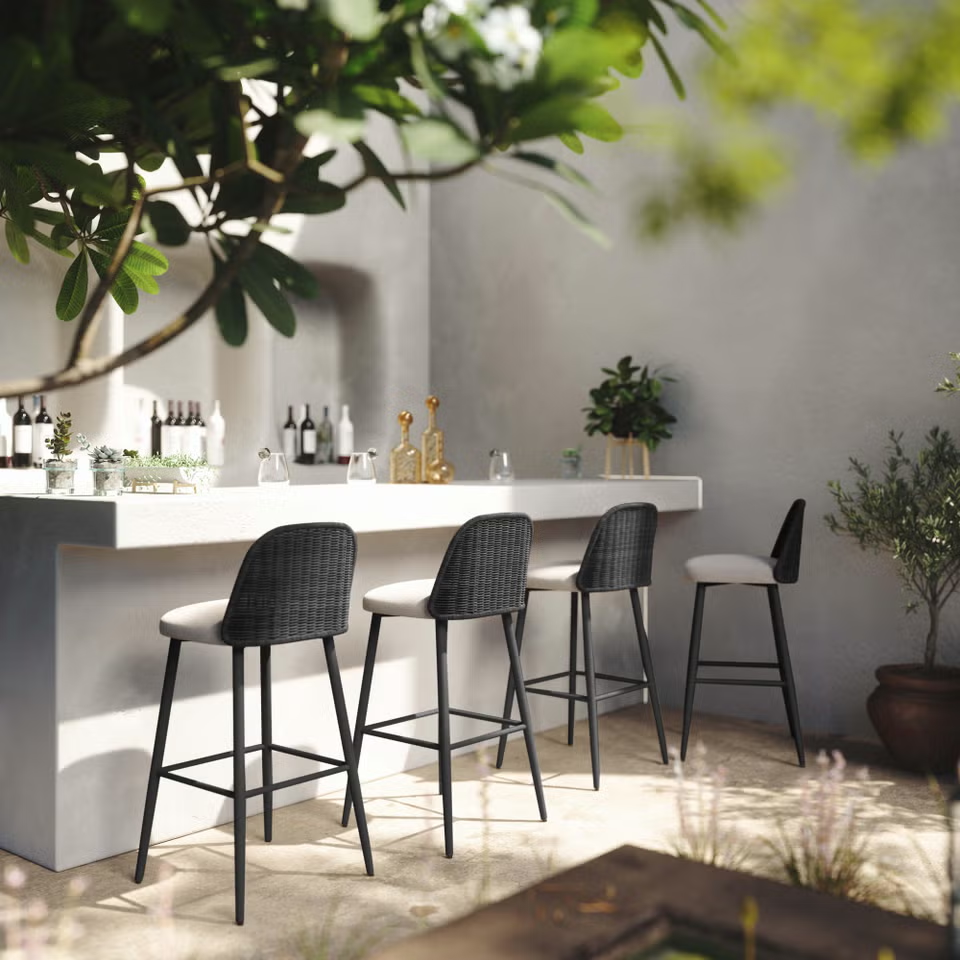
Check footrests, arms, stability, and walking space
A well-measured seat can still disappoint if the details do not fit your space. Footrests matter because many people cannot place their feet flat on the floor at counter height or bar height. Check that the rail is easy to reach and sturdy. If you are considering an adjustable height stool, confirm that the footrest stays comfortable across its height range.
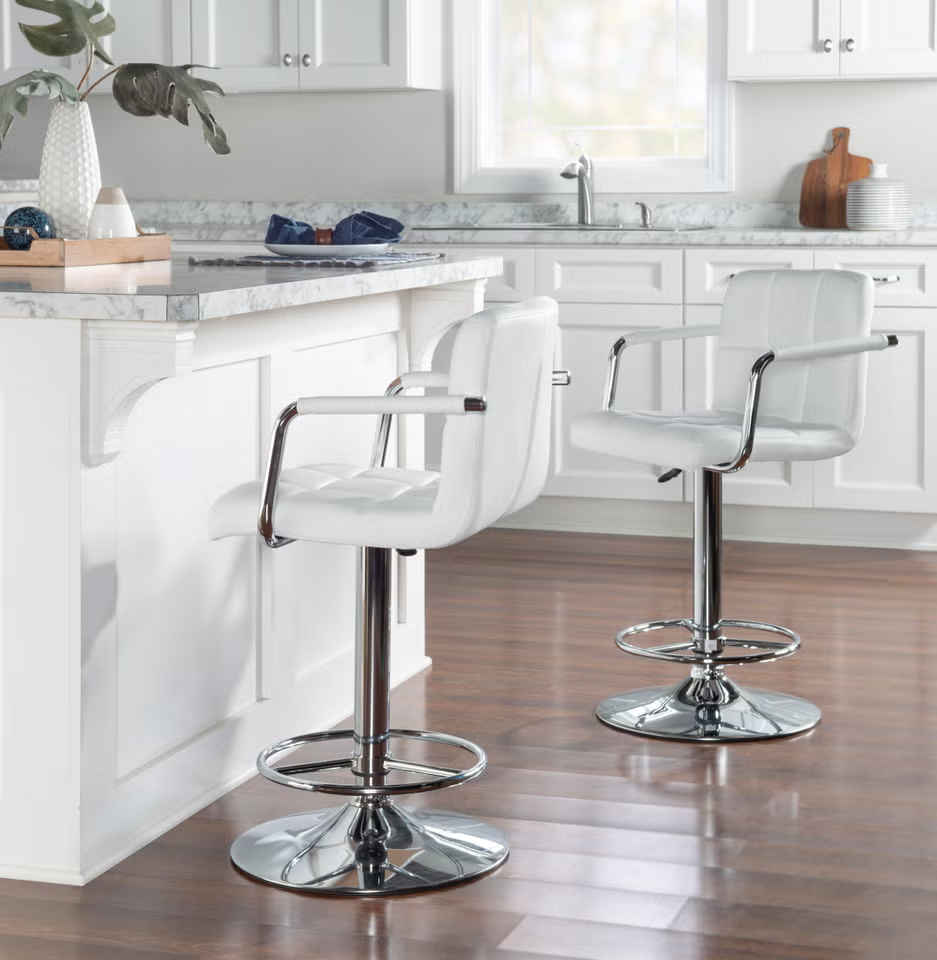
If the stool has arms, compare the arm height with your floor-to-underside measurement. Arms that hit the counter can keep a stool from sliding in. Leave a little extra room instead of relying on an exact fit.
Look at the base as well as the seat. A stool should feel steady when someone sits, shifts, and uses the footrest. Check for levelers on uneven floors, and review weight capacity and assembly details if available.
Finally, measure the space behind the seating area. About 18 to 24 inches can make it easier to pull a stool out and sit down. If people need to walk behind an occupied stool, aim for about 36 inches of clearance.
Map the position of oven and dishwasher doors, refrigerator access and routes through the kitchen. A backless stool can free floor space when not in use, but it cannot make a passage wider while occupied. If the layout is tight, fewer comfortable seats are more useful than an extra stool that blocks the room.
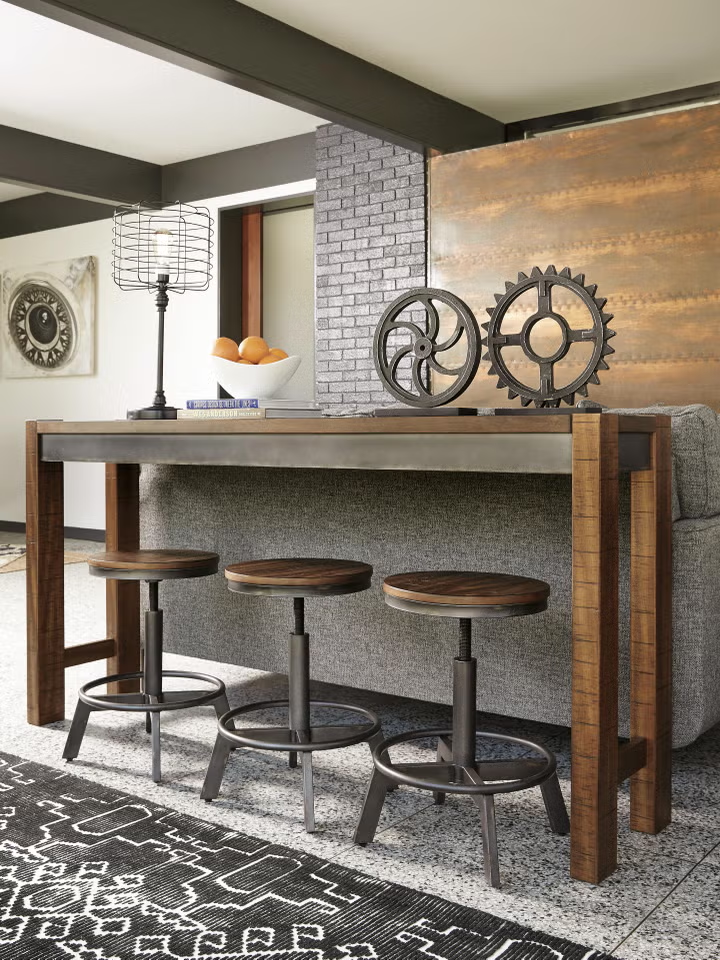
Coordinate stools without buying a matching set
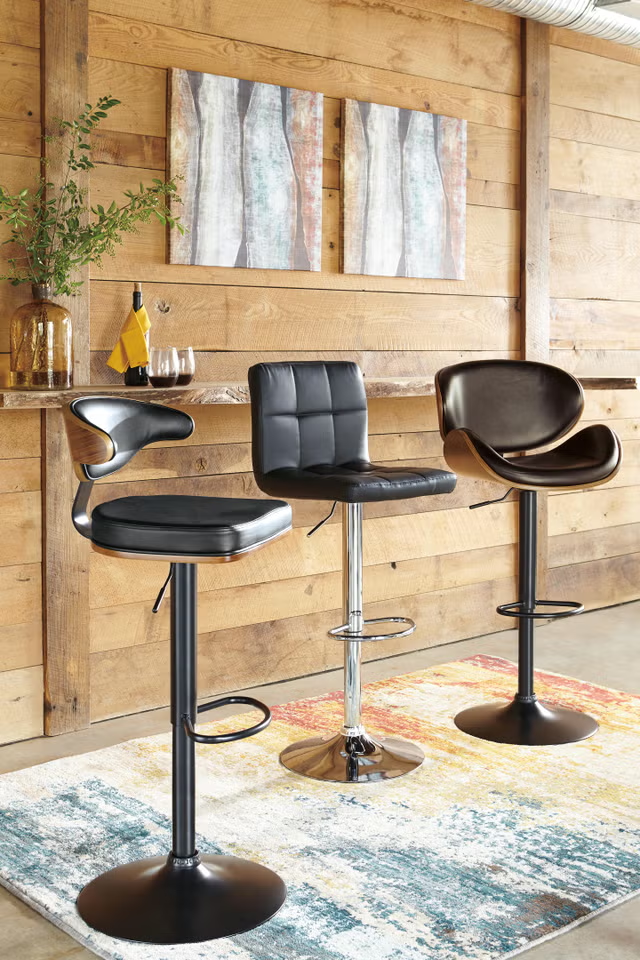
Once the dimensions work, use the dining area as a reference point rather than a set you must duplicate. Repeating one element, such as a warm wood tone, black metal detail, curved profile, or color family, can connect stools to nearby chairs without making the room look overly uniform.
Silhouette is particularly useful in an open kitchen. Open-frame stools can lighten the look beside a substantial dining table; a more solid stool can give a spacious island visual presence. If the kitchen already has strong cabinet hardware or pendant lights, echoing their finish in a small part of the stool may be enough. View your choice from both the kitchen and the adjoining room, especially if taller backs will sit in the sightline.
Color and finish should also work for everyday use. A pale upholstered seat may suit the palette but require more attention at a frequently used counter. A darker easy-wipe seat can give a similar visual anchor with a different cleaning routine. Browse Ashley’s bar stools with your target seat height, maximum width, and preferred back style in hand; let those limits narrow the style choices rather than the other way around.
Care for the material and check the hardware
Follow the care label for the stool you buy, particularly for upholstery and coated finishes. As a general routine, wipe finished wood with a lightly damp cloth and dry it promptly. Clean metal with a soft cloth and mild soap if the finish permits it and inspect outdoor frames for finish damage or rust.
For fabric, blot spills instead of rubbing and use a cleaner appropriate to its care code. Use products intended for genuine leather only when the manufacturer recommends them; faux leather may call for different care. Smooth vinyl or molded seats typically need a soft cloth and a mild cleaner approved for the surface.
Every few months, check bolts, leg levelers, footrest joints and any swivel mechanism according to the assembly instructions. A developing wobble is a reason to inspect the stool before continuing to use it. Routine checks are especially worthwhile for seats that see daily use.
Bar stool pre-purchase checklist
Take your measurements to the product listing and compare them with the specific stool, not a size category or product photo:
- Surface fit: Record floor-to-underside height at the lowest relevant edge, then find a listed seat height that leaves approximately 9 to 13 inches of leg room. Check overhang depth and knee obstructions.
- Quantity: Measure usable seating length. Compare it with each stool’s seat width and widest overall point, allowing about 6 inches between stools and space at both ends.
- Room to move: Check the stool’s overall depth, room to pull it out and the route behind an occupied seat. Account for appliances and doors that open into that route.
- Daily comfort: Choose a back for the usual sitting duration; check footrest position, arm-to-counter clearance, base stability, and any available weight-capacity information.
- Everyday fit: Decide whether swivel movement helps or complicates the layout. Match upholstery or easy-wipe materials to your cleaning routine and verify outdoor suitability where needed.
- Final comparison: Confirm the listed dimensions, finish, care instructions and assembly details before placing an order.
The right choice is not necessarily the narrowest stool that will fit or the largest set that can line an island. It is the combination that gives each person usable leg room, a comfortable seat, and a clear way through the room.