
Browsing Tag

how to guide

All Posts, Bedroom Ideas, Dining Room Ideas, Guides, Home Accessories Ideas, How To, Ideas & Trends, Living Room Ideas October 7, 2026

How to Choose Decor That Matches Your Furniture

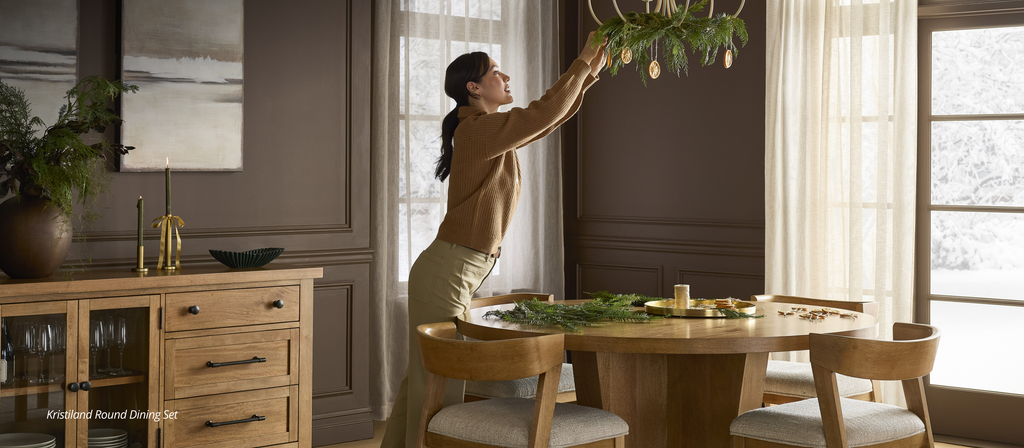
Kristiland Dining Table and 4 Chairs

Key Takeaways

  1. Start with the furniture you plan to keep. Note its undertone, materials, shape, and visual weight before shopping.
  2. Choose a color relationship, tonal, complementary, or neutral with an accent, instead of trying to match every shade exactly.
  3. Repeat a wood tone or metal finish in a small detail when you want a mixed material to feel intentional.
  4. Measure the furniture arrangement before choosing a rug, art, or lamp; the right scale depends on how you use the room.
  5. Add texture first, then a few patterns that share a color. Leave useful surfaces and sight lines clear.
  6. Test colors in your own daylight and evening light. If you want to begin small, try one washable pillow cover in your chosen accent.

The answer to how to choose decor that matches your furniture is to coordinate, not copy. Begin with an existing piece that sets the tone for the room, observe its color, shape, finish, and scale, then choose home decor that relates to one or two of those qualities. A rug might pick up the warmth of a wood table without being brown; a curved lamp might soften a square sofa rather than mimic it. These connections make a room feel cohesive without making it look like a matching set.
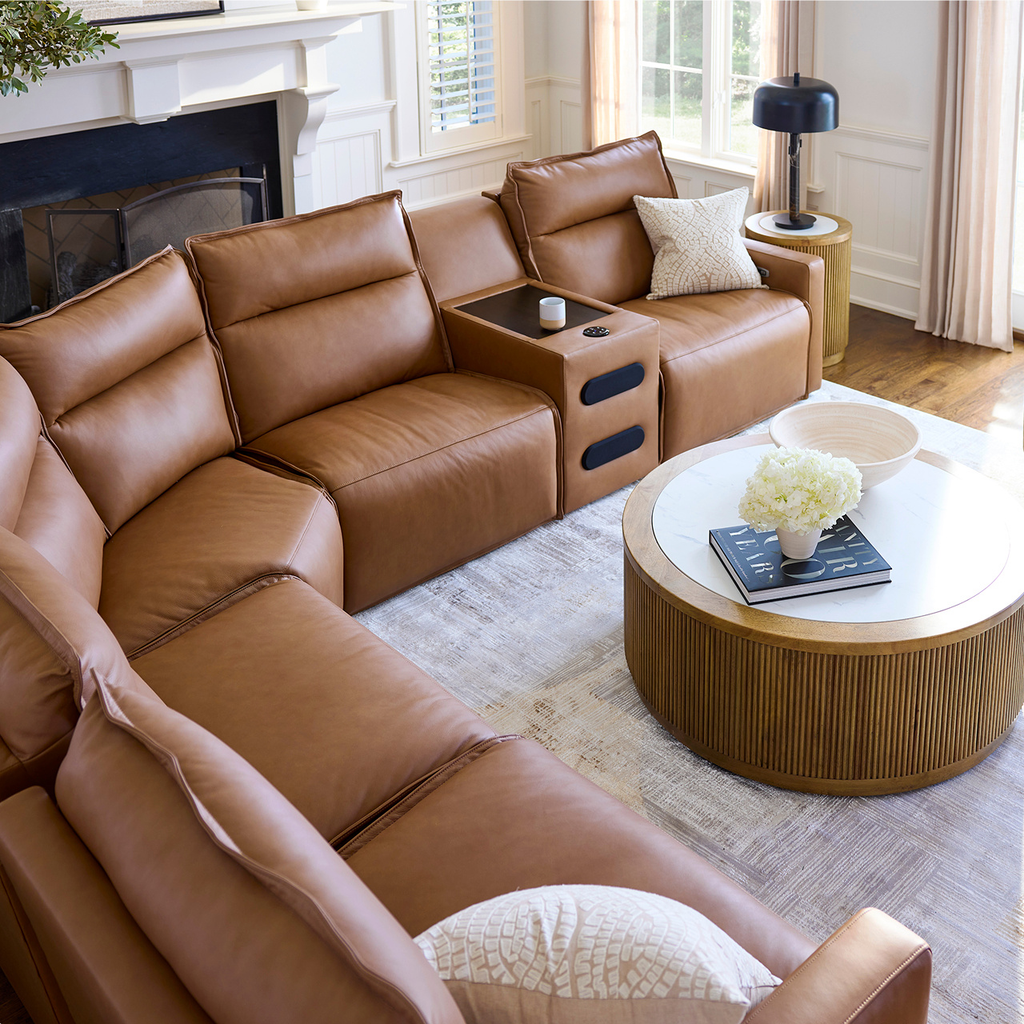
Ashley Luxe inspired living room

Start With the Furniture You Already Own

Choose the piece that has the greatest visual influence or that you are least likely to replace. It might be a sofa, bed, dining table, or large cabinet. If you have several contenders, start with the one that occupies the most space in your view from the doorway. You can still account for the others as you build the room palette.

Look at your anchor in the room, during the day and with the lights you normally use at night. Write down four observations:

  • Color and undertone: Is the surface warm, cool, or fairly neutral? Gray upholstery can lean blue or green; brown wood can lean red or golden. Compare a fabric or finish sample with other colors in the room rather than trusting a product photo. A white sheet of paper beside the surface may make a subtle cast easier to notice.
  • Material and sheen: Is it matte linen, smooth leather, textured wood, reflective metal, or a combination? Contrasting textures can add depth, while repeating a material in a smaller accessory creates a connection.
  • Shape: Are its lines mostly straight, rounded, tailored, or soft? This helps you decide whether the room needs an echo or a counterpoint.
  • Visual weight: A dark sectional with a deep seat looks heavier than an open-legged loveseat of similar width. Consider both its physical size and how much visual space it takes up.

You do not need every purchase to satisfy all four observations. If a pillow shares the sofa’s undertone, for instance, its contrasting texture may be what makes the pairing interesting. Use the observations as a filter for choices, not a requirement to assemble a set.
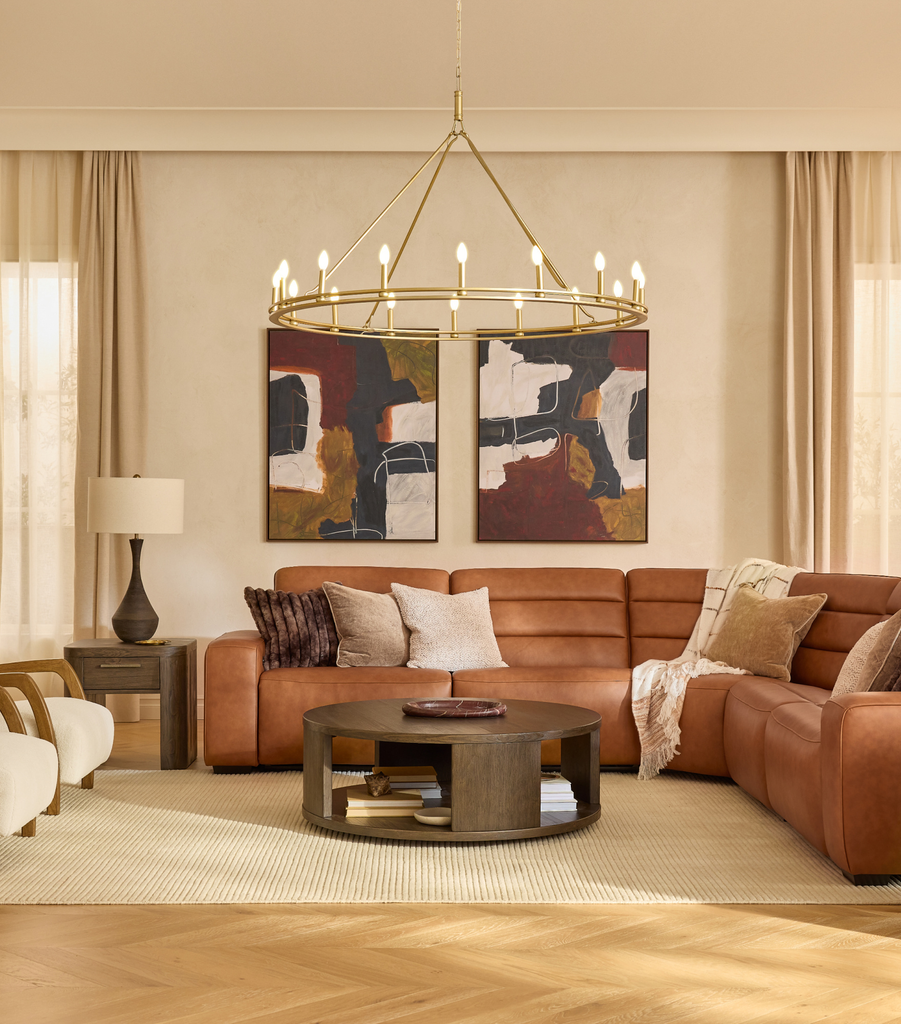
Ashley Luxe Modero 6-Piece Reclining Leather L-Shaped Modular Sectional

Choose a Color Relationship, Not an Exact Match

Pick a small palette before buying accessories: the anchor’s main color, one supporting neutral, and an accent. Include another color only if it has a job to do, such as connecting a patterned rug to existing art. The three approaches below offer different ways to make those colors work together.

Tonal: For a Quiet Room With Depth

A tonal palette stays within one color family while varying lightness and saturation. With a camel sofa, you might use ivory curtains, a deeper brown frame, and a muted terracotta pillow. The colors need not be identical; their shared warmth is the link. This approach is useful when you like a calm room or already own several warm neutrals. Vary the surfaces, too, a smooth leather seat beside a woven throw keeps similar colors from blending into one flat area.
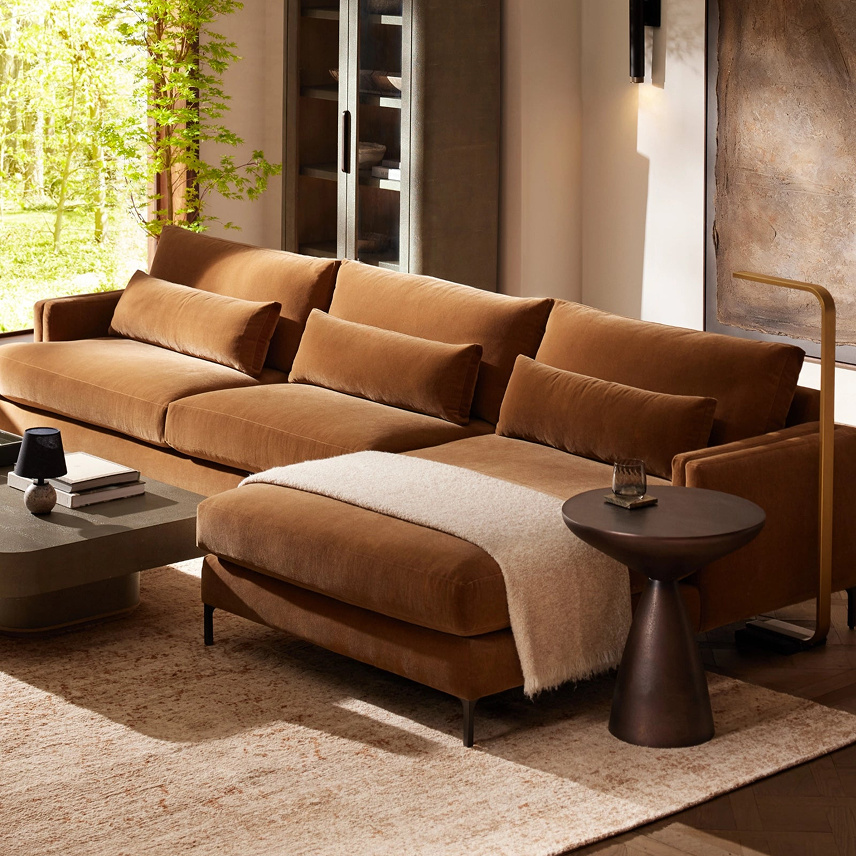
Brown tonal palette living room

Complementary: For Controlled Contrast

Complementary colors sit opposite each other on the color wheel. A navy sofa, for example, can work with a small amount of muted orange in art or pillows. The contrast gives a colorful anchor energy without requiring another large, saturated piece. This works best when the furniture is already a clear color and you want to emphasize it. You can soften the effect by choosing a muted version of the complement and letting neutrals occupy the larger surfaces.
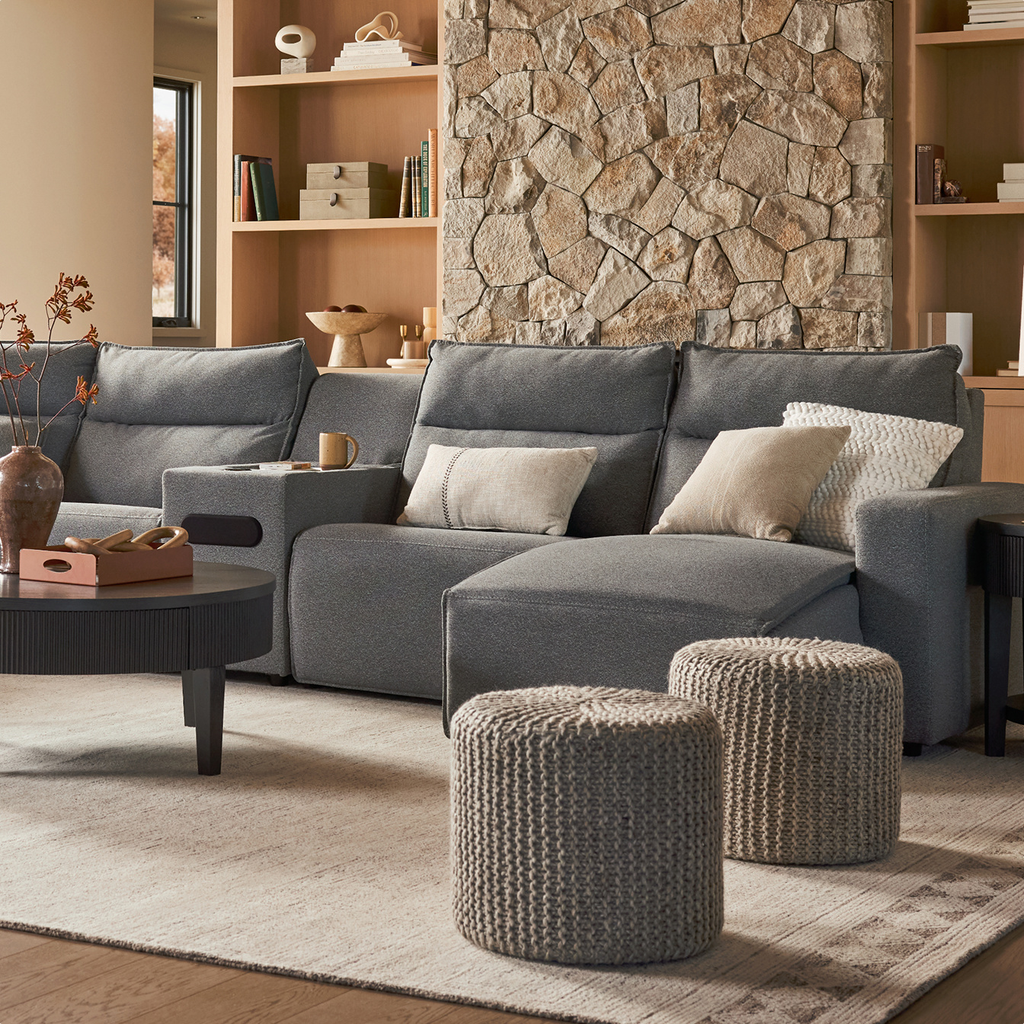
Modmax 2 modular secitonal by Ashley

Neutral With an Accent: For Flexibility

Let the existing furniture and larger textiles form a neutral base, then carry one accent through a few smaller pieces. A charcoal sofa might sit with cream curtains and a rug that includes touches of sage, echoed by a pillow. This approach is practical if you expect your tastes to change: swapping a cover or vase is simpler than replacing upholstery. Check the neutral’s undertone first, since a cool gray and a warm cream may need a shared color or texture to bridge them.

If you own a colorful sofa, resist buying accessories in exactly its shade. A rug with a smaller touch of that color, or art that combines it with your accent, will connect the room while allowing the sofa to remain the focal point.
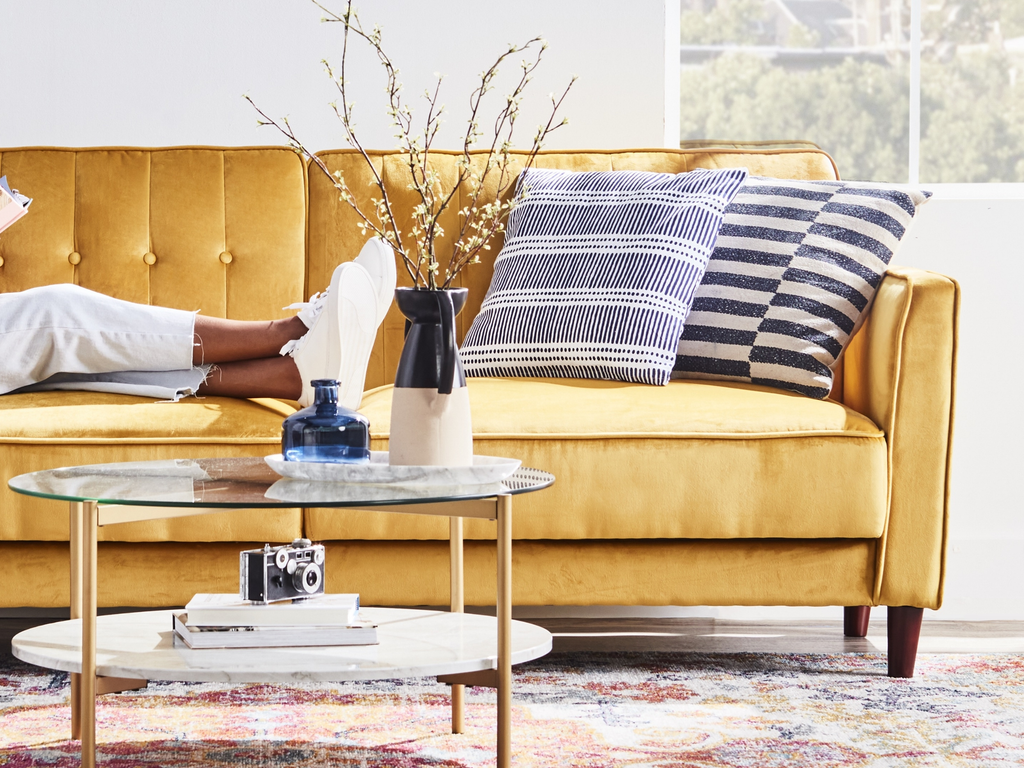
Yellow sofa with blue and white home decor accents

Mix Wood Tones and Metal Finishes

Your decor does not need the same wood or metal finish as your furniture. Repetition can make an arrangement feel settled; contrast can keep it from feeling uniform. The useful question is whether someone can see why a new finish belongs in the room.

First, identify the finishes already present. A dining table may be warm walnut, while its chairs have black metal legs. That combination gives you two existing cues. You could echo the walnut in a frame and the black in a light fixture, then let a lighter wood tray add contrast. The repeated details connect the finishes without requiring every piece to match.

When mixing woods, compare actual samples when possible. Species names alone do not tell you how a stain will read: two items labeled oak can have different warmth and depth. Woods with similar undertones are often easy to combine, but a cool or pale wood can also work beside warm, dark furniture when there is enough separation for both to register. A neutral rug or wall behind them can provide that breathing room.

For metals, let an existing fixture or hardware finish guide your choice, then use another finish as an accent if you like the contrast. Brass and matte black, for example, can share a room when the black appears in more than one visible place. There is no need to count every handle or eliminate a third finish already built into the room. Look for a clear dominant finish and a few deliberate connections rather than a strict formula.
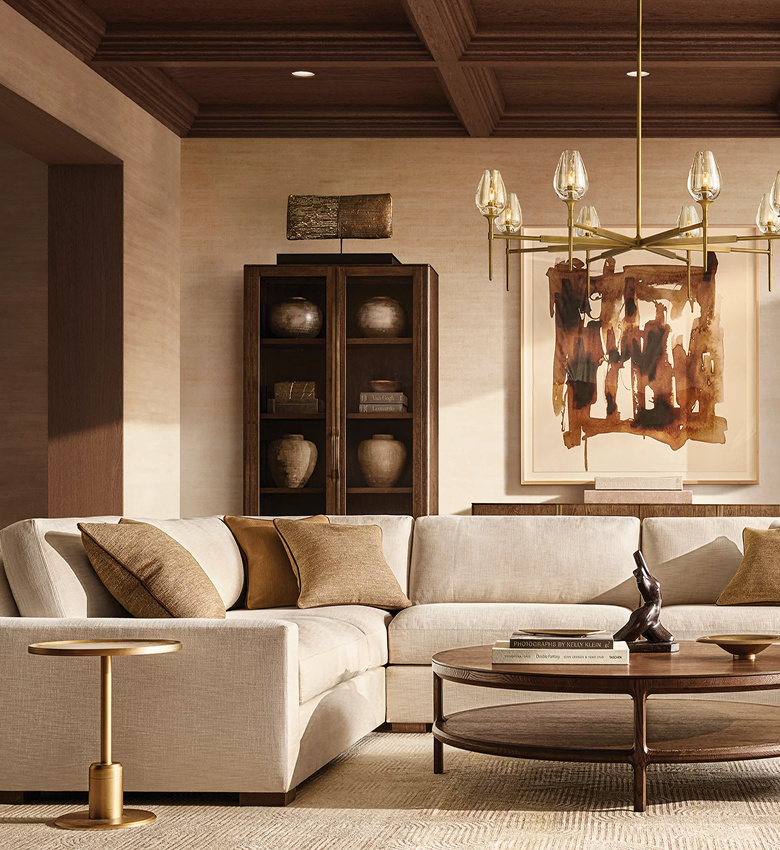
Ashley Luxe living room collection

Balance Furniture Shapes Without Matching Styles

The outline of furniture affects what looks comfortable beside it. If a room is full of square arms, straight table legs, and rectangular frames, a round mirror or curved lamp can soften the view. If most pieces have rounded edges, an angular tray or tailored artwork can provide definition.

Echoing a shape works when you want to reinforce a look. A rectangular mirror above a clean-lined sideboard makes their relationship obvious. Contrasting a shape works when that look has become too repetitive: a rounded vase on the same sideboard adds relief. Neither choice commits you to decorating every item in one style or era.

Stand at the doorway and look at the room as a whole. Which lines repeat? Where does your eye land? A traditional rug can sit near a modern cabinet if they share a color or material cue. The connection should be visible, but it does not have to come from identical silhouettes.
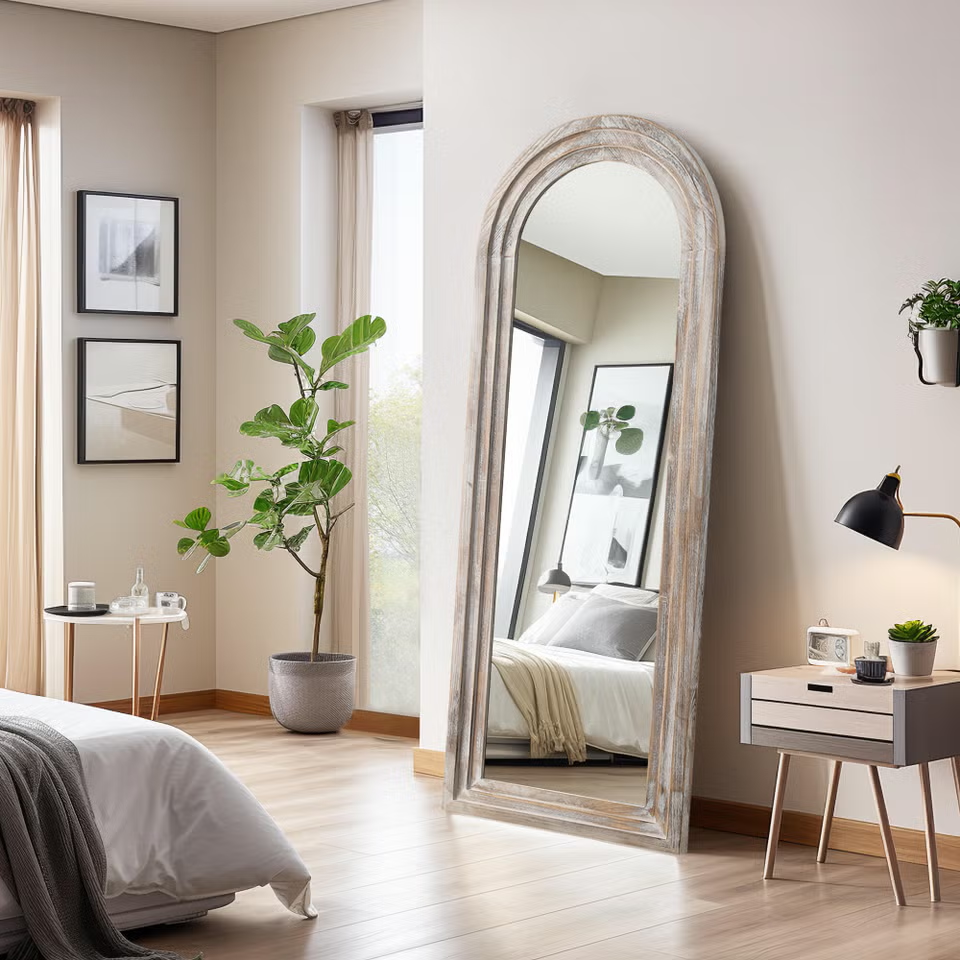
Dulcea 71" Classic Arched Framed Mirror

Measure for Rugs, Art, Lamps, and Displays

Before ordering a large accessory, measure the furniture arrangement and mark out the proposed piece. Painter’s tape on the floor can show a rug’s footprint; paper taped to the wall can show an artwork’s size. These checks are more useful than a universal dimension because rooms, furniture, and walking paths differ.

Rugs: Measure the full seating group, not just the coffee table. In a living room, a rug often looks more connected when at least the front legs of the main seating pieces can sit on it. Check that it does not leave an awkward strip of floor between related seats, and keep door swings and walking routes in mind. Under a dining table, pull a chair back as someone would when getting up; the rug should support that movement without its edge catching the chair. If a rug that size will not fit, consider leaving the dining floor bare instead of forcing a small rug beneath the table.

Wall art: Relate artwork to the furniture below it. Hold up a template above the sofa or sideboard and view it from the doorway and from a seat. One substantial piece or a grouping treated as a single shape may feel more balanced than a small frame floating over wide furniture. Check its height from where people normally see it rather than hanging it by an eye-level rule alone.

Lamps: Measure the table and nearby seating before choosing a lamp. The shade should provide useful light without blocking conversation across the room or shining directly into someone’s eyes when seated. A broad base may overwhelm a narrow nightstand even if the lamp’s height seems right. Compare the base, shade, and overall dimensions, then check the fit against your own table measurements.

Tabletop decor: Vary the height and shape of objects, but preserve the surface’s purpose. A coffee table needs room for a drink; a dining centerpiece should allow people to see one another. On a shelf, leave some open space so books and objects remain distinct. One larger object may be more effective than several small pieces that disappear beside substantial furniture.
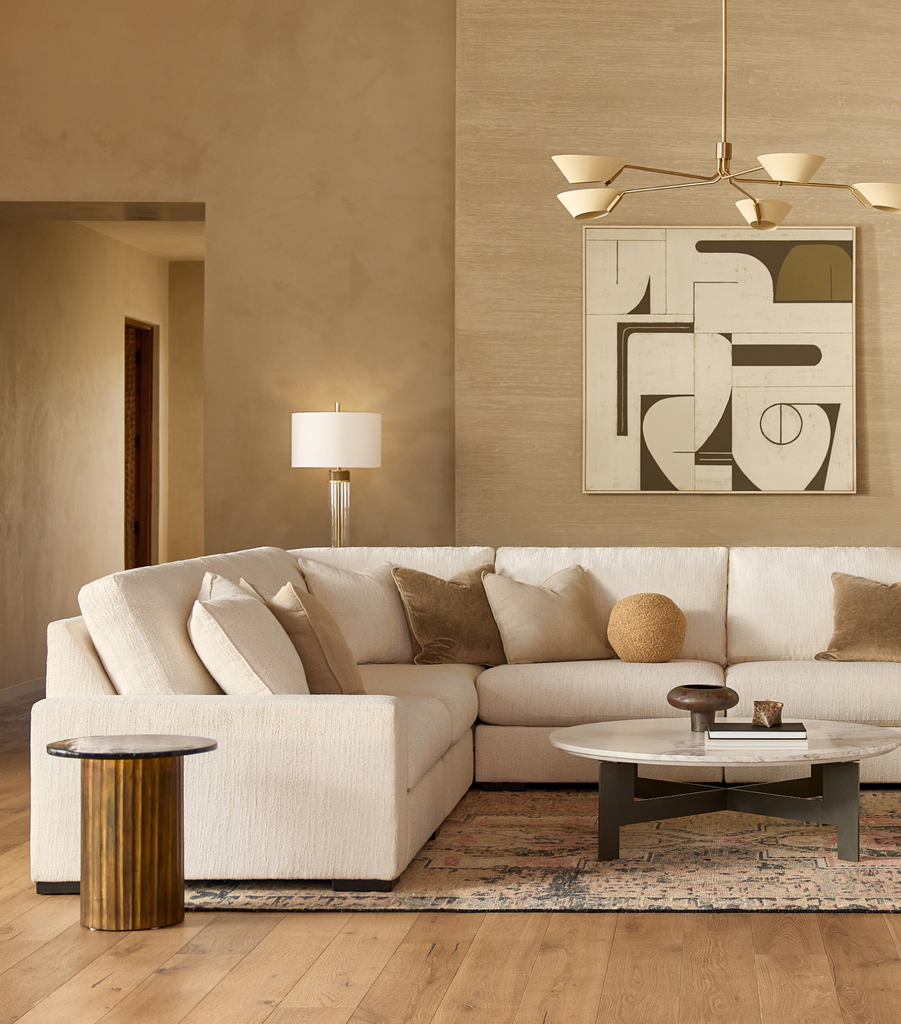
Ashley Luxe Calden Boucle 5-Piece Modular Sectional

Layer Texture Before Adding More Pattern

Soft decor gives you a way to change the feel of existing furniture without replacing it. A linen curtain, woven rug, knit throw, and velvet pillow can add depth even when their colors are close. Start with the textiles that occupy the most visual space, then add smaller textures where someone will see or touch them.

Use pillows and throws to connect the sofa or bed to the room palette. For example, a pillow can repeat a color from wall art while its fabric contrasts with smooth upholstery. Curtains can soften a room dominated by wood and metal; a rug can bring warmth to leather seating. Choose materials for how you live, too. Removable, washable pillow covers may be more useful than delicate fabrics in a busy household, while a low-maintenance rug may matter more than a particular weave.

When you add pattern, give each one a distinct role. A patterned rug can be the main visual feature, with quieter pillows that share one of its colors. If the curtains are bold, keep the rug calmer and introduce a smaller-scale print in a throw or cushion. There is no required number of patterns: if the room feels busy from the doorway, remove one and see whether the furniture comes back into focus.
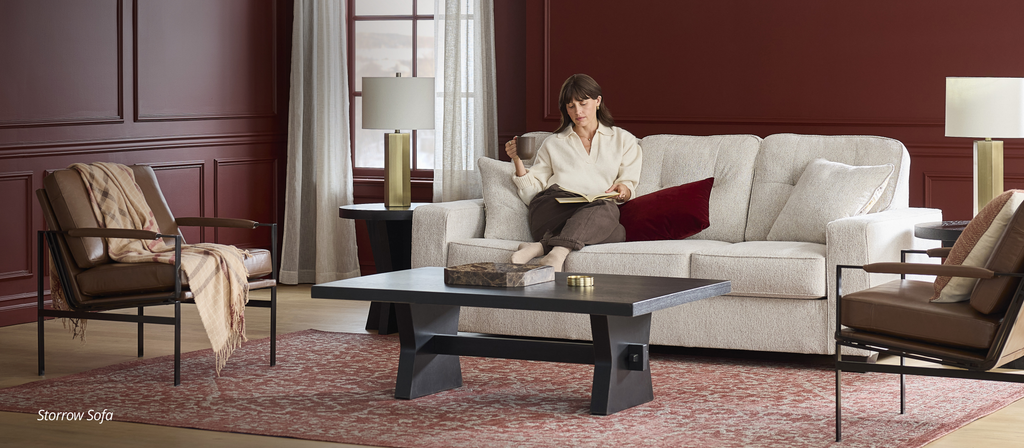
Storrow Sofa

Build the Palette, Test It, Then Buy by Impact

A little planning can prevent a collection of individually appealing objects from pulling in different directions. Follow this sequence before committing to a room refresh:

  1. Record what must stay. List the anchor, other prominent furniture, flooring, and fixed finishes. Note their undertones and choose a tonal, complementary, or neutral-with-accent direction.
  2. Gather a few references. Keep photos of your furniture taken in the room alongside samples of a supporting neutral and an accent. Check the samples next to the actual upholstery, wood, and flooring, not just next to one another.
  3. Test in real lighting. View swatches where the finished decor will sit, in both daylight and your usual evening light. A color that looks balanced online can read very differently beside your furniture. If a large purchase is involved, bring home a sample or mock up its color and size first.
  4. Prioritize by visual impact. A rug or curtains can change a large portion of the room, so settle their direction before accumulating small accessories. Next consider pillows, art, and lighting according to what the room lacks. Add tabletop objects last, when you can see whether they are needed at all.

This is a purchase order, not an instruction to buy everything. If your existing rug already works, keep it. If poor task lighting is the problem, a lamp may be more useful than new curtains. Pause after each addition and look at the room from several places before choosing the next piece.
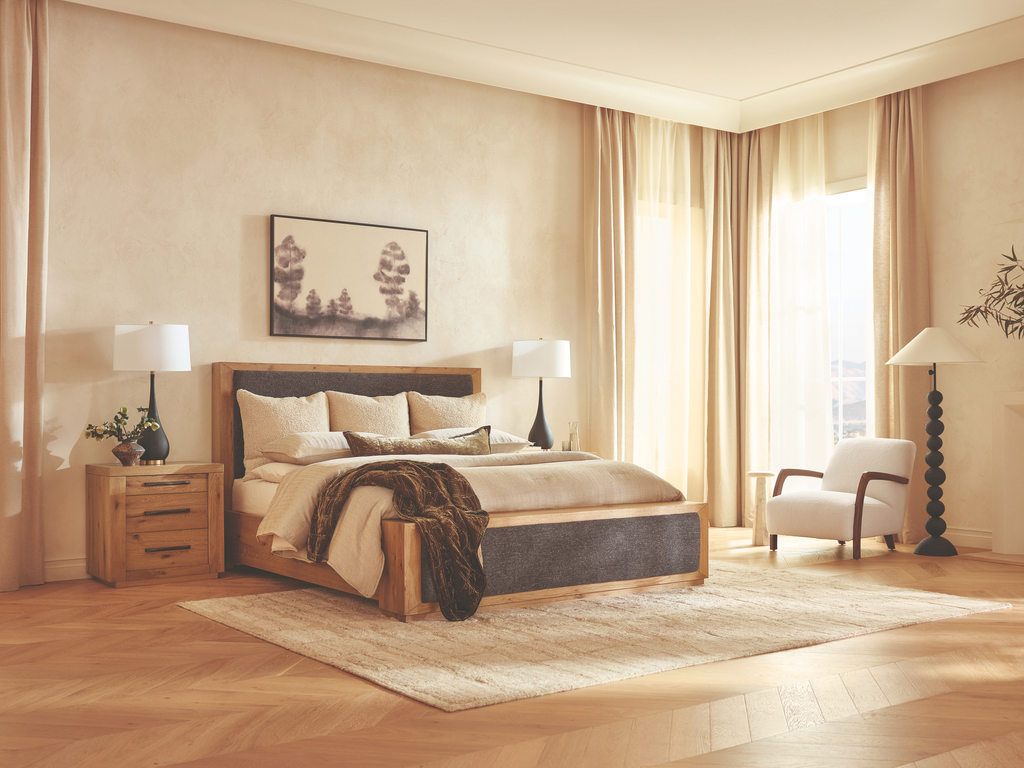
Ashley Luxe Bracken Bedroom Collection

Match the Plan to Your Furniture Starting Point

Use the furniture you have, not an idealized room, as your starting point. These common situations call for different choices:

Furniture starting pointDecor directionWatch for
Neutral upholsteryBring in texture through a rug, curtains, and pillows. Use one accent color in a few places, checking it against the upholstery’s undertone.Similar neutrals with no variation in depth or texture; an accent that looks unrelated in the room’s light.
Colorful upholsteryLet the sofa or chair carry the strongest color. Choose quieter surrounding textiles, then repeat a small amount of its color in art or a rug.Buying every accessory in the upholstery’s exact shade or adding several competing bold colors.
Dark wood furnitureIntroduce lighter textiles or wall art for contrast. Check whether the wood leans red, golden, or cool before choosing neighboring colors.Surrounding substantial dark pieces with equally heavy decor, or assuming every dark wood has the same undertone.
Mixed finishesUse the furniture’s existing wood and metal as palette cues. Echo each in a smaller detail while keeping the color palette focused.Adding accessories to solve a mismatch that is not there; crowding a room that already has plenty of material variety.

The table is a starting point, not a set of restrictions. A dark wood table can look good with another dark detail; what matters is whether the room still has enough contrast and open space to feel balanced.
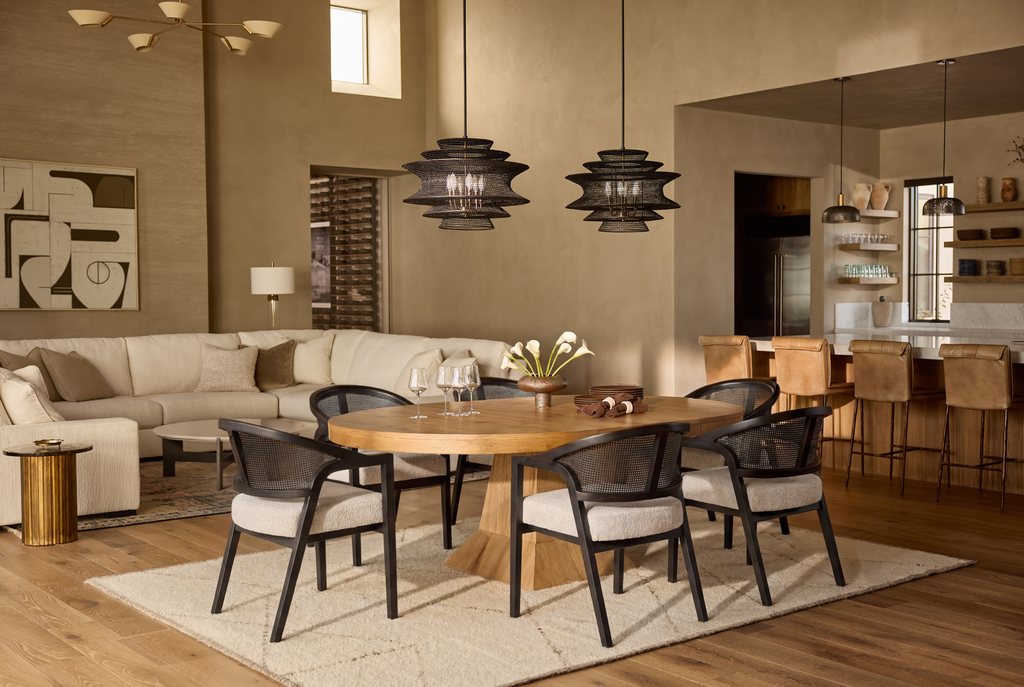
Ashley Luxe collection

Make the Room Livable, and Take One Small First Step

Decor has to work after it is styled. For homes with children or pets, look for washable covers and rugs you can maintain, check care labels, and choose stable objects for busy surfaces. Keep frequently used tables clear enough to use. If a shelf or console feels crowded, remove its objects and add back only those that serve a purpose, hold meaning, or strengthen the room’s palette.

Before you shop, make one quick pass through the spaces you use most:

  • Living room: Does the rug connect the seats? Is the art in proportion to the sofa? Is there useful light near where people read or talk?
  • Bedroom: Do bedding and curtains relate to the bed’s color and shape? Can bedside lamps fit without crowding the nightstands?
  • Dining room: Can chairs move freely, and can people see over or around the centerpiece? Do the table and nearby decor share a color or material cue?
  • Home office: Is the desk clear enough to work? Does task lighting suit the desk, and is there one visual connection to the furniture elsewhere in the room?

If you are not ready for a larger change, start with one washable pillow cover in the accent color you have tested at home. It is a low-commitment way to see that color directly against your upholstery. If a pillow is not useful in your room, choose a similarly small item from Ashley’s home decor selection that adds the texture or finish you identified. Live with that one addition before deciding what the room needs next.
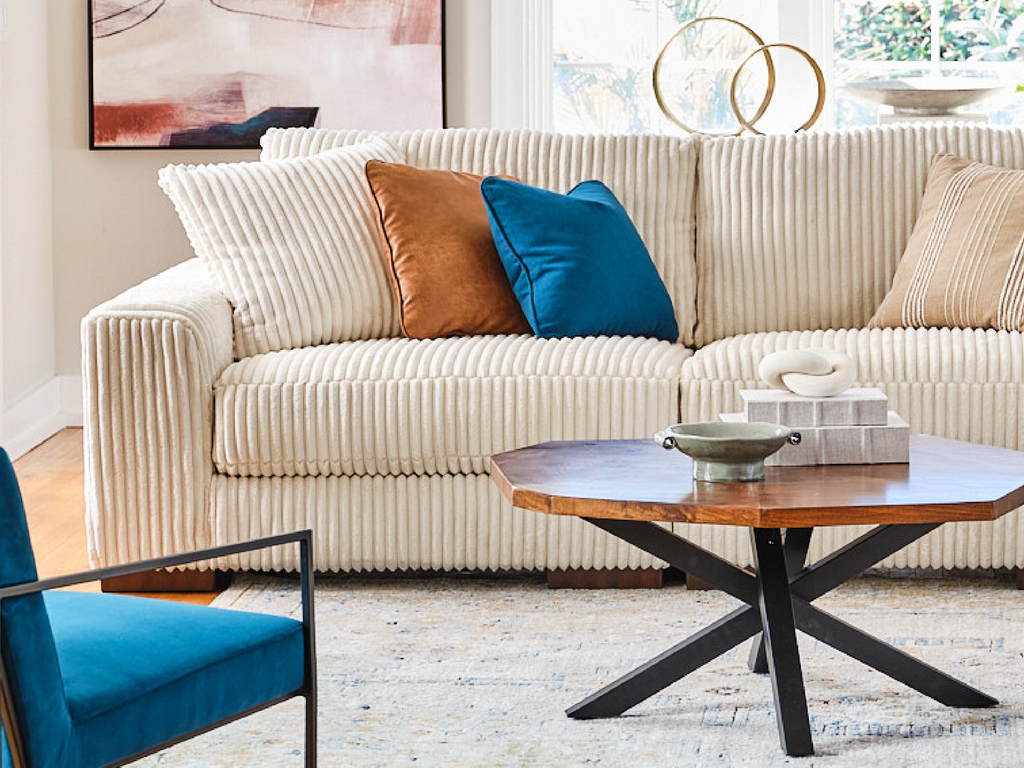
Living room furniture with blue and orange accent color decor
All Posts, Guides, How To, Kids Room Ideas October 7, 2026

How to Choose Kids Bedroom Furniture

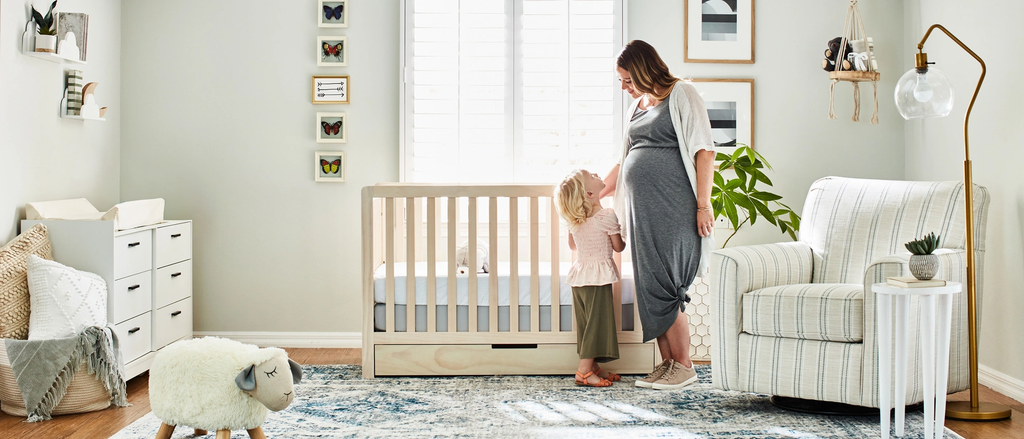
Mother and child in kids bedroom

Key Takeaways

  1. Start with a bed that fits the room, reachable clothing storage and enough open floor space before adding extras.
  2. Measure the delivery path and room. Check each piece’s assembled dimensions, not just mattress size or photos.
  3. Choose a twin over a full if the extra width crowds a dresser, doorway or play area. Pick a storage bed only if its drawers can fully open.
  4. Keep everyday clothes in drawers your child can reach without climbing. Use higher shelves for less-used items.
  5. Treat bunk beds and loft beds as space-saving options with additional access considerations, not automatic upgrades.
  6. Compare bedroom sets and individual pieces by total cost and usefulness. A coordinated set is not a bargain if it does not fit or will not be used.
  7. Anchor tip-prone furniture according to its instructions, and update the layout as your child’s needs change.

Choosing kids bedroom furniture starts with three priorities: a suitably sized bed, reachable clothing storage and usable floor space. A desk, extra chair or second storage piece can wait until you know what the room lacks. That order helps you focus your budget on furniture your child will use now without filling the room so completely that it cannot adapt later.

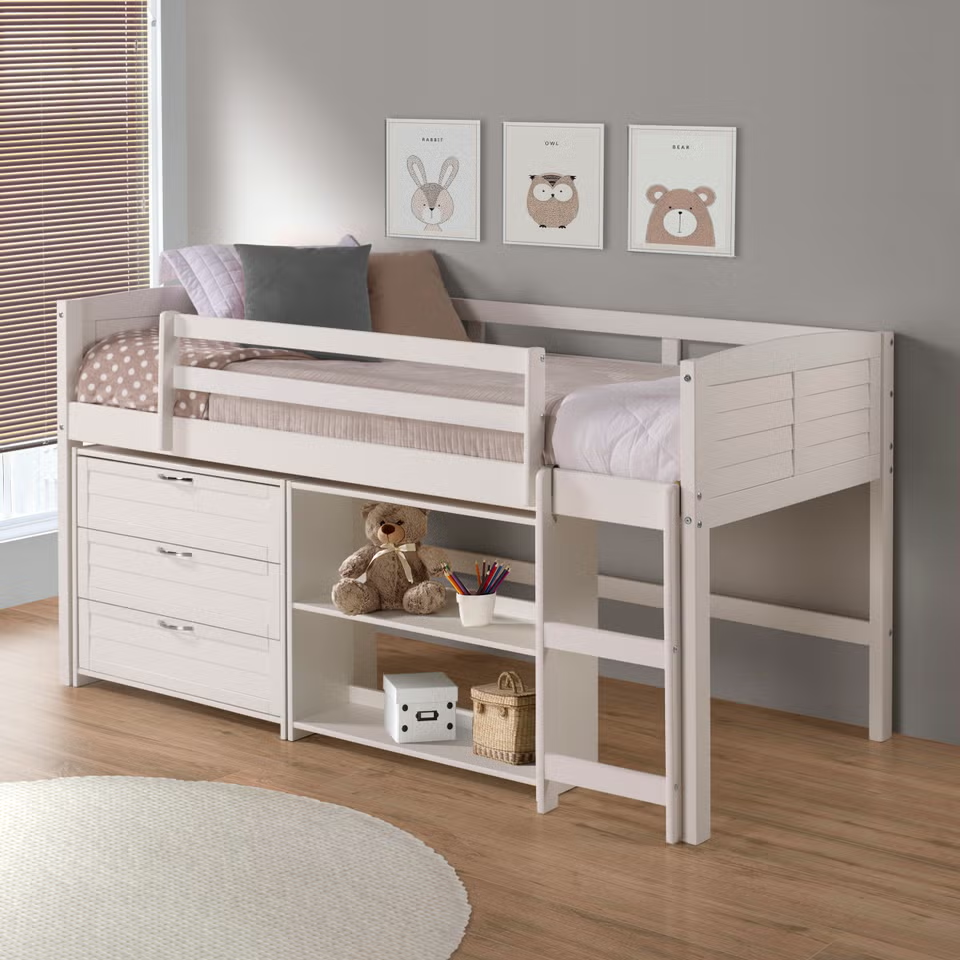
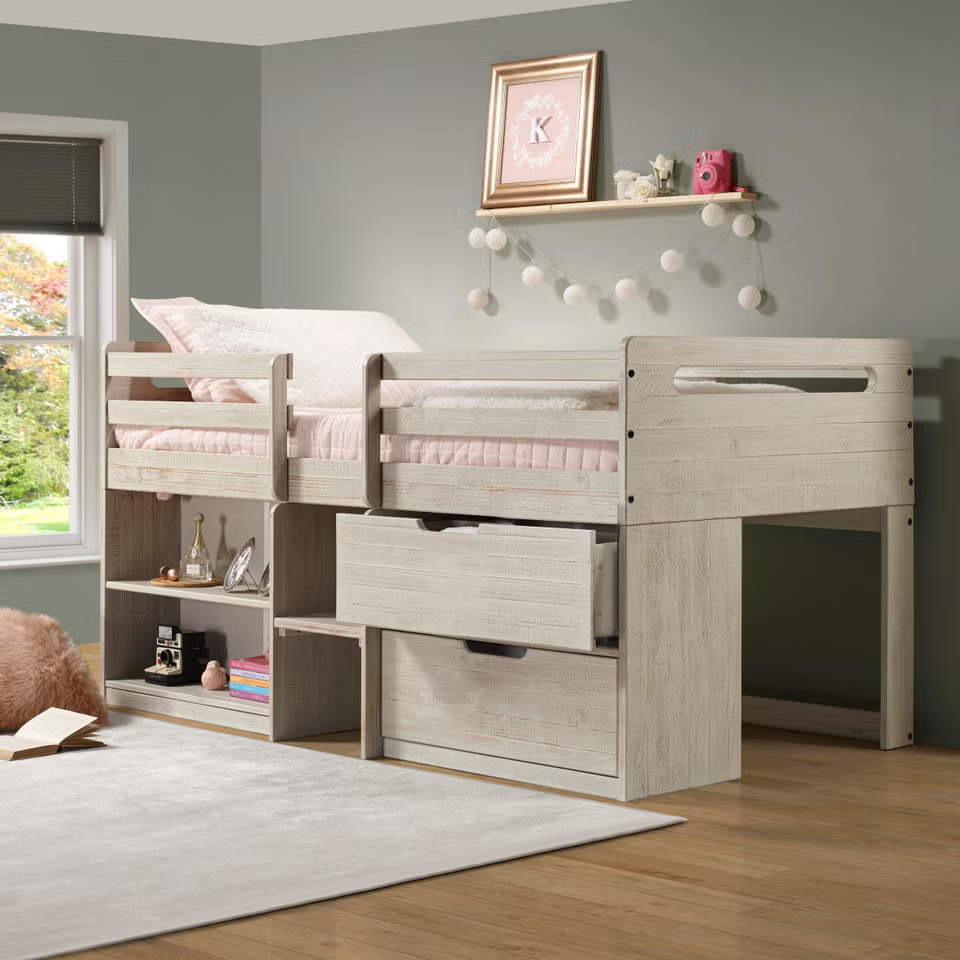
Donco Kids Louver Twin Modular Loft Bed

What does a child’s bedroom need first?

For most rooms, the essentials are a kids bed and mattress, a practical place for clothes and a clear route between the door, bed, and storage. If a closet already holds the child’s daily clothes within reach, you may need less drawer space than a complete bedroom display suggests. If closet storage is limited, a dresser may matter more than a nightstand.

Start by taking stock of what you own. A sturdy dresser or bed that still meets your needs can stay, even if its finish does not match a new piece exactly. Bedding, a lamp, and a small bedside surface may make the room easier to use, but none requires buying an entire set. Leave room for getting dressed, making the bed and playing rather than treating every open wall as a place to put furniture.

When deciding whether to add something, name the job it will do. If books pile up on the floor, a reachable shelf may solve a practical problem. If homework happens comfortably elsewhere, a desk might only take away floor space. This simple test is particularly useful in a small kids room layout.

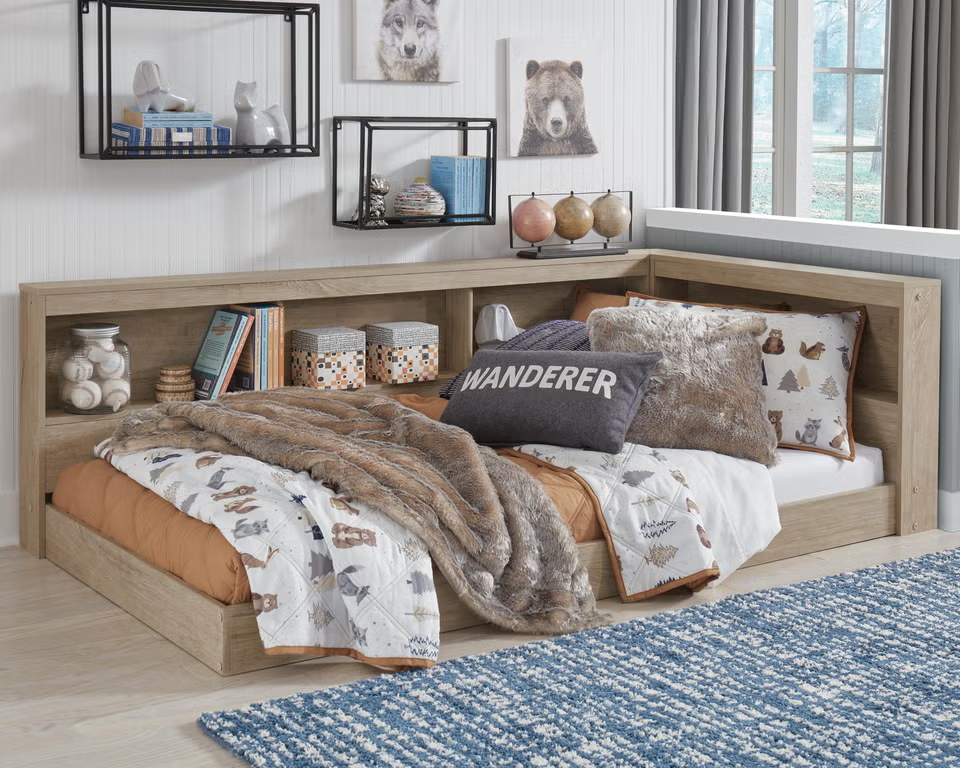
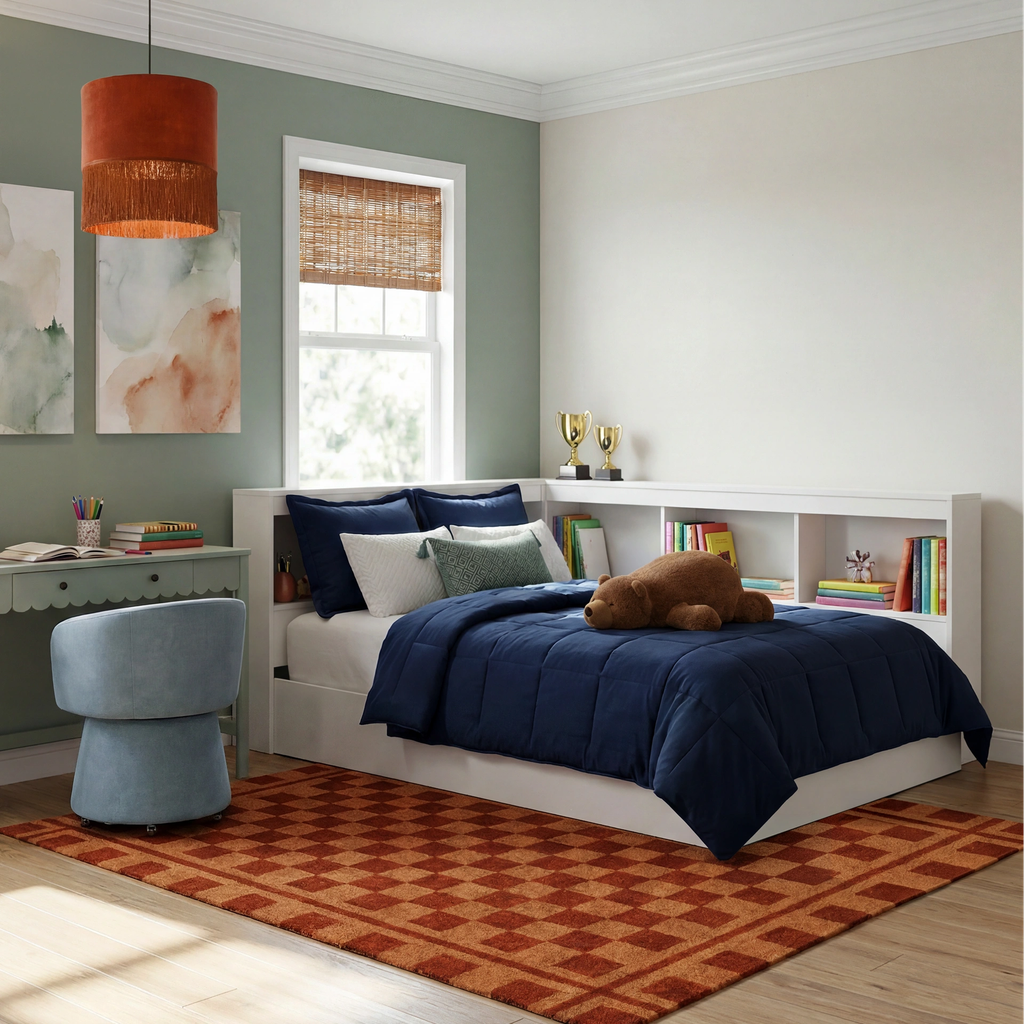
Oliah Twin Bookcase Storage Bed

Measure the room before shopping

A bed can fit along a wall and still prevent a closet door from opening. Sketch the room or mark its dimensions on graph paper, then draw each candidate piece to scale. Include the space needed to use the furniture, not just the space it occupies when closed.

Use this kids room measuring checklist:

  • Room: Record the wall-to-wall length and width, ceiling height, baseboards and any alcoves or sloped ceilings. Mark outlets, vents, windows and the space needed to reach and operate each window.
  • Doors: Note the position and swing of the bedroom and closet doors. Include sliding closet panels and drawers built into the closet.
  • Delivery route: Measure doorways, hallways and stair turns the furniture must pass through. Check whether the item ships assembled or in boxes.
  • Bed: Compare the frame’s exact assembled width, length and height with the proposed spot. Mattress dimensions alone do not tell you how much room a headboard, footboard or storage base will need.
  • Storage: Mark the depth of a dresser or chest with its drawers fully extended. Leave space for someone to stand in front of them, and check which side a storage bed’s drawers open from.
  • Paths: Trace a comfortable route from the door to the bed, closet and dresser. Keep doors, windows and everyday storage accessible.

A typical twin mattress measures about 38 by 75 inches, while a typical full mattress measures about 54 by 75 inches. Frames can be larger, and product designs vary. Before ordering, verify the specific item’s assembled dimensions, mattress compatibility and delivery details on its product page. If the layout feels doubtful on paper, use painter’s tape to outline the bed and dresser on the floor. Then walk the paths and mimic opening the drawers.

Linon Cale Twin Loft Bed with Storage

Which bed fits the child and the room?

A bed should support comfortable sleep without dictating every other choice in the room. Compare sizes using the actual frame, mattress and remaining floor space rather than an assumed age for moving to a larger bed.

Twin vs. full

A twin generally costs less to furnish and leaves more space for storage and movement. It is often the practical choice when a full bed would narrow the route to the closet or eliminate a useful open area. A full offers more sleeping width and may meet a child’s needs longer if they prefer more room, but it also calls for a wider frame, mattress and bedding. Both common mattress sizes have roughly the same length. If height is the concern, check mattress length rather than assuming a full solves it.

QuestionTwin mattressFull mattress
What does it save or add?Preserves more floor spaceAdds sleeping width
When does it fit best?When storage and open space compete with the bedWhen the wider frame still leaves comfortable access
What else affects the budget?Typically smaller mattress and beddingTypically larger mattress and bedding

Lay out both frame footprints before deciding. If choosing a full means removing accessible clothing storage or squeezing past an open drawer, the twin is likely the better fit for now. You can compare the dimensions of kids beds rather than choosing by mattress label alone.

Standard vs. storage bed

A standard bed is a straightforward option when the room already has enough storage. It may also be easier to move or rearrange than a bed with built-in drawers. A storage bed can hold spare bedding, seasonal clothes or toys without adding another cabinet, but its usefulness depends on drawer access. A drawer facing a wall or trapped against a dresser adds little value.

Compare the storage bed’s total price and capacity with a standard bed plus a dresser or simple under-bed bins. Built-in drawers do not necessarily replace a dresser. Daily clothes may still be easier for a child to see and put away in a low, accessible chest of drawers. If you are considering a lift-up platform, check how it opens and whether an adult will need to manage it. Choose the storage format for the items you actually need to put away, not just because hidden storage sounds efficient.

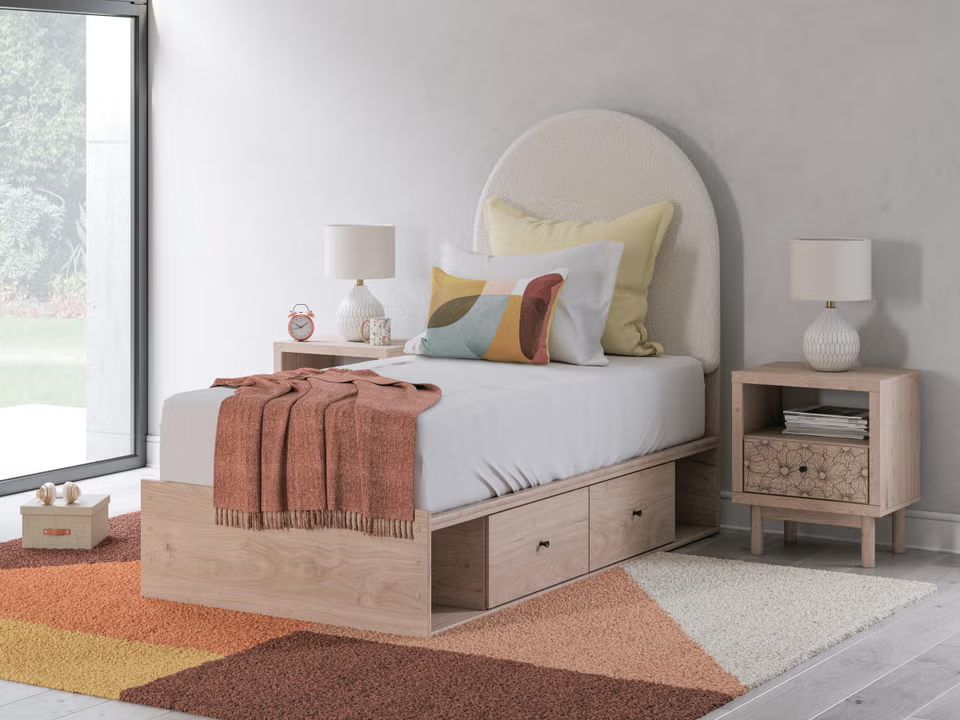
Shapella Twin Upholstered Panel Bed with Storage

Bunk bed and loft bed considerations

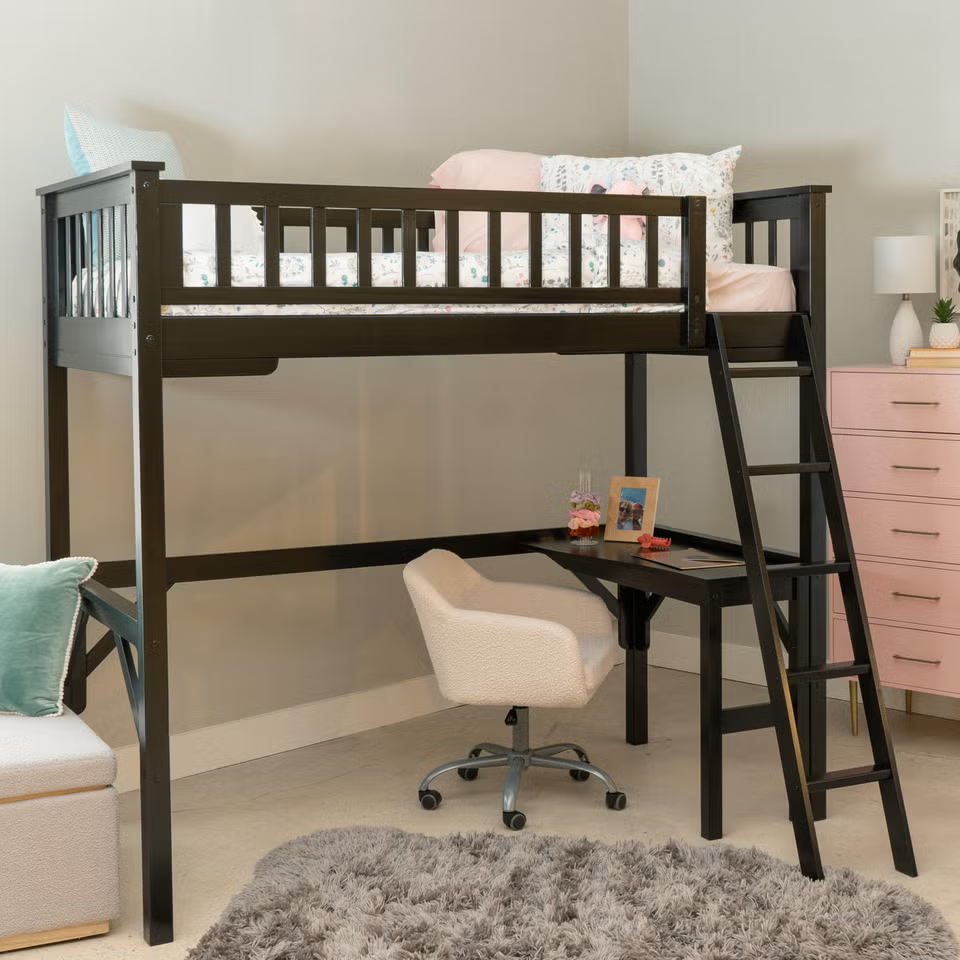
A bunk bed can free floor space otherwise used by two separate beds. A loft bed raises one sleeping surface to make room below for another function, such as a desk or play space. Either choice adds a ladder or stairs, a higher sleeping surface and a more demanding bed-making routine. Check whether the child can use the access method comfortably, including at night, and whether the area underneath a loft will be useful at its actual height.

Measure the ceiling clearance above the mattress, and account for light fixtures or a fan. Follow the product’s age and weight limits, assembly instructions and requirements for mattress size and guardrails. Do not remove a required guardrail to make the bed easier to make. For guidance on upper-bunk use and entrapment hazards, consult the U.S. Consumer Product Safety Commission’s bunk bed guidance. Compare the specifications of kids bunk beds before treating one as a space-saving solution.

Donco Kids Twin Low Loft Twin Bed

Choose clothing storage your child can use

Capacity matters, but so does access. A child who can reach and operate the drawers used every day may find it easier to get dressed and put clothes away. Check drawer height, pull design and how smoothly the drawers move in person when possible. Do not assume a child can reach an upper drawer just because the cabinet fits the room.

A wide, low dresser often makes daily clothing easier to reach and provides a useful surface on top. Its drawback is the amount of wall space it takes. A taller chest uses less wall width and can offer plenty of drawer capacity, but its upper drawers may be better for items an adult manages. A nightstand keeps a book, lamp or water cup close to the bed. It rarely substitutes for clothing storage. Under-bed bins or drawers can hold blankets, off-season clothes and other items that do not need to be retrieved each morning. Check that the child can pull them out comfortably and that the bedding does not catch in the mechanism.

Organize storage according to frequency of use. Put everyday clothes in reachable drawers or a reachable section of the closet. Save higher shelves and less-accessible under-bed compartments for occasional items. If a chest and a dresser are both on your list, first ask whether one, combined with the closet, would do the job. Comparing the dimensions and drawer layouts of kids storage can help you avoid buying more capacity than the room needs.

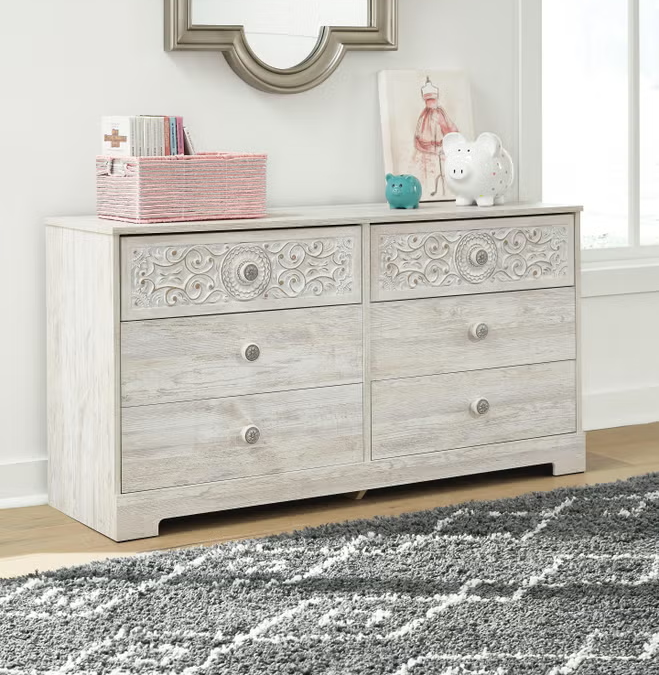
Paxberry 6 Drawer 60" Dresser

Add a desk or reading spot only when it earns the space

A kids desk is useful when a child regularly needs a bedroom workspace and can sit comfortably at it. If homework and crafts already happen well at another table, keep the bedroom floor open until that changes. When you do add a desk, allow space for the chair to pull out without blocking a door, dresser or route through the room. Consider a chair that can adjust as the child grows.

A reading spot does not have to be a chair. A floor cushion and a reachable shelf may be enough. A larger seat makes sense only if it will be used and the room still functions around it. The same applies to a bookcase or display shelf: choose one to contain an existing collection, not to fill a blank corner. Secure tip-prone pieces according to their manufacturer’s instructions.

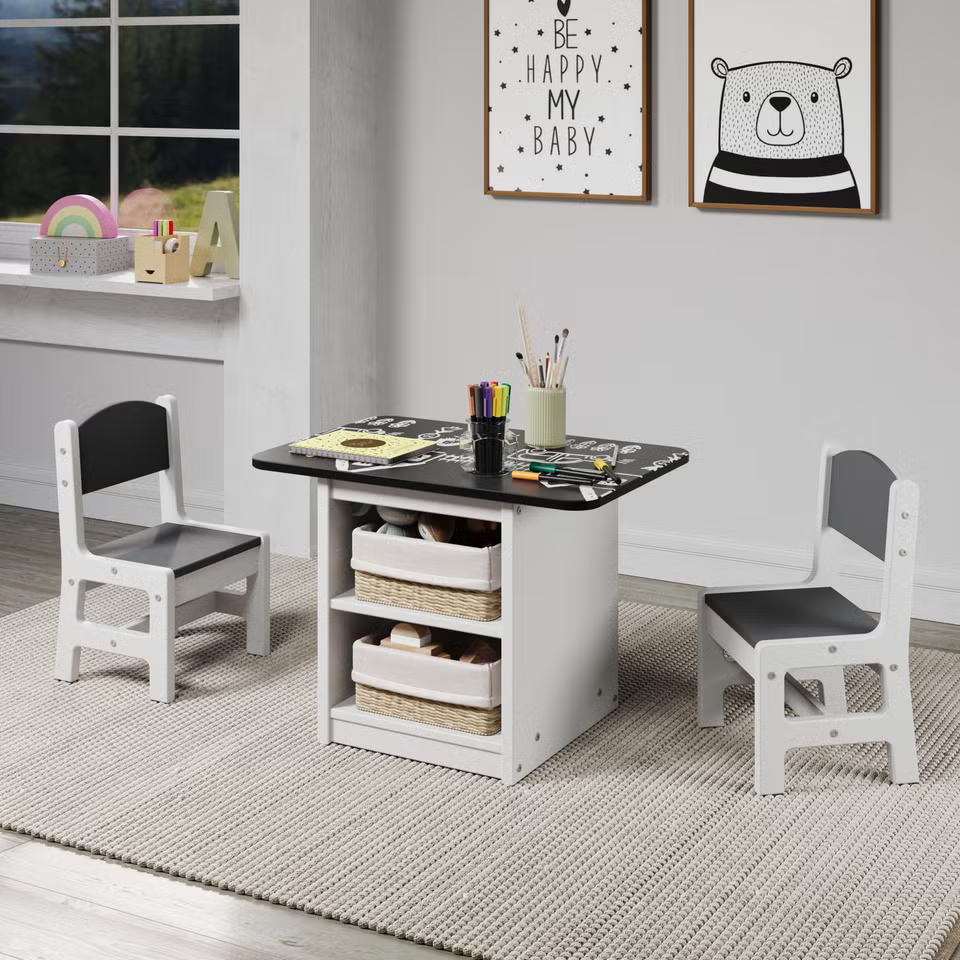
Donco Kids Art & Play Table and 2 Chairs Set

Test the layout before you commit

Once you have candidate dimensions, place the essentials first and test how the room works during an ordinary day:

  1. Position the bed. Try a wall that leaves the bedroom door, closet and window accessible. Avoid placing furniture where it interferes with a window that must be reached or opened.
  2. Place clothing storage. Put frequently used drawers where they can open fully and the child can stand in front of them. Do not let an open drawer block the only comfortable path through the room.
  3. Walk the routine. Move from the door to the bed, then to the dresser and closet. Imagine carrying laundry, changing sheets and getting dressed. Adjust the placement if these tasks require awkward detours.
  4. Check open floor space. Look at the space left after the bed and storage are usable, not merely installed. Preserve an area for movement and play before considering a desk, chair or additional cabinet.
  5. Test optional pieces last. Outline each extra on the sketch or floor. If it compromises access or makes the room feel crowded, postpone it or choose a smaller alternative.

There is no single layout that works for every room. A bed along the longest wall may fit beautifully in one bedroom and obstruct a closet in another. Let the door swings, windows, furniture dimensions and your child’s routine guide the placement.

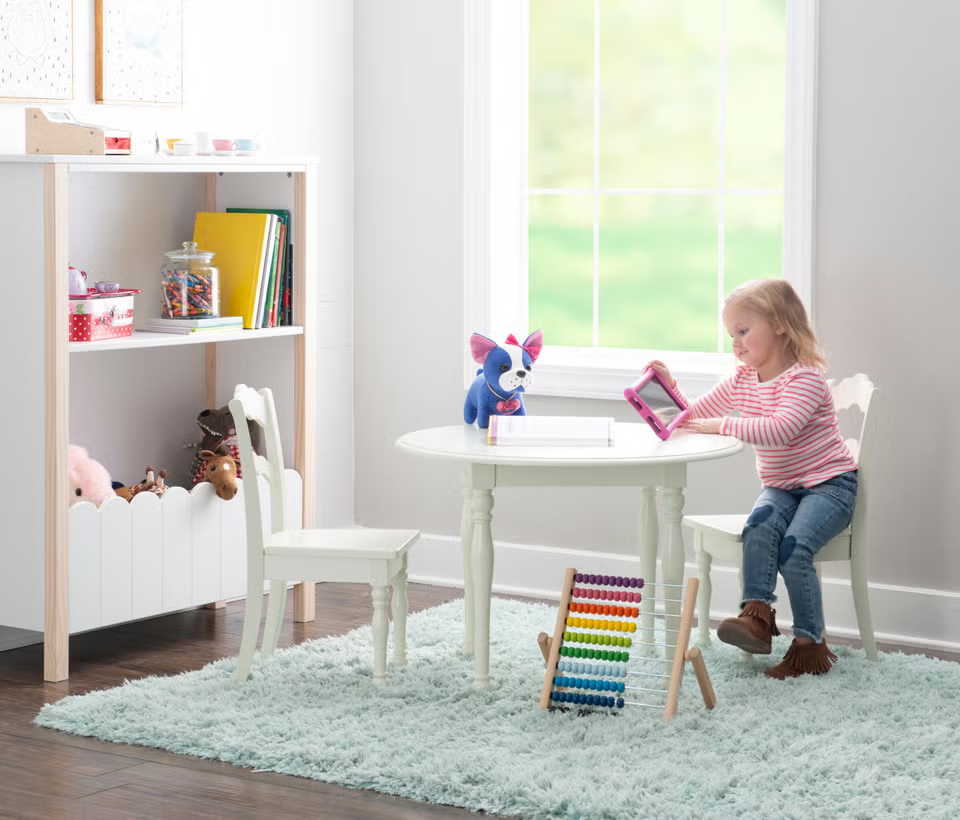
Linon Kids Table And 2 Chairs Set

Make safety part of the purchase decision

Before buying or assembling a piece, review its instructions, weight limits, recommended use and any required safety hardware. A product that fits the sketch may not be appropriate if it cannot be installed or used as directed.

Anchor dressers, chests, bookcases and other tip-prone furniture to the wall according to the manufacturer’s instructions. Children may pull on drawers or try to climb to reach an item. A stable-looking cabinet is not a substitute for proper anchoring. Keep frequently wanted toys and other items within reach rather than on top of tall furniture.

For bunk beds and loft beds, use the specified mattress size and all required guardrails and access components. Follow the product’s age and weight limits, and confirm that the upper sleeping area clears the ceiling and fixtures. After assembly, periodically check bed connections, guardrails, drawer hardware and anchors as the instructions direct. Address loose or damaged parts before continued use. These checks matter whether a piece is new, handed down or moved to a different wall.

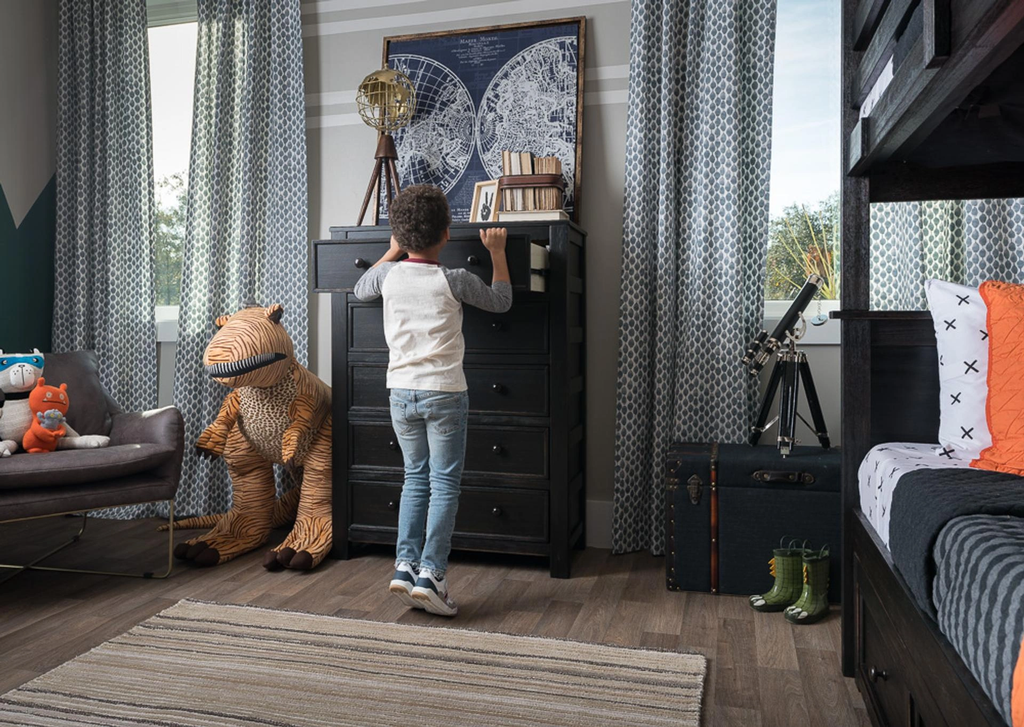
Kid opening dresser anchored to wall

Bedroom set or individual pieces?

A matching set can simplify shopping, but it is only a good fit when you need its components and each one fits the measured layout. Buying separately gives you more control over sizes and purchase timing. Compare the full cost of furniture you will use, including any items you would still need to add, rather than relying on a bundle price or per-piece estimate.

Decision factorBedroom setIndividual pieces
Room fitCoordinated pieces may include a size or item that crowds the roomSelect each footprint for its intended spot
FlexibilityMore decisions are made at onceKeep existing furniture and add or replace one piece later
CoordinationFinish and design are chosen togetherMatch a few shared details or use complementary finishes
CostMay be convenient if you need most included pieces; compare the total priceLets you stage spending, though individual prices vary

Choose a set if the bed, storage and any included extras all have a purpose and fit. Choose individual pieces if the room is small or irregular, you already own usable furniture or you need to spread purchases over time. You can review the components of kids bedroom sets, then compare their dimensions and total price with a shorter list of individual pieces.

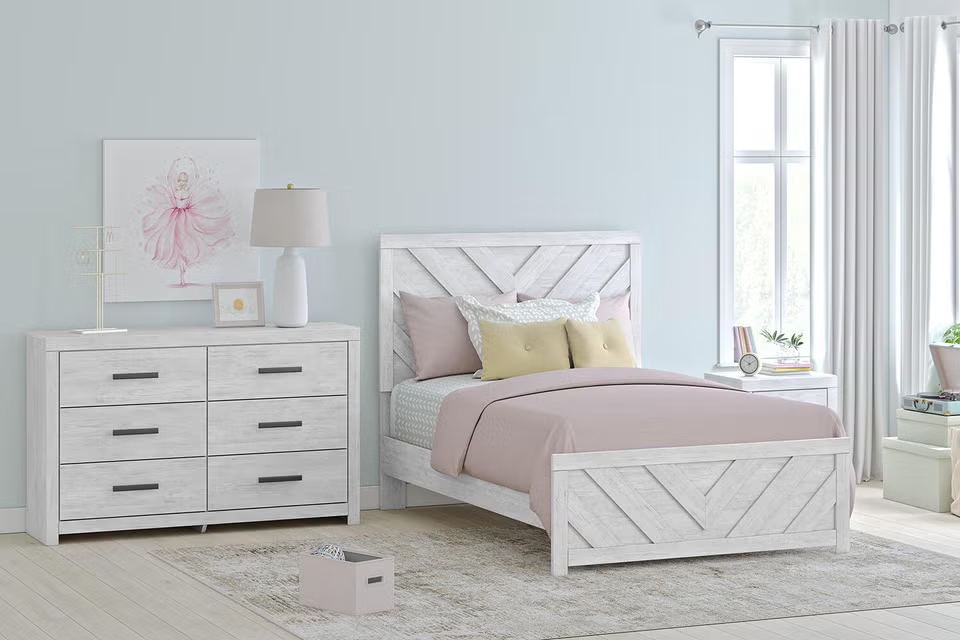
Cayboni Full Panel Bed with Dresser and Nightstand

Choose for everyday use, then shop in stages

Look beyond color when considering how furniture may work in the room over time. Check the construction, drawer operation and care instructions for the specific piece. Solid wood and engineered wood each have distinct characteristics, and quality varies from piece to piece. Protect surfaces from standing moisture, and use cleaning products recommended for the finish. A simple shape and adaptable finish can stay in the room while bedding, art and accessories change with your child’s taste.

Use this purchase order to keep the budget focused:

  1. Bed and compatible mattress: Choose the size that works with the measured layout, then check the frame’s requirements and total cost.
  2. Reachable clothing storage: Use the closet or an existing piece if it works. Otherwise, buy the dresser or chest that solves the storage gap. Install required anchors when you place it.
  3. Basic bedside function: Add lighting and, if needed, a compact surface that does not narrow the path.
  4. Additional storage or workspace: Wait until daily use shows whether a shelf, under-bed container, desk or chair would solve a persistent problem.

Living with the essentials for a while gives you better information than filling every corner on shopping day. As your child grows, repeat the measurement and walking-path test. Move everyday clothes to drawers they can reach, reconsider a workspace if routines change and replace the bed when comfort or room fit makes it necessary.

Piperton Twin Bookcase Storage Bed