

KKey Takeaways
- Proper slat spacing of no more than three inches and adequate center support for larger beds help support your mattress and may be required by the mattress warranty.
- Platform beds eliminate the need for a separate box spring, while panel beds generally require a separate foundation, increasing the total expense.
- Storage frames maximize bedroom space with built-in storage but add significant weight, which can make them more difficult to move.
- Solid hardwoods are often chosen for long-term durability, while engineered woods cost less but can lack durability over time.
- Flimsy frames can squeak and sway, disrupting sleep, while solid construction helps reduce motion transfer.
- Adjustable beds can raise and lower the head portion to elevate the upper body, but they rank among the most expensive options.
Bed frames do more than hold up your mattress. They influence how well you sleep, shape your bedroom’s overall aesthetic and impact your comfort in ways you might not consider. While shoppers often focus on mattress specs, the frame underneath can also influence the quality of every night’s rest.
A quality mattress needs a supportive base to deliver its full benefits. Poor foundations can lead to sagging and cause squeaks. Choosing the right bed frame means considering your space, mattress specs, preferred style and the structural strength of the frame itself.
This guide covers key factors to consider before you buy, including types and materials, weight capacities and support systems, so you can select the best bed frame for your needs.
Why your bed frame matters
Bed frames aren’t just decorative accessories. They’re fundamental components of your sleep system. Understanding what they actually do helps explain why choosing the right one matters before you start comparing specific models.
Protecting your mattress investment
Modern mattresses, especially heavy memory foam and latex types, need consistent, even support. Without a strong frame, mattresses can sag and develop permanent indentations. Many mattress warranties specify support requirements, such as slats no more than three inches apart or center support for larger beds. Check your mattress warranty for specific requirements.
Enhancing sleep quality
A sturdy bed frame helps reduce movement and noise at night. In contrast, flimsy metal or poorly built wooden frames can squeak and sway, which may disturb sleep. For people sharing a bed, a solid, quiet foundation can also help limit motion transfer from one side of the bed to the other.
Maximizing bedroom space
Bed frames also influence room layout. Large, bulky frames like sleigh beds can make small rooms feel cramped. Minimalist platform beds help open up space, while storage beds provide additional room for bedding, clothing and other items.
Choose what size you need
Before falling in love with any bed frame, the first step is measuring your bedroom. A beautiful piece can become a poor fit when it prevents doors from opening fully or takes up too much of the room.
Understanding standard mattress sizes
Precise sizing matters when pairing frames with mattresses. Too much space between the mattress and frame can allow shifting. These measurements clarify what each size provides and who should consider it.
Twin size (38″ x 75″)
Twin beds work well for children, teenagers or small guest rooms. Their narrow width usually means no center support leg is needed.
Twin XL size (38″ x 80″)
The Twin XL adds five inches of length, and is suitable for taller sleepers or dorm rooms with limited width.
Full size/double (54″ x 75″)
A full-size bed is 16 inches wider than a twin, offering more space for solo adults. For two adults, this size may feel tight.
Queen size (60″ x 80″)
Queen beds fit many primary bedrooms and provide room for two adults. Check that your queen frame has adequate center support to handle the added width and weight.
King size (76″ x 80″)
A king bed is as wide as two Twin XL beds side by side, offering plenty of space for two sleepers. King frames require substantial center support, usually a rail with multiple legs or a cross-grid, to help prevent sagging.
California king (72″ x 84″)
A California king bed is four inches narrower and four inches longer than a standard king, making it an option for taller sleepers. Use only a frame specifically labeled “California king,” as the sizes are not interchangeable.
Explore the different types of bed frames
Once you know the size and available space, you can start exploring bed frame types. The frame style influences whether you need extra foundation pieces, how much storage you have, and your room’s look.
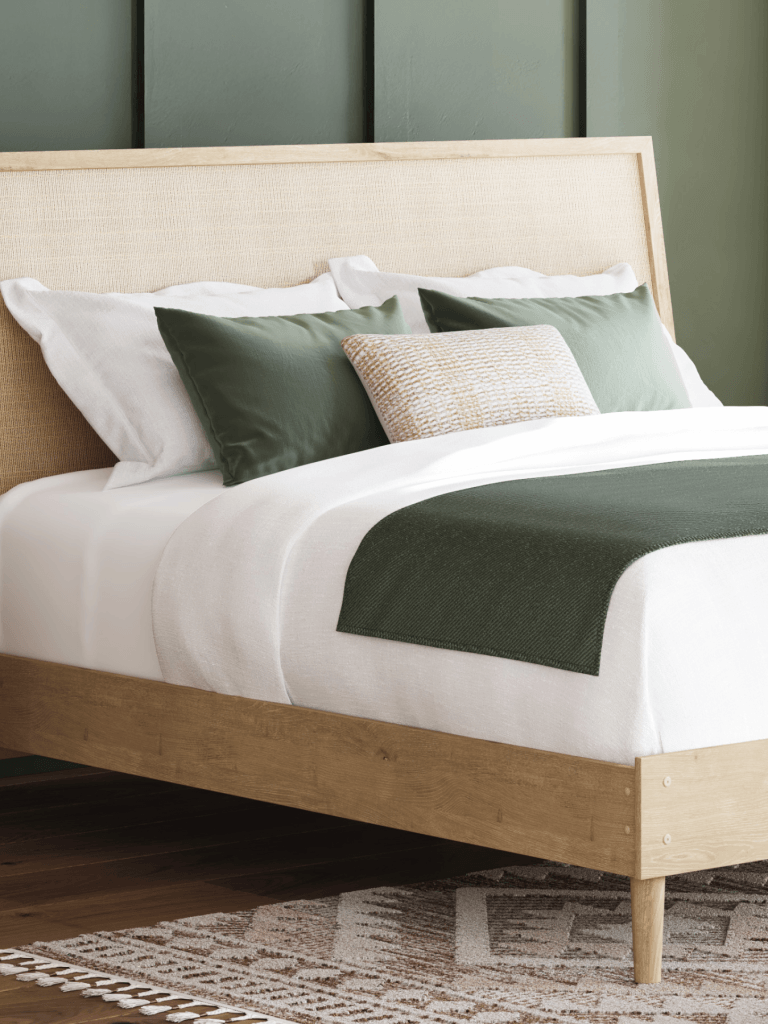
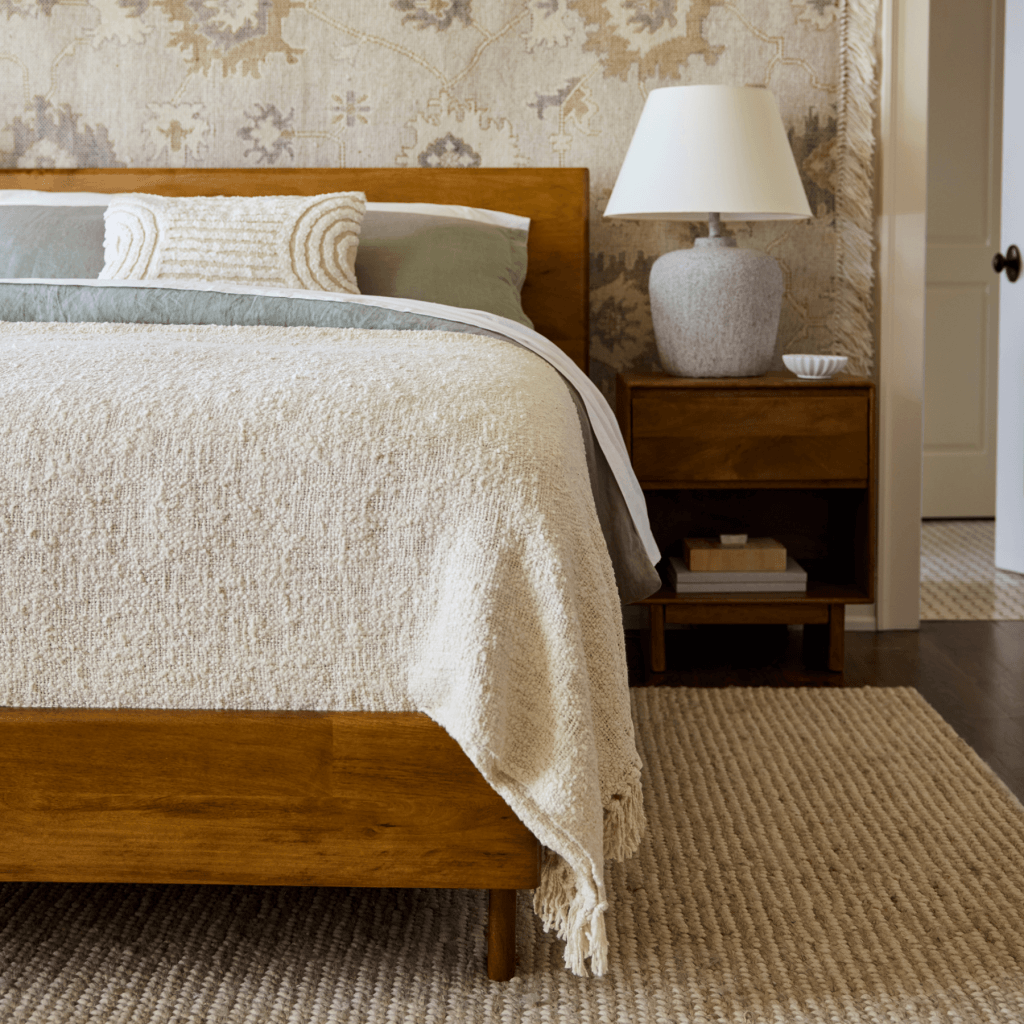
Platform bed frames
Platform beds support your mattress directly on either a solid surface or tightly spaced wooden slats. The support system is already built into the frame itself.
Pros:
- No need for a separate box spring, saving money and lowering bed height
- Offers a sleek, low-profile look ideal for minimalist, modern, and mid-century styles
- Provides firm support for all mattresses, especially memory foam and hybrids
Cons:
- Lower height may be difficult for those with mobility issues
- Limited under-bed storage, depending on leg height
Panel bed frames
Panel beds, which feature a tall headboard and often a footboard, are usually made with flat wooden panels. They typically have cross-slats designed to hold a box spring or foundation.
Pros:
- Classic appearance for traditional bedrooms
- Box spring raises mattress height for easier access
Cons:
- Requires a separate box spring or foundation, increasing cost
- Can be heavy and bulky
Storage bed frames
Storage beds add functional space directly beneath your mattress through built-in compartments. Pull-out drawers along the sides or foot of the bed can hold bedding, clothing, shoes and other items.
Pros:
- Provide storage that can reduce the need for a large dresser, saving floor space
- Help protect stored items from dust
Cons:
- Tend to be very heavy and difficult to move
- Inexpensive models may have less durable drawer tracks
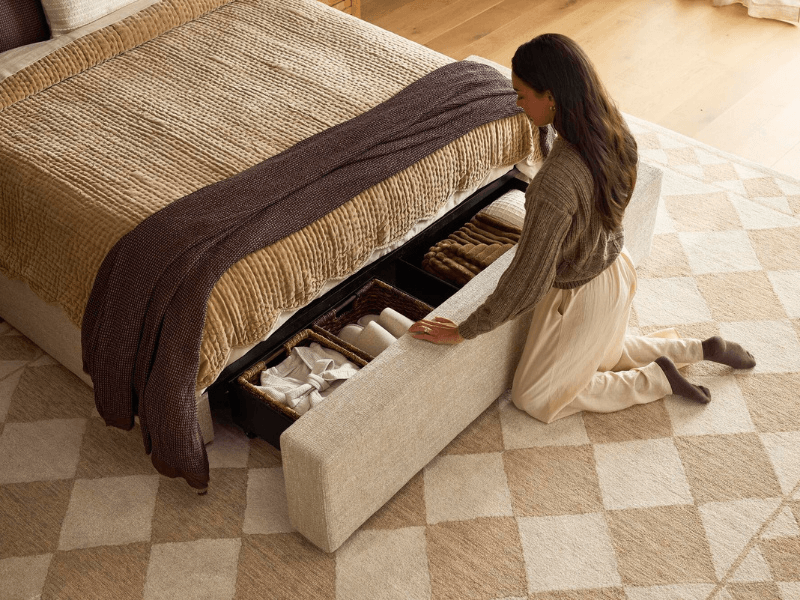
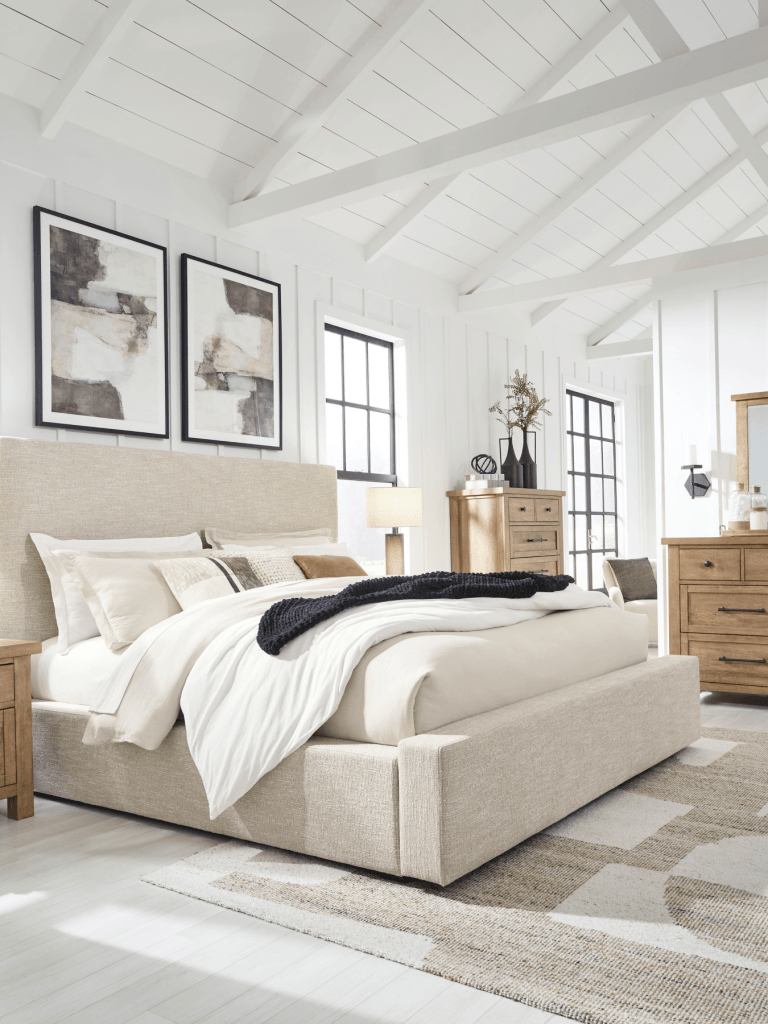
Upholstered bed frames
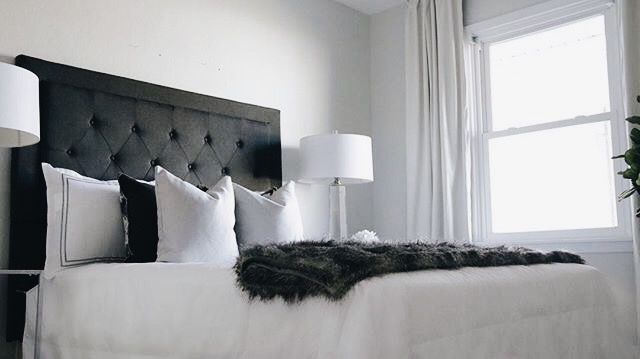
Upholstered beds take a basic wood or metal frame and add a cushioned fabric covering. You’ll find them wrapped in everything from linen and velvet to faux leather and polyester blends.
Pros:
- Comfortable for sitting up in bed
- Fabric adds warmth and texture
- Padded edges provide a soft surface
Cons:
- Fabric requires upkeep and can attract dust, pet hair and stains
- Pets may scratch upholstered corners
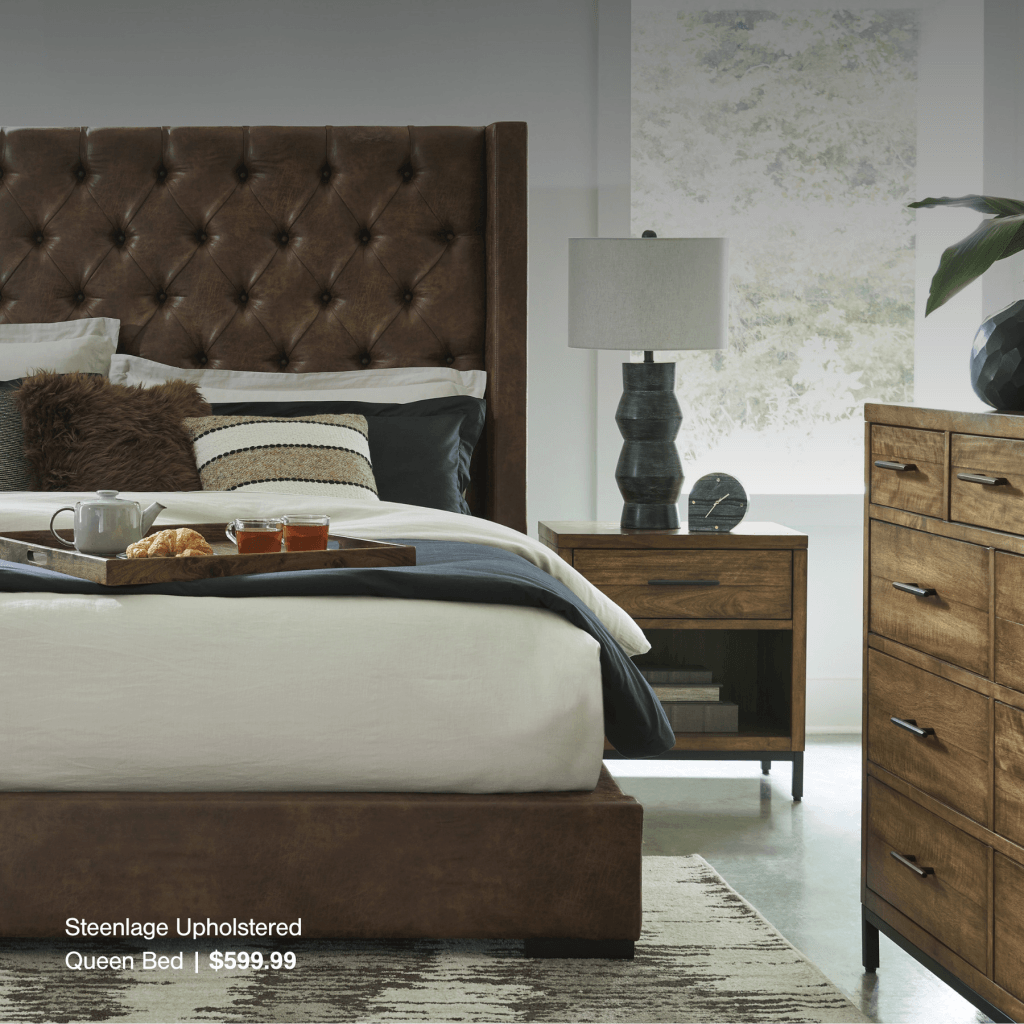
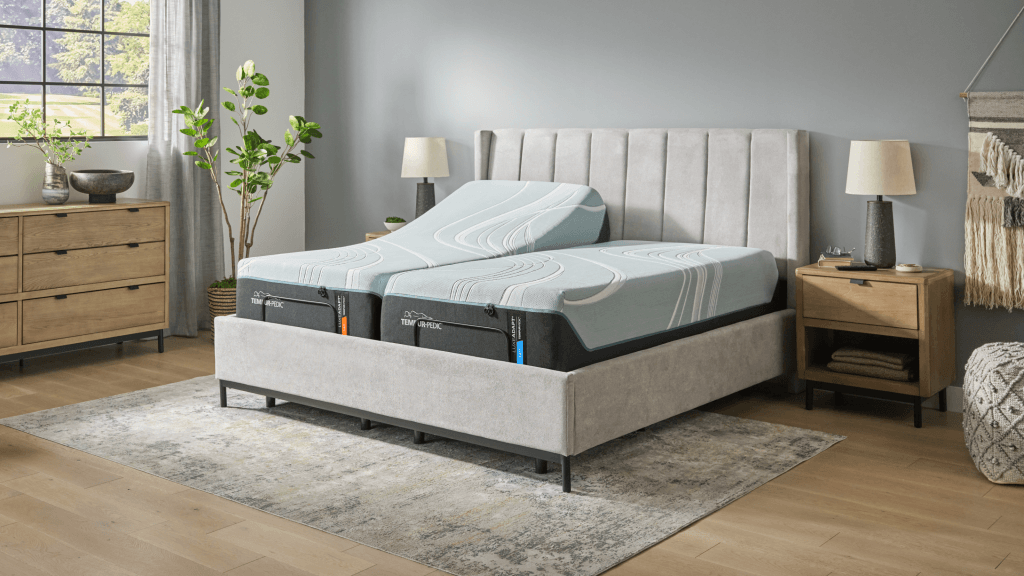
Adjustable bed frames
Adjustable beds use electric motors to raise and lower the head and foot portions of your bed. You control the angles, positioning each section where you want it.
Pros:
- Raises the head and foot of the bed to your preferred angle
- Offers a “zero gravity” position at the touch of a button
- Allows you to fine-tune your resting position
Cons:
- Among the most expensive frame options
- Heavy and may require additional setup
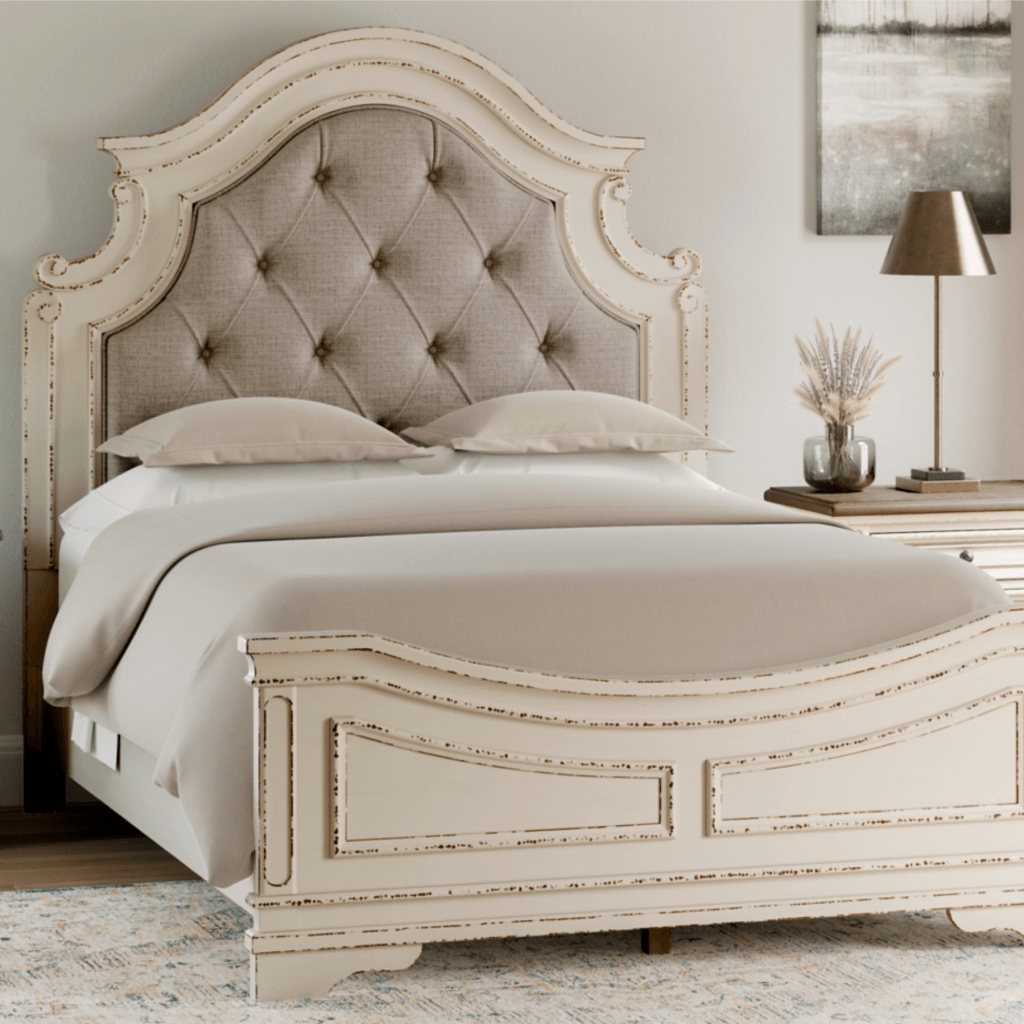
Sleigh beds
Sleigh beds stand out with a curved headboard and footboard design that echoes the lines of a classic sleigh. Often constructed from wood, these frames can become the focal point of a bedroom.
Pros:
- Distinctive traditional style
- Substantial construction
Cons:
- Curves take up extra floor space
- Heavier than many other bed frames
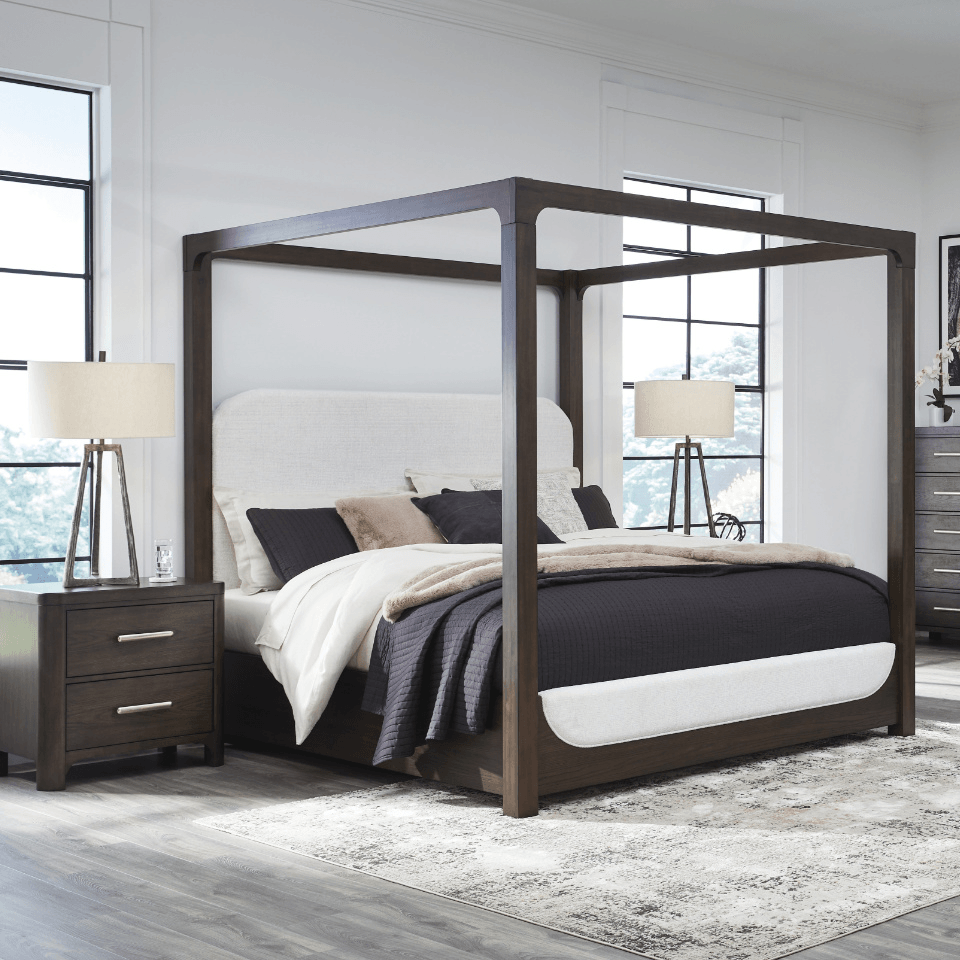
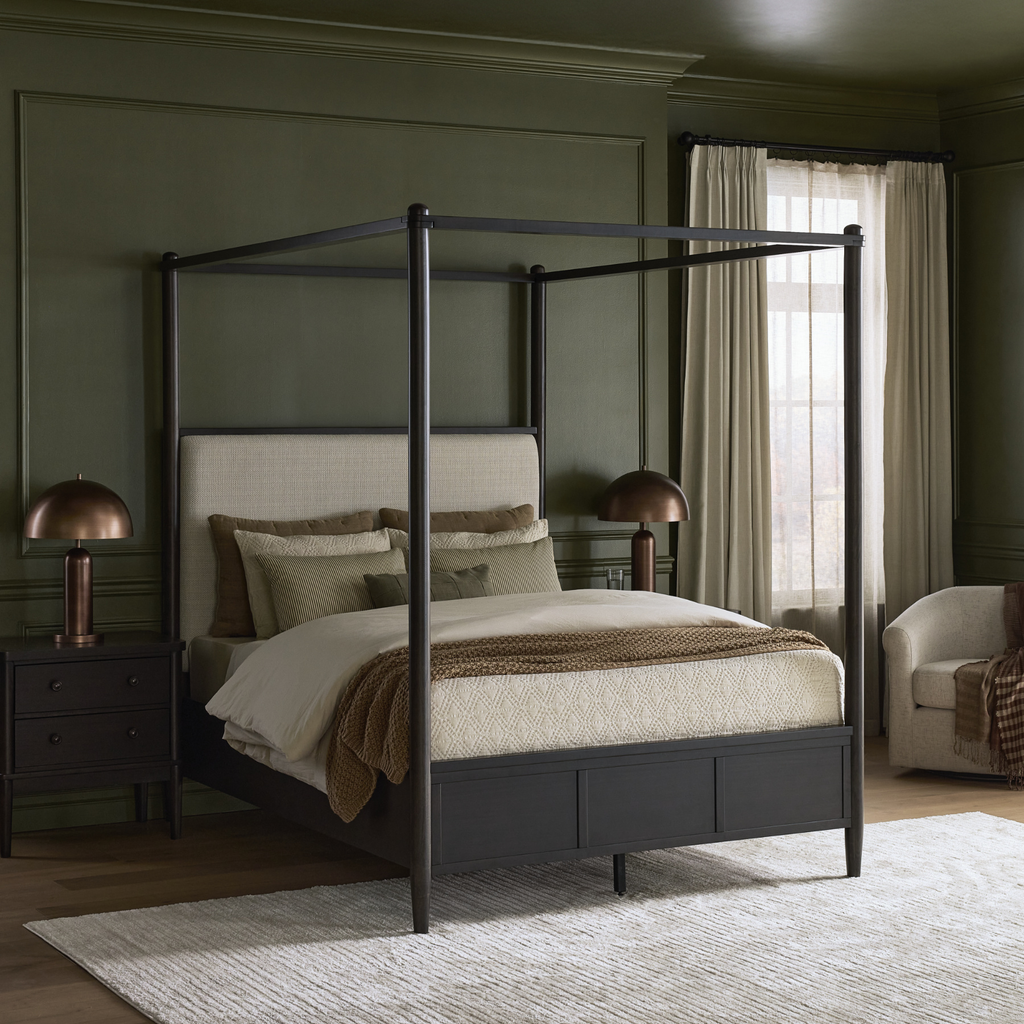
Canopy beds
Canopy beds feature tall posts rising from each corner that connect overhead with a frame. This structure can support draped fabric for privacy or decorative effect.
Pros:
- Adds drama and a luxurious look to a bedroom
- Drapes can help block light and add a layer of insulation
Cons:
- Require sufficient ceiling height to keep the room from feeling cramped
- Top rails collect dust and require regular cleaning
Metal beds
Metal beds are typically made from steel or iron. Some basic metal frames are adjustable and designed to support a box spring or foundation, while decorative versions can serve as a complete bed frame.
Pros:
- Budget-friendly options are widely available
- Often easy to assemble, disassemble and move
- Solid metal construction is easy to inspect and clean
Cons:
- Basic metal frames may have less aesthetic appeal than other beds
- Without reinforcement, metal joints can become squeaky
Select the right materials for longevity
The material of your bed frame determines its lifespan, weight, maintenance needs, and appearance. Knowing the difference between high-quality and budget materials helps you choose a sturdy bed frame.
Select the right materials for longevity
The material of your bed frame influences its lifespan, weight, maintenance needs and appearance. Knowing the differences between materials can help you choose a sturdy bed frame that fits your needs.
Wooden bed frames
Solid wood is a classic bed frame material. These frames rely primarily on lumber rather than engineered wood alternatives or composite materials.
Hardwoods vs. softwoods:
- Hardwoods: Oak, maple, walnut, mahogany and cherry are dense and durable. A well-made hardwood frame is built for long-term use, though it tends to be heavier and more expensive.
- Softwoods: Pine, cedar and spruce are generally less costly and grow quickly but may be more prone to dents and scratches. Pine is common in casual, natural styles and budget-friendly frames.
Check the finish for quality. Oils, stains or clear varnishes highlight the wood grain, while paint can provide a more uniform appearance.
Engineered wood (MDF and particleboard)
Engineered wood appears in many budget-friendly bed frames. These materials use wood particles or fibers bonded with adhesives. They’re often lighter and less expensive than solid wood but can offer different levels of durability.
- Medium-density fiberboard (MDF): Made from compressed wood fibers and resin, MDF is dense, heavy and smooth, making it suitable for painting or veneer.
- Particleboard: Made from wood particles bonded with resin, particleboard is generally lighter and less durable than MDF.
MDF and particleboard frames typically cost less and offer a uniform appearance but can lack durability. Hardware can loosen, particularly after repeated disassembly and reassembly, and exposure to moisture can cause swelling or warping. These frames may not be ideal for frequent moves.
Metal bed frames
Metal bed frames vary widely, using materials ranging from lightweight alloys to durable steel and iron.
- Steel frames: Steel frames can provide substantial strength. Powder coating can help protect the metal surface from rust and scratches. A lower steel gauge number indicates thicker steel.
- Wrought iron: Common in vintage or farmhouse-style designs, wrought-iron frames are generally heavy and sturdy.
To minimize squeaks, look for frames with secure joints and sturdy hardware.
Upholstered bed frames
Upholstered bed frames perform differently depending on the fabric used. Material selection directly impacts both appearance and the cleaning effort required to maintain it.
- Linen blends: Breathable fabric with a natural texture; may wrinkle and stain
- Velvet: Soft and vivid, though it can attract pet hair
- Faux leather/polyurethane (PU): Easy to clean, but lower-quality versions may crack
- Genuine leather: Offers a premium look and distinctive natural characteristics, generally at a higher cost
Best-selling bed frames
Ashley offers bed frames across a variety of aesthetics, materials and configurations. The following options highlight different approaches to storage, upholstery, panel construction and metal designs.
Ashley best-selling beds:
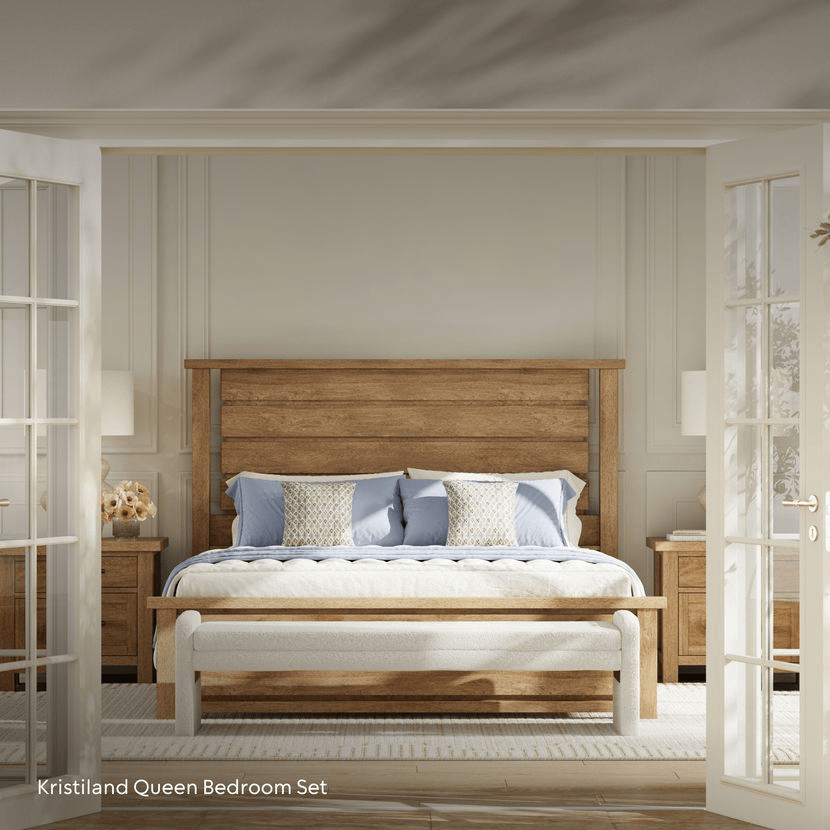
- Kristiland King Upholstered Storage Bed: The Kristiland king storage bed features neutral upholstery, wood construction, a discreet footboard drawer and easy assembly. No additional foundation or box spring is needed.
- Cabalynn King Upholstered Bed: The Cabalynn king bed combines modern lodge and farmhouse style with an upholstered, tapered headboard and loose pillows for lounging, reading or watching TV.
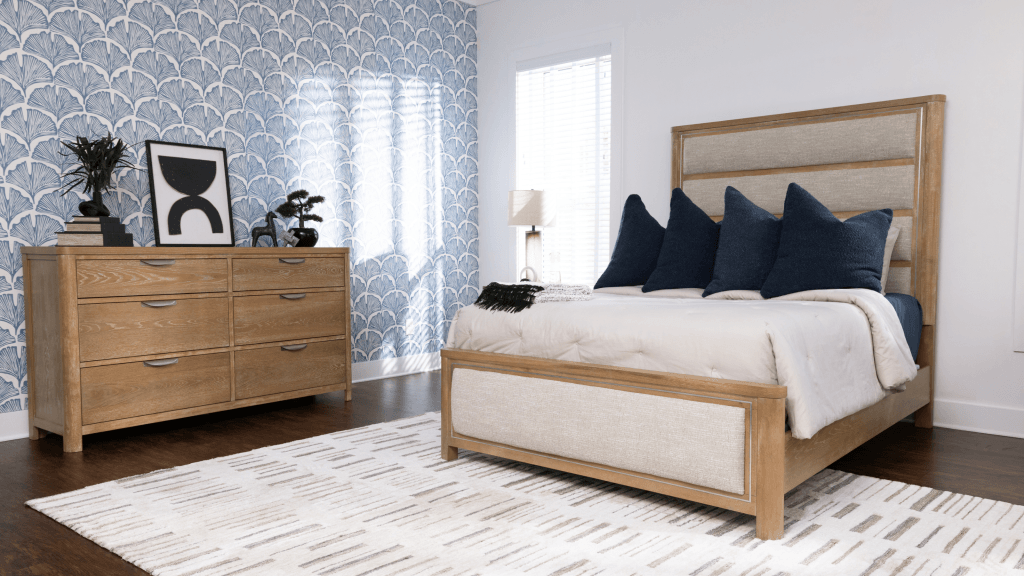
- Starmore Queen Panel Bed: Ideal for contemporary spaces, the Starmore queen panel bed features acacia veneers, an oiled walnut finish and an open plank headboard design. It requires a separate foundation and assembly and is compatible with adjustable bases.
- Isanti Queen Panel Bed: This platform bed made with mango wood features a clean-lined, low-profile design and light finish. It’s well suited to creating a natural look while maximizing bedroom space. No additional foundation or box spring is needed, and the bed is compatible with adjustable bases.
- Takston King Panel Bed: The Takston king panel bed features a sunburst-paneled headboard with a light glazed brown finish and is made with hardwood solids and acacia veneer. It requires a separate foundation and mattress.
- Breckington King Next-Gen Nuvella™ Performance Fabric Canopy Bed: The Breckington king canopy bed features hardwood construction, Next-Gen Nuvella™ upholstery and a modern design. Next-Gen Nuvella™ is a performance fabric that is soft, easy to clean, stain-resistant and durable. The bed requires a foundation, mattress, assembly and sufficient ceiling clearance.
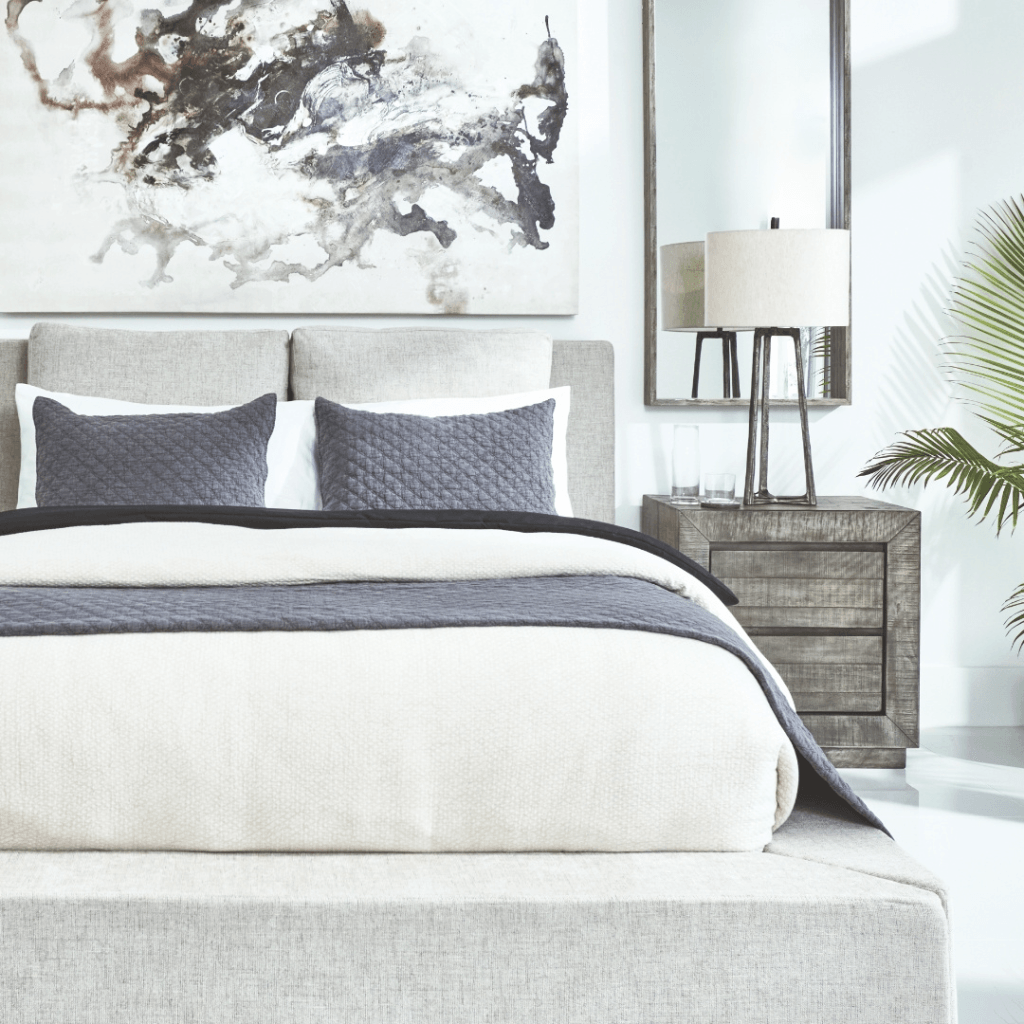
- Whittgate Queen Next-Gen Nuvella™ Performance Fabric Bed: The Whittgate queen bed features Next-Gen Nuvella™ upholstery and a modern design. This bed includes a headboard, footboard and rails and requires a mattress and foundation or box spring.
- Nashburg Queen Metal Bed: The Nashburg queen metal bed features a steel frame, a farmhouse-inspired matte black finish and moulded details. This bed includes a headboard, footboard and rails and is compatible with adjustable bases. Assembly is required.
- Hennington King Upholstered Bed: The Hennington king upholstered panel bed combines modern style with cushioned, upholstered rails, textural bisque wood and a plinth base. It requires a foundation and mattress (sold separately). Assembly is required.
Ashley trending beds:
- Jesstean King Next-Gen Nuvella™ Performance Fabric Bed: This king bed features plush tufting, Next-Gen Nuvella™ performance fabric and an engineered wood frame with slat support. It includes a headboard, footboard and rails. A foundation and mattress are sold separately, and assembly is required.
- Takston Queen Panel Bed: The Takston queen bed makes a stylish statement with sunburst veneer panels, hardwood and acacia veneer construction and a light glazed finish. A separate foundation is required.
- Dolante King Upholstered Bed with Square Button Tufting: This king bed features soft, tufted beige upholstery for a modern look. It includes a headboard, footboard and rails and is compatible with adjustable bases. A foundation or box spring is required.
Evaluate the support system: slats vs. solid base vs. box spring
How the bed frame supports the mattress is crucial. The support system can affect mattress comfort, breathability and durability.
Wooden slats
Slats are horizontal planks, usually wood and sometimes metal, that form the base of platform beds.
Solid vs. sprung slats:
- Solid slats: Made from firm woods like pine or birch, these offer stable support and are commonly used with memory foam, latex and other mattress types.
- Sprung (flexible) slats: Made with curved, laminated wood that flexes under weight, these slats add bounce and cushioning.
Bed slats should be no more than three inches apart when required for memory foam, latex or hybrid mattresses. Always check the mattress manufacturer’s requirements for the appropriate support and slat spacing.
Solid base foundations
Instead of slats, some platform beds feature a solid foundation built from wood panels or MDF sheeting.
Pros:
- Provides consistent support across the surface
- Eliminates gaps between slats
- No individual slats to shift or squeak
Cons:
- Offers less airflow beneath the mattress
- Increases frame weight
Box springs
Box springs and foundations are fabric-wrapped support structures placed under the mattress to raise bed height and provide the support required by certain bed frames and mattresses.
Pros:
- Raises mattress height
- Provides support for beds designed to use a foundation or box spring
Cons:
- Adds to the overall cost of the bed setup
- Not required with bed frames that already provide appropriate mattress support
Always follow the requirements of both the bed frame and mattress manufacturer when determining whether a foundation or box spring is needed.
Bed frame styles and design
While structural integrity is important, your bed frame is also likely to be one of the largest pieces of furniture in the room. Its design can set the overall aesthetic tone.
- Mid-Century Modern: Characterized by clean lines, warm woods and veneers like walnut or teak and tapered, angled legs. Many mid-century frames feature a low-profile platform design. They pair well with uncluttered, airy bedroom designs.
- Traditional and Rustic: These frames are characterized by substantial wood framing, prominent headboards and decorative moulding. Sleigh beds, four-poster beds and panel beds can fit this category. Their larger scale is often best suited to rooms with adequate space and pairs well with warm lighting and layered bedding.
- Industrial: These bed frames are characterized by materials such as metal, distressed wood accents and exposed hardware. The combination creates a distinctive, streamlined look that works well in loft-inspired and contemporary spaces.
- Minimalist/Scandinavian: These frames emphasize simplicity, with light-colored woods and veneers like ash or birch, low profiles and minimal decorative elements. The focus is on function and an uncluttered appearance.
The frame matters as much as the mattress
Don’t let the bed frame be an afterthought in your bedroom refresh. Take accurate measurements, choose sturdy construction, make sure slats are positioned correctly for your mattress type and confirm that the frame provides the support your mattress requires. Pay attention to weight capacity and hardware quality. Choosing the right foundation can bring greater stability and a quieter setup for everyday use.