
Key Takeaways
- Choose a table that fits your seating, leaves room to walk and supports what you do there every day.
- Start with a length around two-thirds of your sofa’s length, then let the available floor space decide the final size.
- Look for a top near seat-cushion height. Test roughly 14 to 18 inches between the table and seating, and aim for about 30 inches along a main walkway where feasible.
- Rectangular tables suit many sofas. Round and oval tables soften tight traffic routes, while square tables can serve both sides of a sectional.
- Pick a surface you are willing to care for, and add storage, nesting pieces or a lift top only if you will use them.
- Check the table’s footprint and its delivery route before you order.
The right coffee table fits your seating layout, preserves walking space and makes everyday activities easier, whether you set down drinks, play games or work from the sofa. To find one, measure the room first, use common size guidelines as starting points and compare shapes and features with the way people actually move through the space. Style matters, but a beautiful table will not feel right if everyone has to squeeze past it.
Measure the sofa, floor space, rug and routes
Measure your sofa from the outside of one arm to the outside of the other. If you have a sectional, note the length of each side and where the chaise or corner projects into the room. Then measure the open floor area in front of the seating, including the distance to opposite chairs, a media unit or a wall.
A coffee table about two-thirds the length of the sofa is a useful first estimate. For a 90-inch sofa, that suggests a table around 60 inches long. It is not a required size. A shorter table may preserve access to a chair or chaise, while two smaller tables may put a surface within easier reach of everyone.
Measure your area rug as well. Note where the table would land and whether its base will sit steadily on the rug. A balanced border around the table often looks more intentional than a placement that leaves only one end hanging off. The rug does not need to dictate the table size, but it should be part of the floor plan.
Finally, walk the routes you use: into the room, around the seating and toward any doorway or other furniture. Note where people turn or pass one another. Those paths, rather than the room’s overall dimensions, determine how much space the table can occupy.
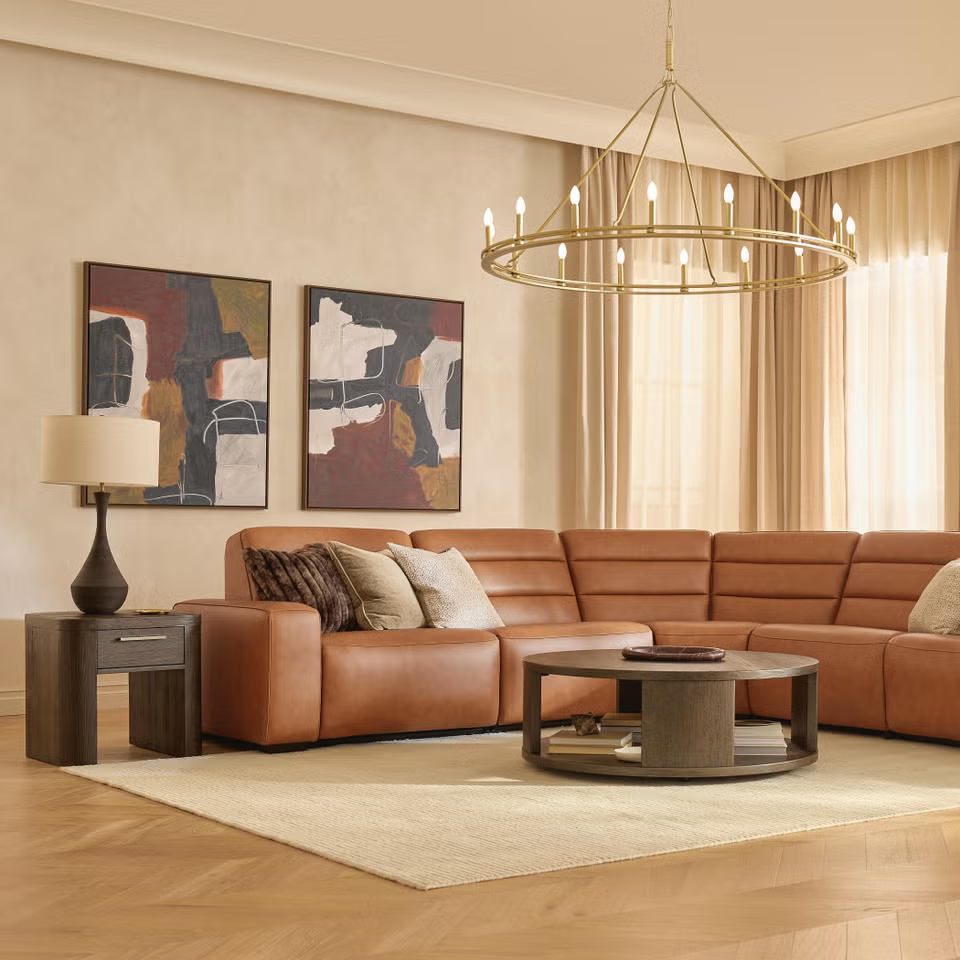
Choose a comfortable height and leave room to move
A coffee tabletop near the height of your sofa’s seat cushions usually feels natural to reach. At or slightly below cushion height is a good starting point. Compare actual product dimensions with your sofa rather than relying on a label such as “standard height.” If a deep cushion compresses noticeably, measure while someone is sitting on it.
Test roughly 14 to 18 inches from the front of the seating to the nearest edge of the table. That tends to leave room for knees and for getting up without putting drinks out of easy reach. Measure to the part of the table that comes closest to the sitter, which may be a projecting base rather than the top.
Along a main route through the room, aim for about 30 inches of clear walking space where feasible. You may not achieve that on every side in a small room. Protect the busiest path first, then consider a narrower table, a round or oval shape or nesting pieces if traffic still feels cramped. Opposite seating also needs comfortable entry and legroom. Do not treat a gap between two sofas as though only one side needs space.
A quick floor-plan calculation can rule out an oversized table. If you have 74 inches from the sofa front to the boundary of a main walkway, allowing 16 inches beside the sofa and 30 inches for the route leaves 28 inches for table depth. Mark that 28-inch footprint on the floor and walk around it before deciding. These figures help you test a layout. They are not substitutes for seeing how your particular room functions.
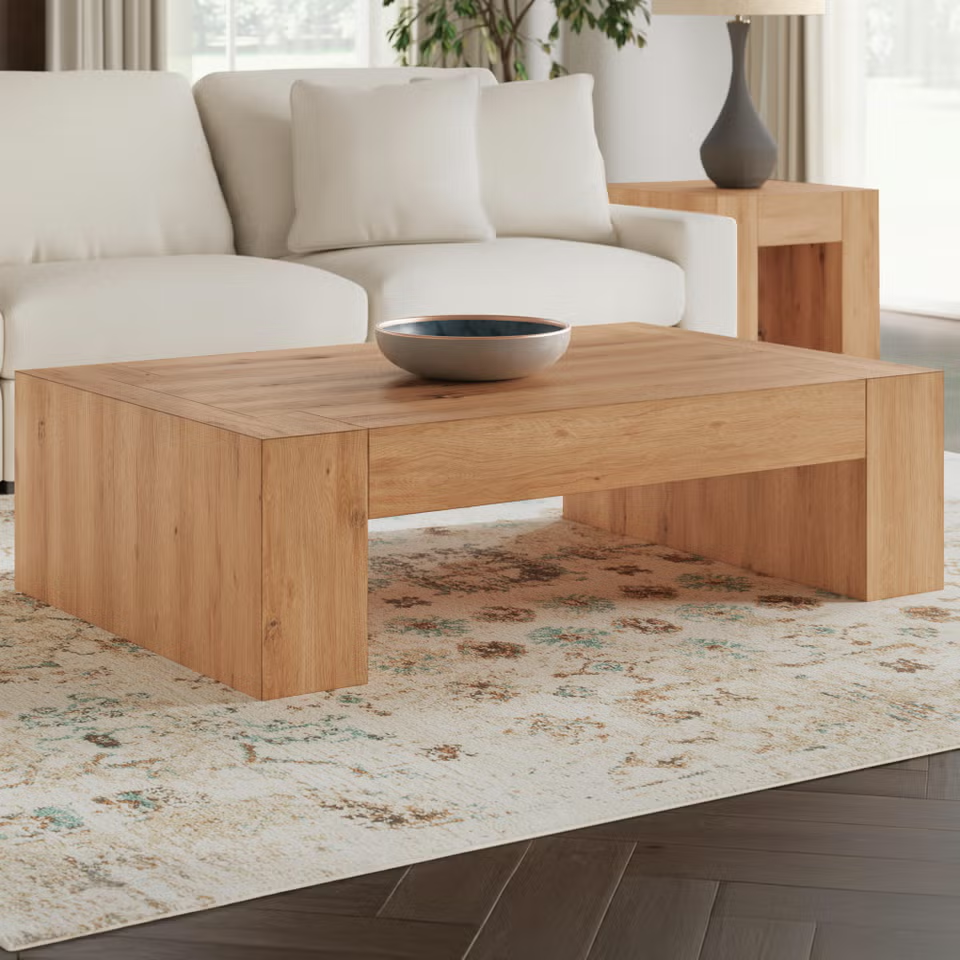
Match the shape to your seating layout
Shape affects both reach and traffic. Compare the table’s widest points with the space available, not just its length in a product photo.
Rectangular coffee tables follow the line of a standard sofa and provide a long surface for several sitters. They also fit between parallel seating pieces when there is enough clearance on both sides. With a chaise sectional, positioning a narrower rectangle along the main sofa run can leave more space near the chaise.
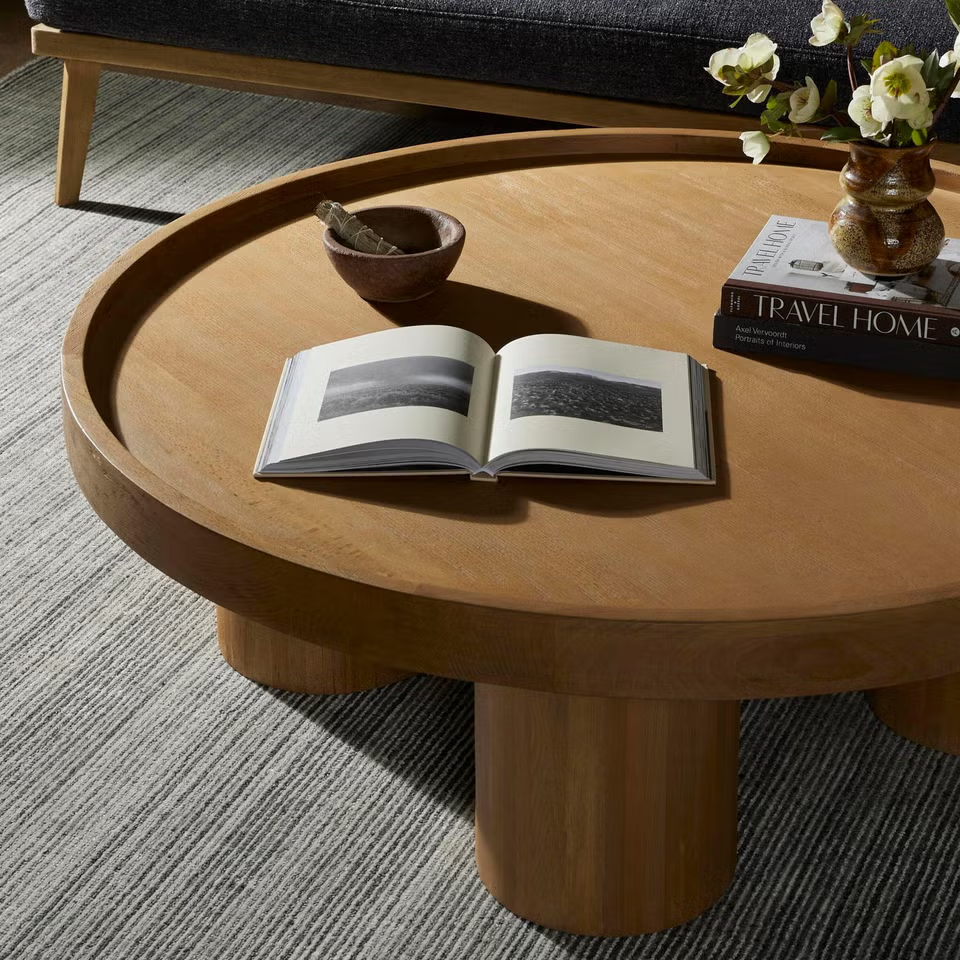
Round coffee tables remove projecting corners and make it easier to move diagonally around the center of a seating group. They can put a shared surface within reach of both sides of a compact sectional or several chairs. Check the diameter carefully, though. A wide round table can take up as much walking space as a square one.
Oval tables combine a sofa-friendly length with softer ends. They are often a practical choice for a narrow living room where a rectangle would place corners in the traffic route.
Square tables can serve an L-shaped sectional or two sofas meeting at a right angle. Their depth can overwhelm a long, narrow room, so confirm that people at the inner corner can reach the top without blocking entry to either seat. Two smaller square tables offer another option if you want to separate the surfaces when guests arrive.
For any shape, consider how many people need access. A table can look centered in a photograph yet sit too far from a favorite chair. A slightly off-center placement, a smaller table or a nearby side table or end table may work better than increasing the coffee table’s footprint.
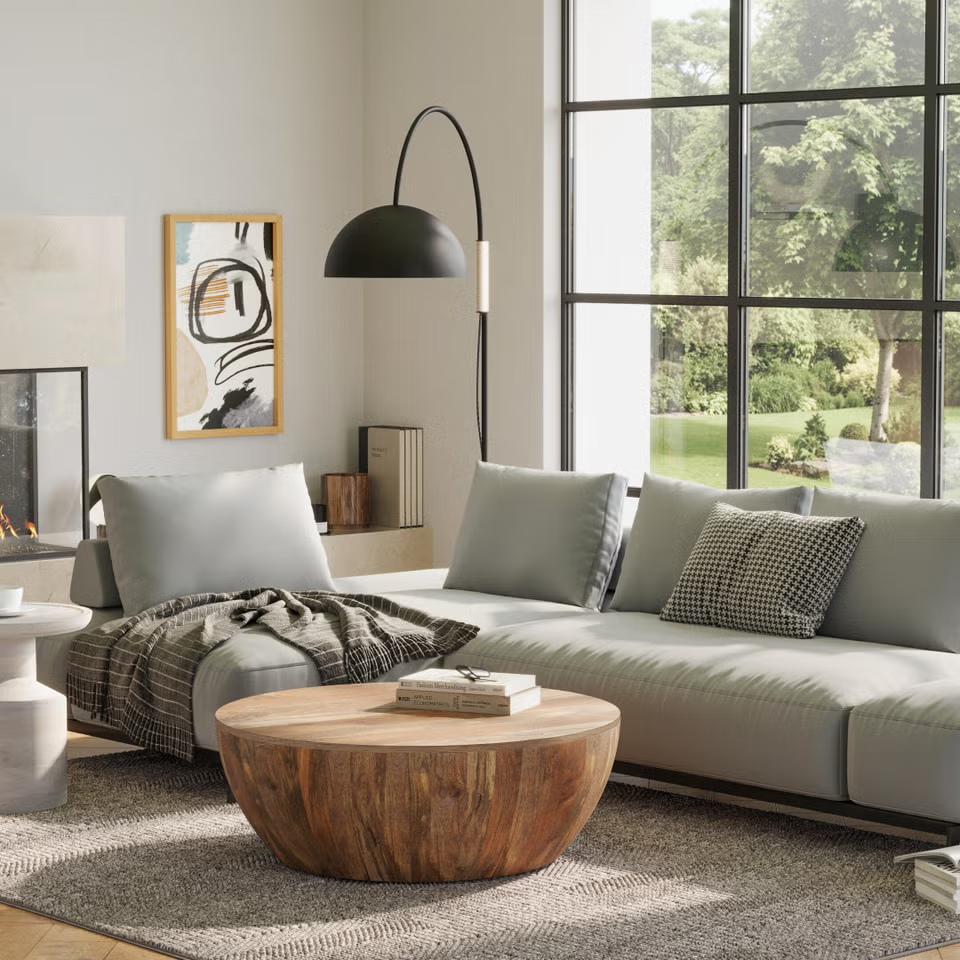
Choose a surface for your household and cleaning routine
The best-looking material is one you will still enjoy maintaining after a busy week. Pay attention to the tabletop finish as well as the frame. Those surfaces may need different care.
| Surface | What it brings to the room | Everyday consideration |
|---|---|---|
| Wood coffee table or wood veneer | Warmth, a wide range of finishes and a substantial look | Use coasters and wipe up moisture promptly. Scratch resistance and repair options depend on the finish |
| Glass coffee table | A lighter visual footprint that lets more of the rug show | Fingerprints and dust are noticeable. Check the edges and the maker’s glass specifications |
| Metal coffee table | A slim frame or a bold, industrial-style surface, depending on the design | Finishes can scratch or show smudges. Follow the product’s cleaning directions |
| Upholstered top | A softer edge and a casual, ottoman-like look | Fabric needs prompt spill care. Use a stable tray if you need a place for drinks |
Wood is a flexible choice for a high-use living room, but wood species, veneers and protective finishes wear differently. Glass can keep a small room looking open, though households with young children may prefer a table with softer edges. Metal bases can offer visual openness beneath a wood or other solid top. For upholstery, check the fabric-care instructions and whether the piece is designed to support anything beyond ordinary tabletop use. Do not assume every upholstered table is extra seating.
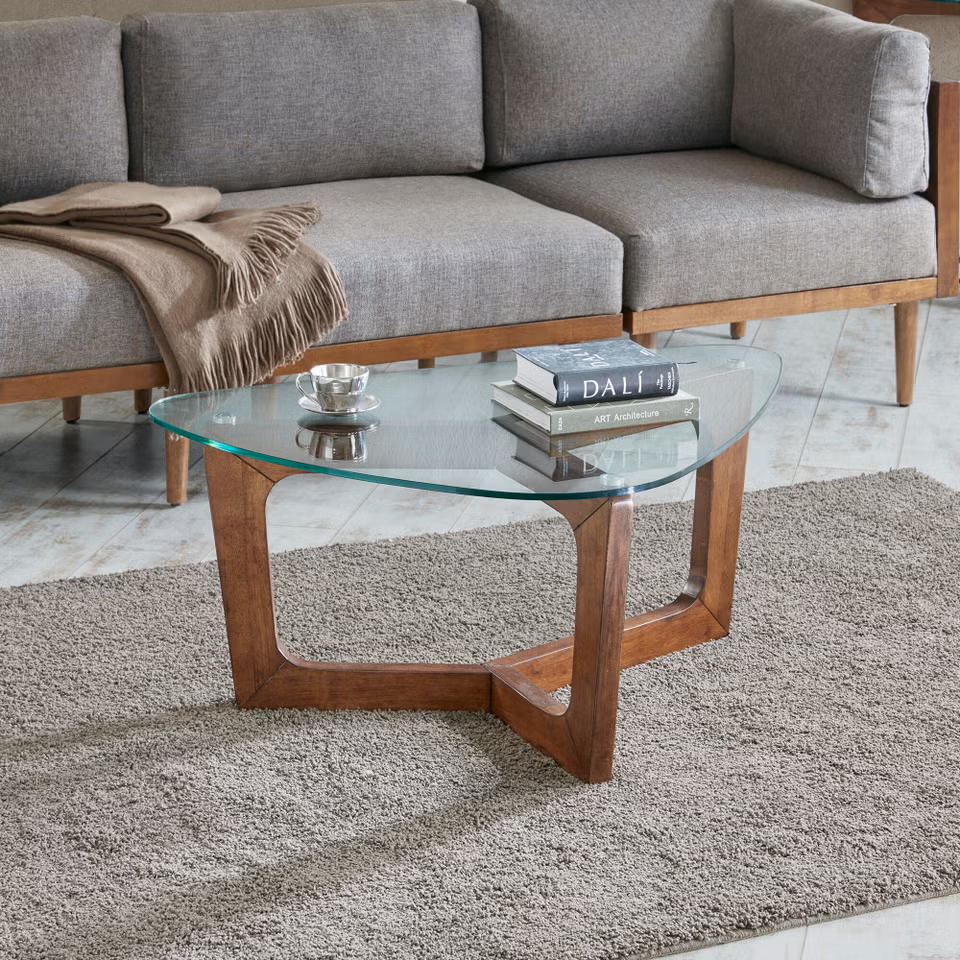
Decide which features earn their space
A simple open table is often the easiest choice when the room already has enough storage. Its exposed legs can make the floor feel less crowded, and there is no drawer or mechanism to account for when you measure access. If clutter gathers at the center of the room, choose a feature that solves that specific problem.
An open shelf keeps books or a basket handy without hiding them, so it works best if you are comfortable with visible storage. Drawers conceal remotes, chargers and game pieces but can add visual weight. Check that they can open fully without hitting the sofa or another piece.
A lift-top coffee table brings the surface closer for laptop work or occasional meals. Compare its closed and raised dimensions, the direction the top moves and how much clearance it needs. A lift top may be worthwhile if you use it often. A standard table is simpler if you mainly need somewhere to set a drink. Keep in mind that items on the top may need to be moved before opening it.
Nesting coffee tables take up less space when tucked together and spread out when guests need extra surfaces. Measure them both nested and separated. If spreading them out blocks the only walkway, the flexibility will be less useful than it first appears.
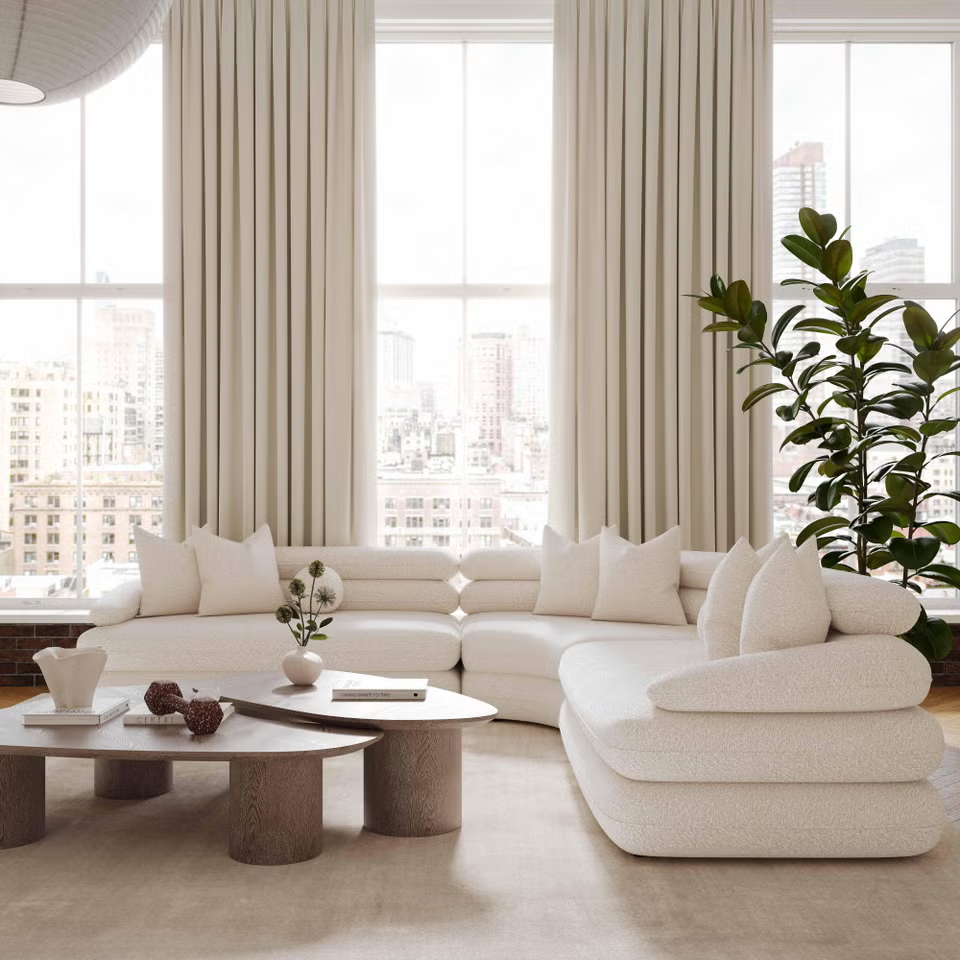
Coordinate the look without buying a matched set
Think about visual weight as well as color. A solid, chunky table can balance a generous sectional but dominate a room with slim-legged seating. A glass top or an open metal base allows more of the rug and floor to show through. Neither approach is inherently better. The aim is for the center of the room to feel proportionate to the furniture around it. If you are comparing options in the Ashley coffee table collection, this can be a useful way to narrow the styles that fit both your seating scale and your room’s visual balance.
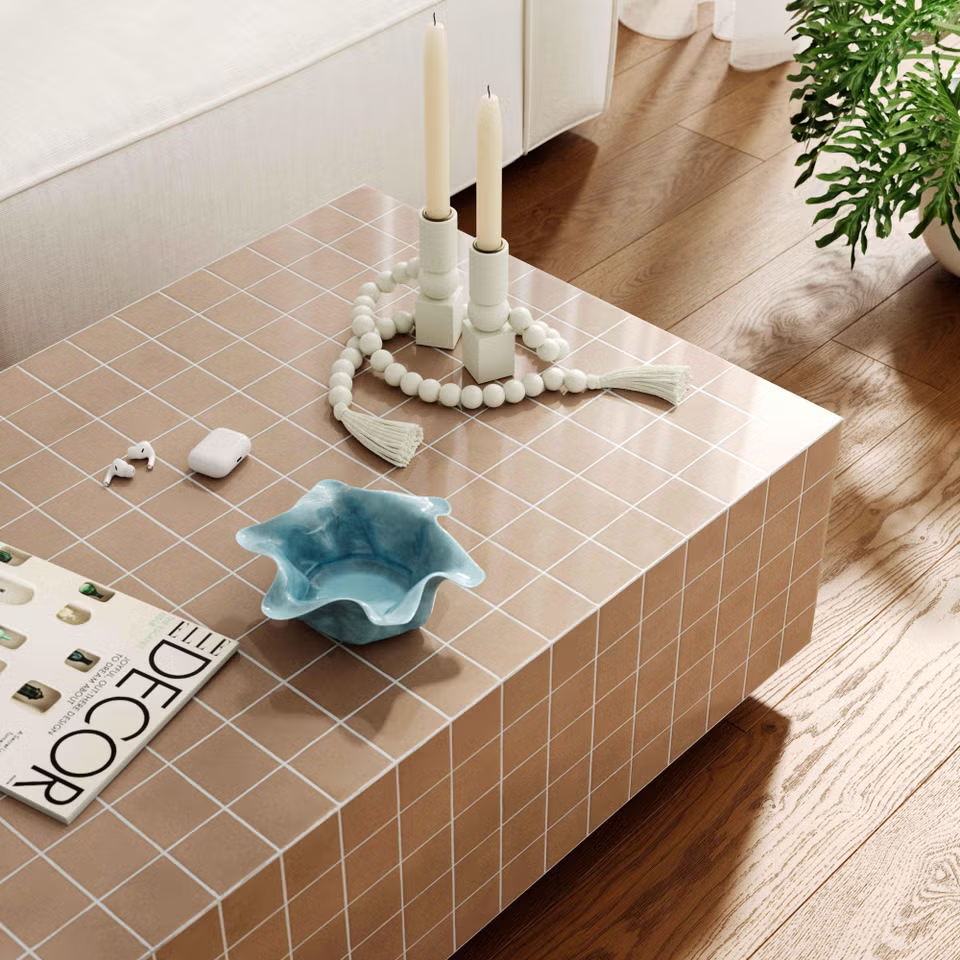
You can repeat one detail, such as a wood tone, metal finish or shape found in a lamp or media console, without matching every piece. Contrast works, too. A warm wood coffee table can soften a cool-colored sofa, while a painted or metal finish can break up a room with many wood surfaces. On a patterned rug, a simpler tabletop may give the eye a place to rest. On a plain rug, texture or mixed materials can add interest.
Before committing to a finish, look at it beside your sofa and rug if samples are available. Photos taken under different lighting can make the same wood tone look surprisingly different. The table should belong in the room, not necessarily match a set.
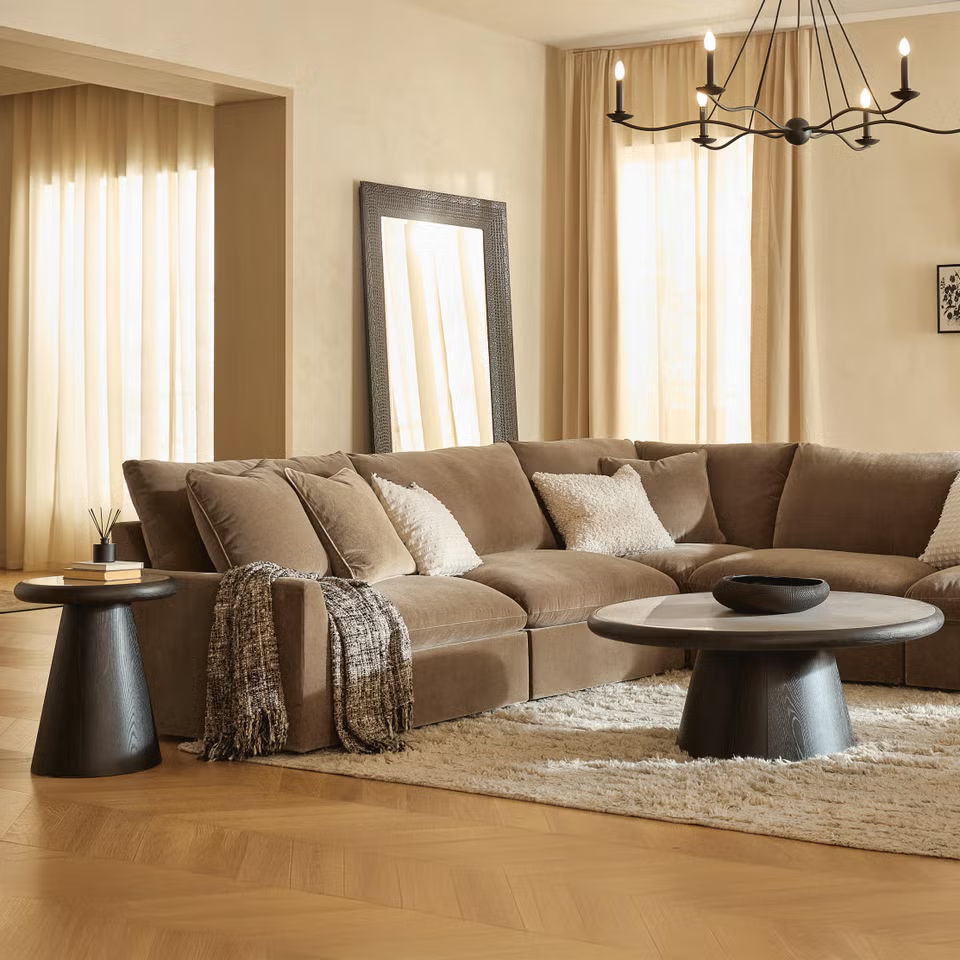
Compare common room layouts
Use these pairings to build a shortlist, then check each candidate against your measurements. The shape listed is a starting point, not the only one that can work.
| Room layout and priority | Shape to try | Feature worth considering |
|---|---|---|
| Standard sofa facing a TV wall; easy reach across the sofa | Rectangle | Open shelf if books and remotes need a home |
| L-shaped sectional; access from both sides | Round or square | Drawers if central storage can replace loose clutter |
| Two sofas facing each other; shared surface without crowding | Oval or narrow rectangle | Open base to keep the center feeling less dense |
| Small or narrow room; keep a route clear | Oval or compact round | Nesting pieces for occasional extra surface area |
| Studio or multipurpose room; work or eat at the sofa | Rectangle or square | Lift top, after checking its open footprint |
| Living room with young children; reduce sharp corners | Round, oval or a rounded-edge design | Easy-care finish or upholstered top with a tray |
If you are choosing a coffee table for a sectional, pay particular attention to the inner corner. A table that reaches both wings may also block the easiest way into a seat. Tape out the proposed shape and sit in each position before favoring a larger surface.
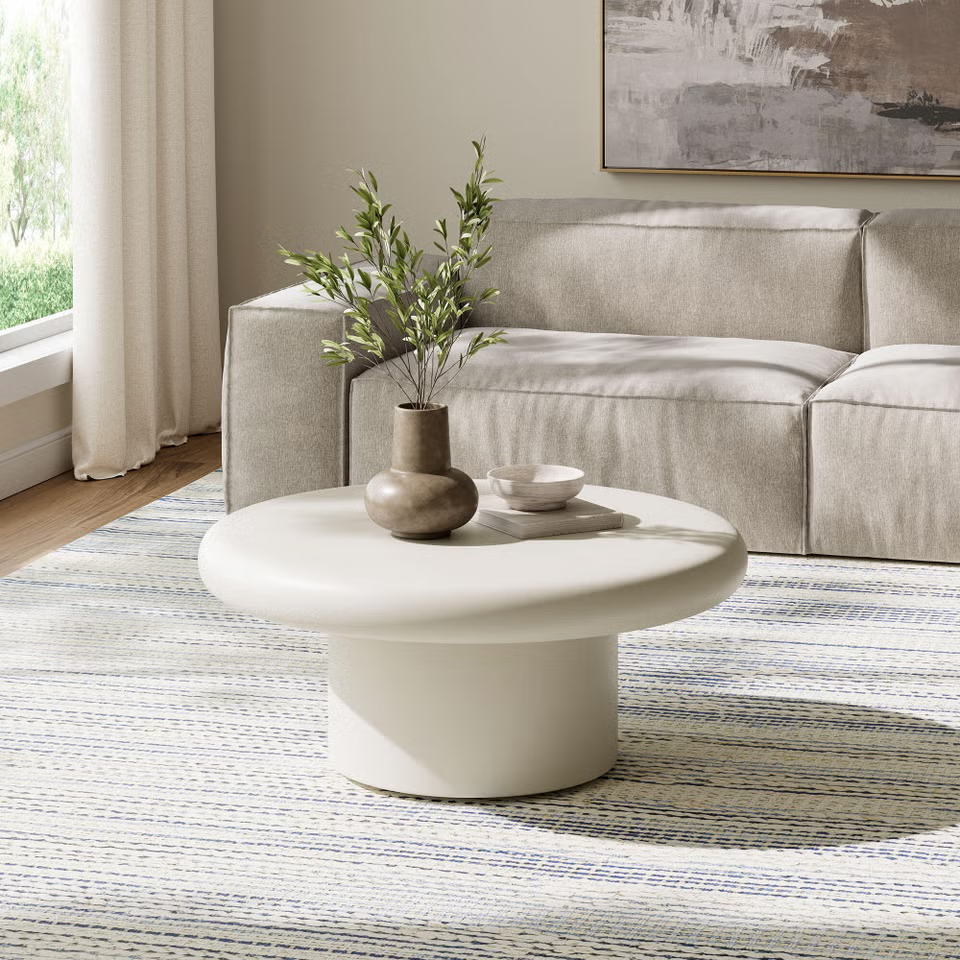
Shortlist, check delivery access and care for the table
Once you have a few candidates, compare their listed width, depth and height, not just the styled images. Then make a final pass through these checks:
- Mark the footprint. Tape out each table’s actual dimensions on the floor. Sit in every seat, reach toward the proposed top, stand up and walk your usual routes. Leave approximately 14 to 18 inches at seating and aim for about 30 inches on the primary walkway where the room allows.
- Check the rug and moving parts. Confirm the table sits steadily where you intend to place it. Allow space for drawers to open, a lift top to rise or nesting tables to spread out.
- Measure the delivery route. Check door openings, hallways, stair landings and elevators, including tight turns. Compare the narrowest access points with the product’s shipping or packaged dimensions and assembly details. A table that fits on the rug still needs to get into the room.
- Review the product information. Verify materials, dimensions, assembly requirements and manufacturer care instructions for the specific table you plan to buy.
Once the table is home, use coasters for drinks and protection beneath objects that could scratch the finish. Clean up spills promptly. Blot fabric rather than rubbing it. For wood, glass, metal and upholstery alike, follow the manufacturer’s instructions before using a cleaner or applying polish. Periodically check any hardware or lift-top mechanism according to its directions.
Final fit-and-function check: Does the table serve the people seated around it without crowding their knees or the main route? Is its surface practical for your household, and will you use the features you are paying for? If the answers are yes and the table can make it through the delivery route, you have a better reason to choose it than a perfect match in a showroom photo.